2025 ReSAKSS - Integrating Emerging Irrigation Technologies to Advance Agricultural Production and Resilience in Africa: Dr. Greenwell Matchaya
Dr. Greenwell Matchaya, Senior Researcher, Economics, ReSAKSS Coordinator, and Deputy Country Representative, South Africa, International Water Management Institute (IWMI)
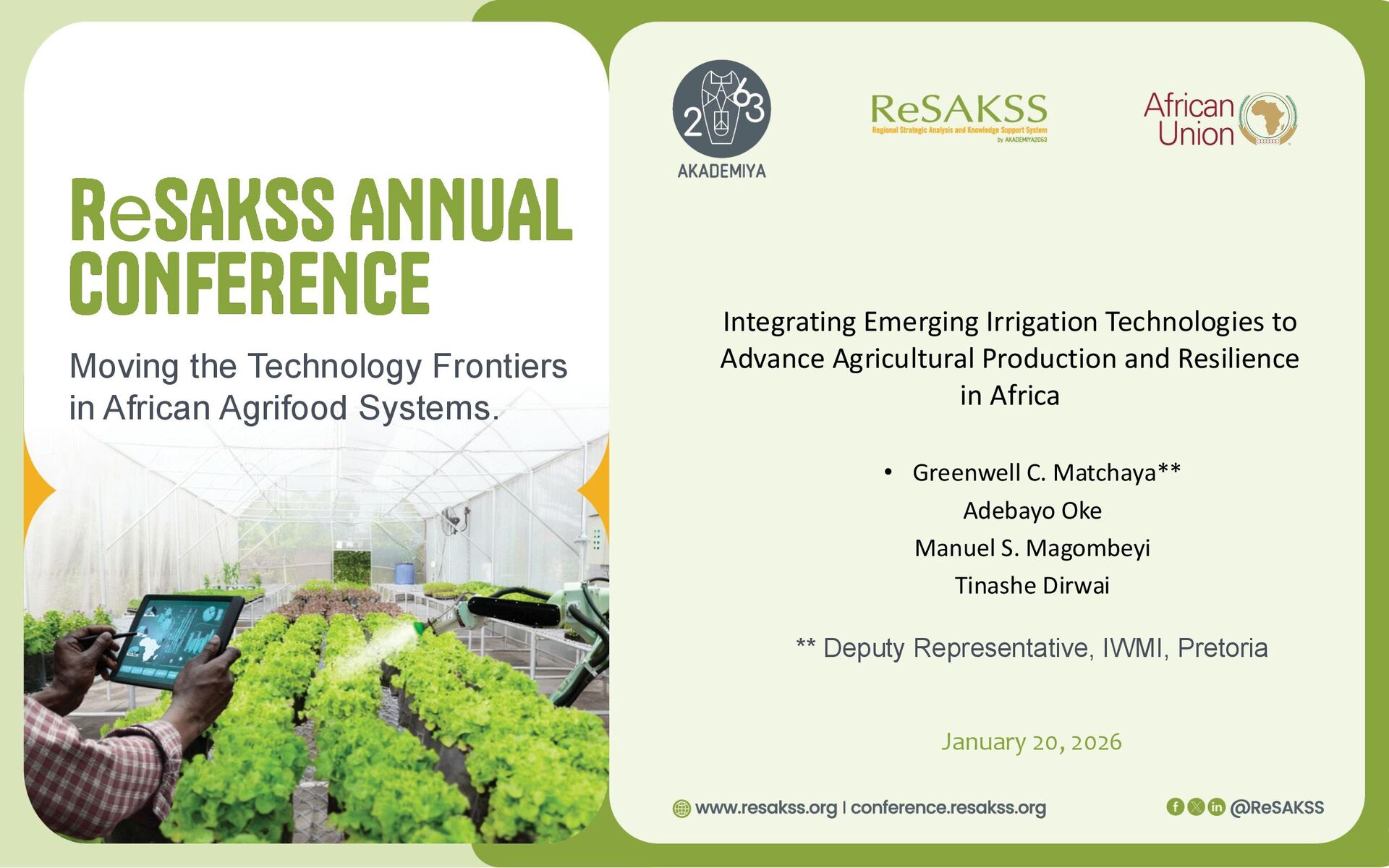
Integrating Emerging Irrigation Technologies to Advance Agricultural Production and Resilience in Africa • Greenwell C. Matchaya** Adebayo Oke Manuel S. Magombeyi Tinashe Dirwai ** Deputy Representative, IWMI, Pretoria January 20, 2026
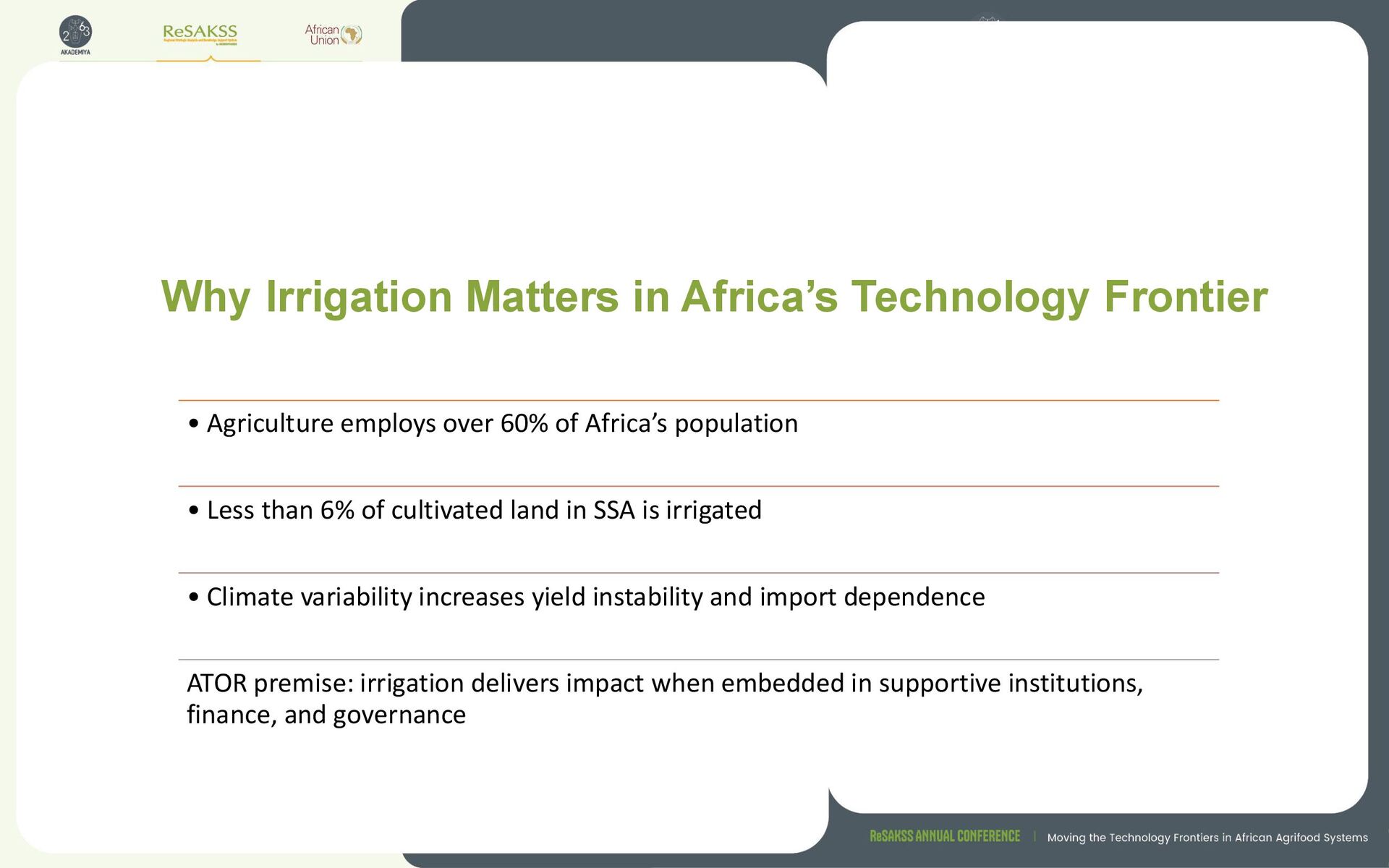
over 60% of Africa’s population • Less than 6% of cultivated land in SSA is irrigated • Climate variability increases yield instability and import dependence ATOR premise: irrigation delivers impact when embedded in supportive institutions, finance, and governance
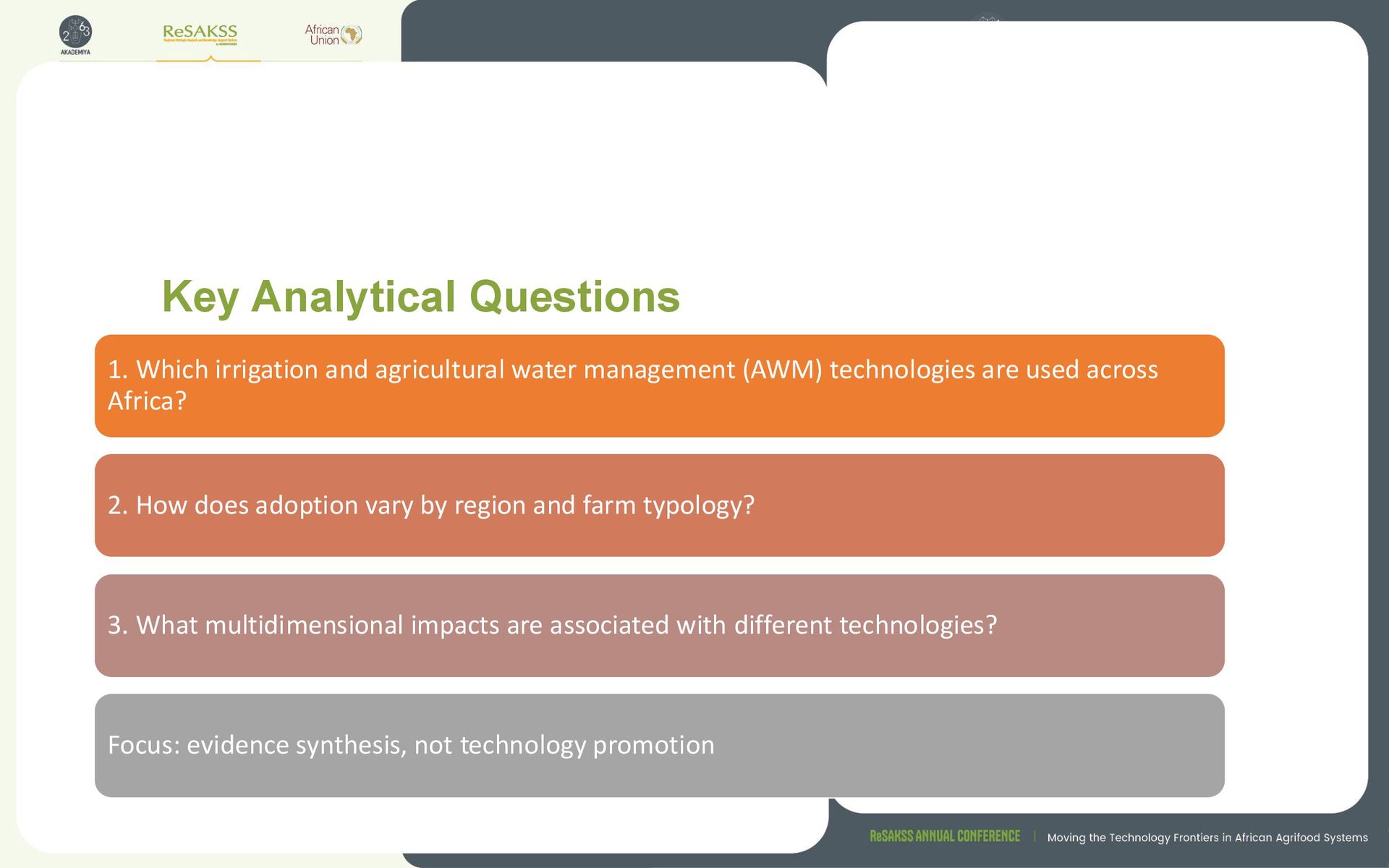
(AWM) technologies are used across Africa? 2. How does adoption vary by region and farm typology? 3. What multidimensional impacts are associated with different technologies? Focus: evidence synthesis, not technology promotion
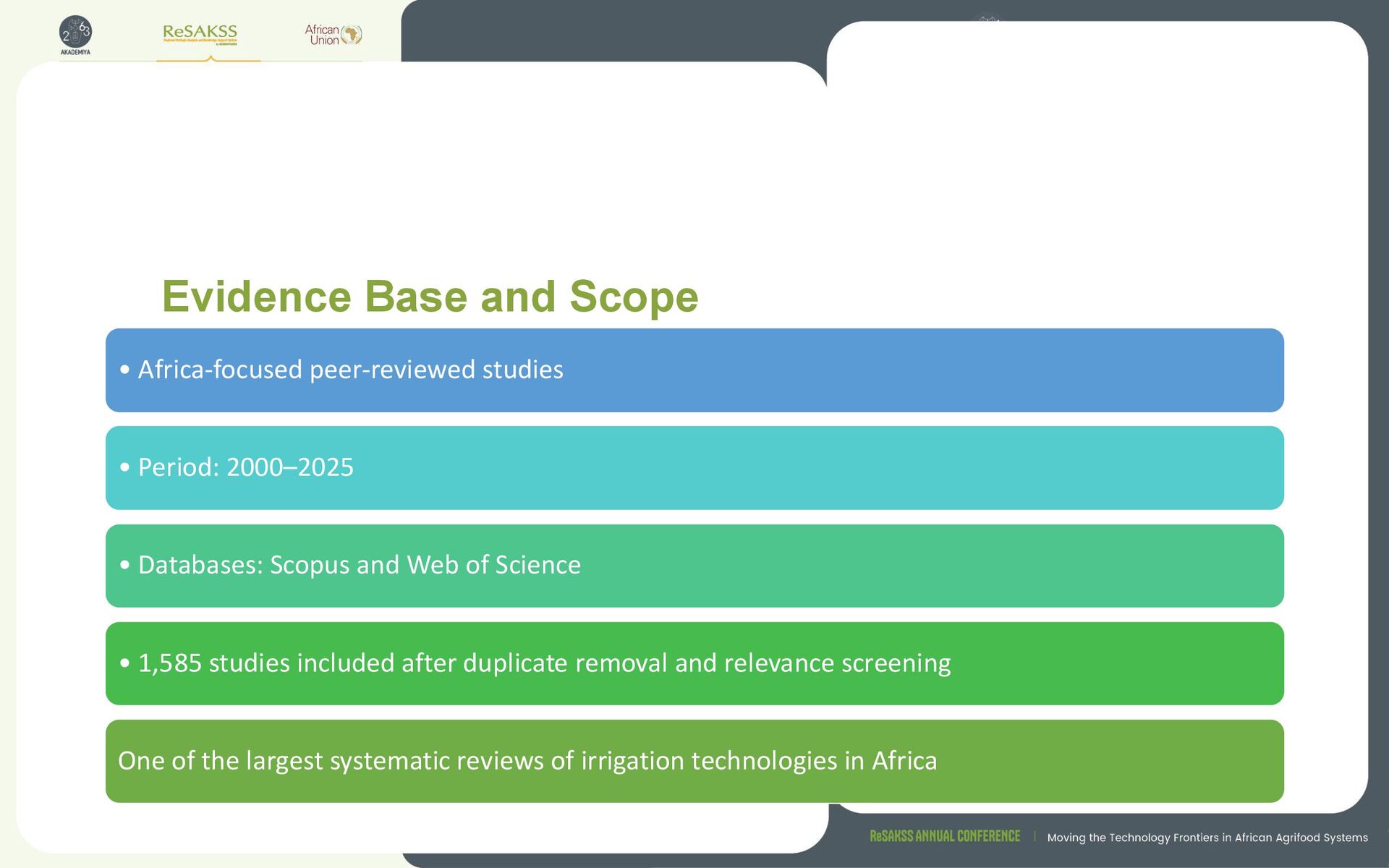
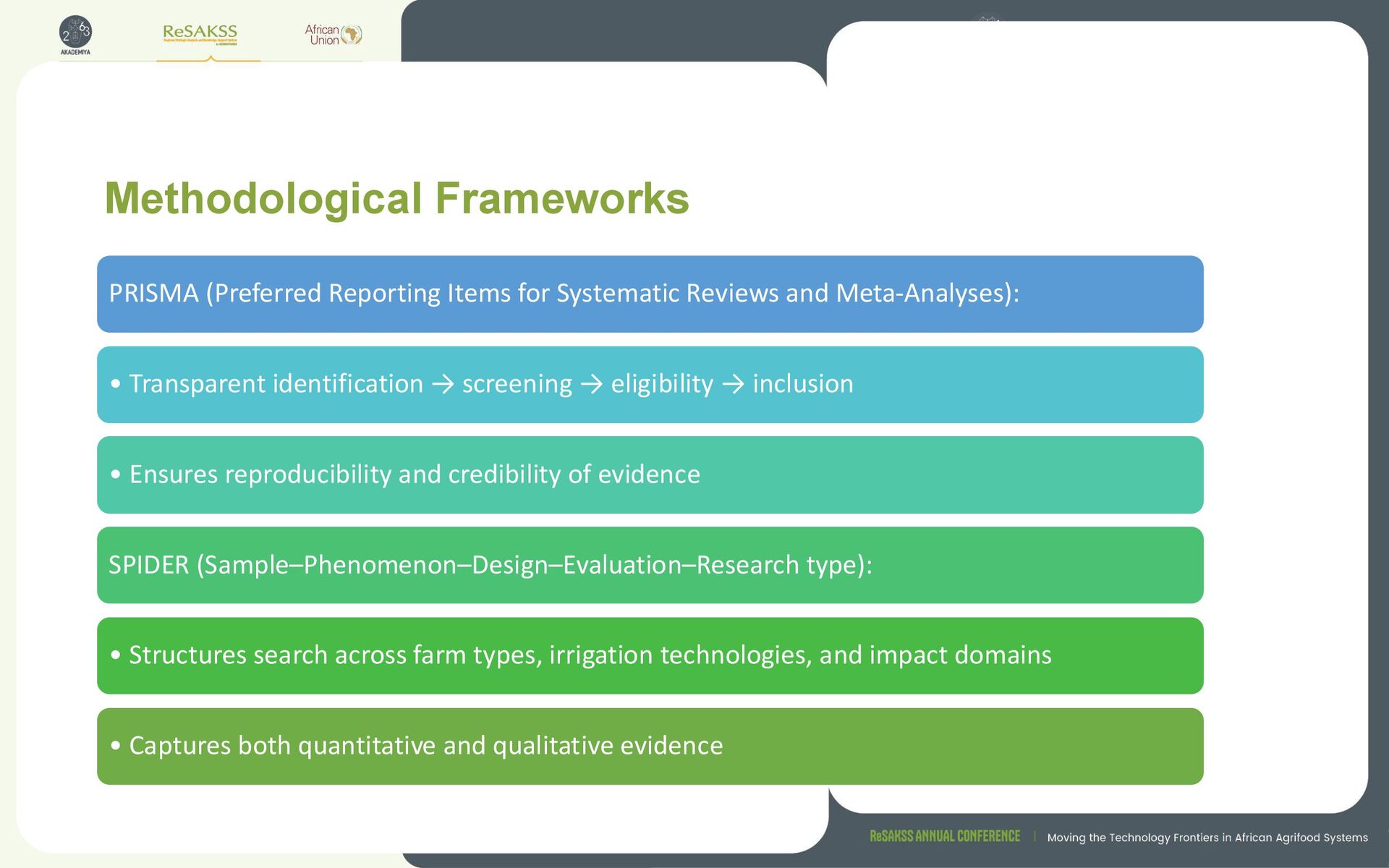
2000–2025 • Databases: Scopus and Web of Science • 1,585 studies included after duplicate removal and relevance screening One of the largest systematic reviews of irrigation technologies in Africa
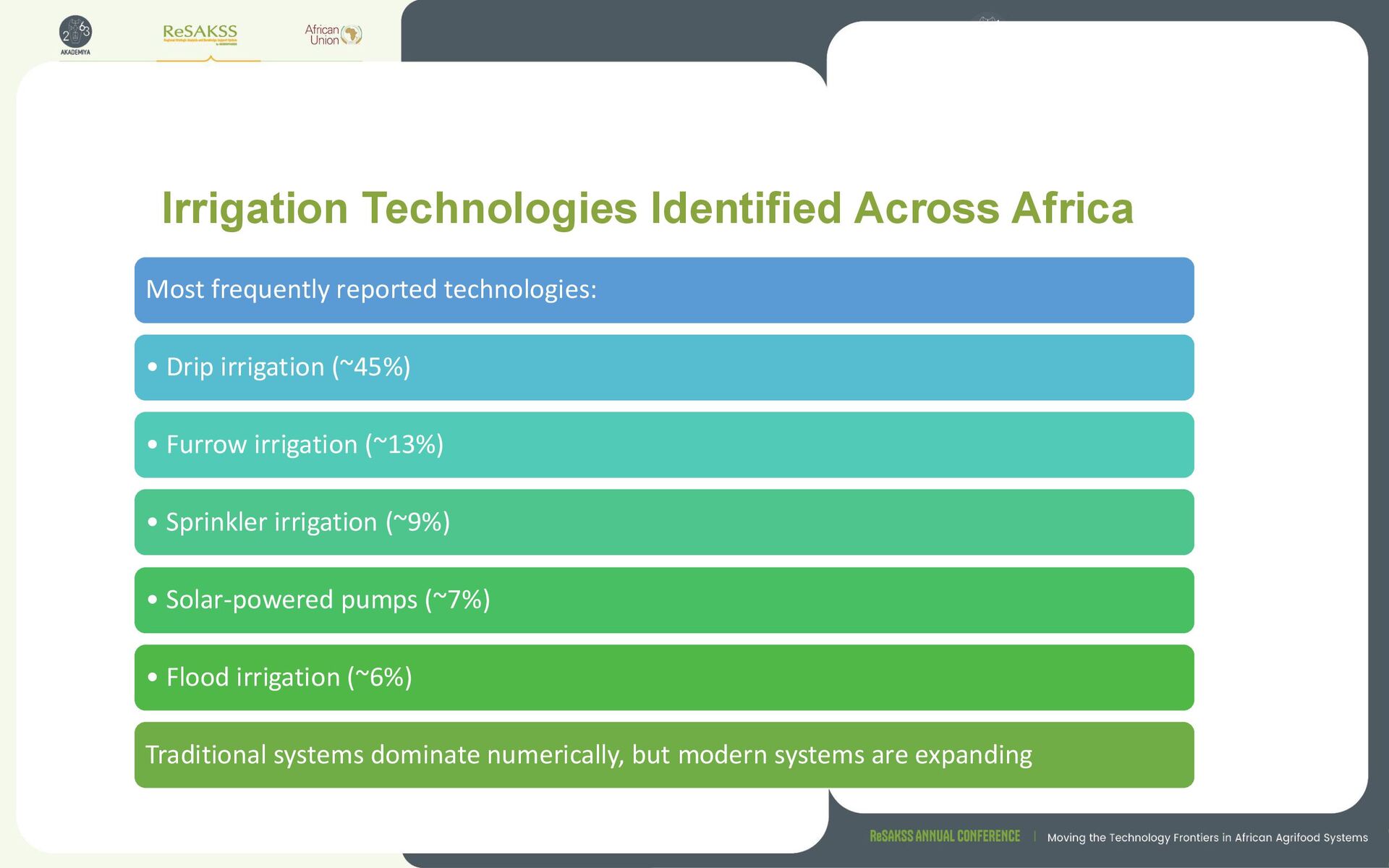
Drip irrigation (~45%) • Furrow irrigation (~13%) • Sprinkler irrigation (~9%) • Solar-powered pumps (~7%) • Flood irrigation (~6%) Traditional systems dominate numerically, but modern systems are expanding
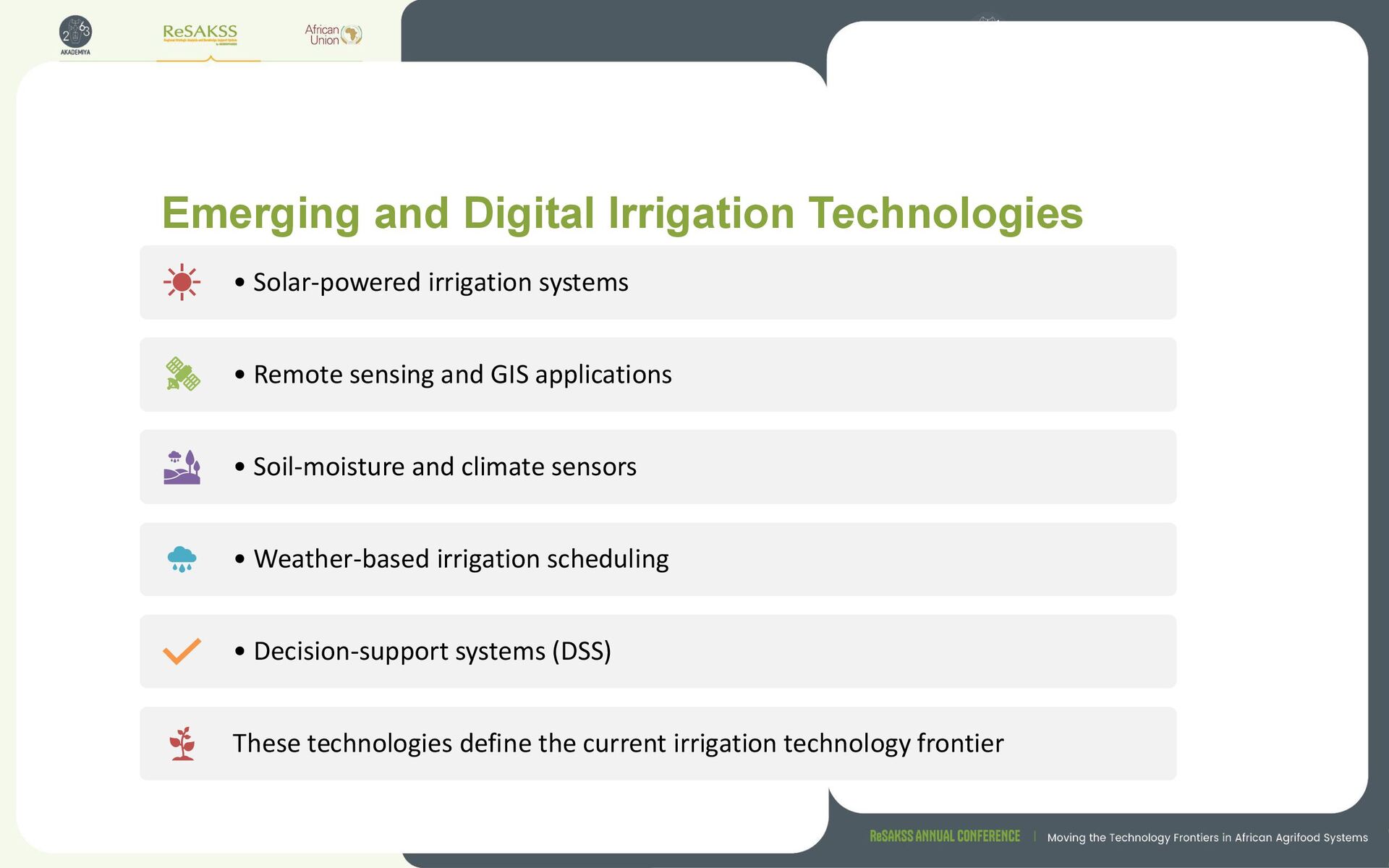
Remote sensing and GIS applications • Soil-moisture and climate sensors • Weather-based irrigation scheduling • Decision-support systems (DSS) These technologies define the current irrigation technology frontier
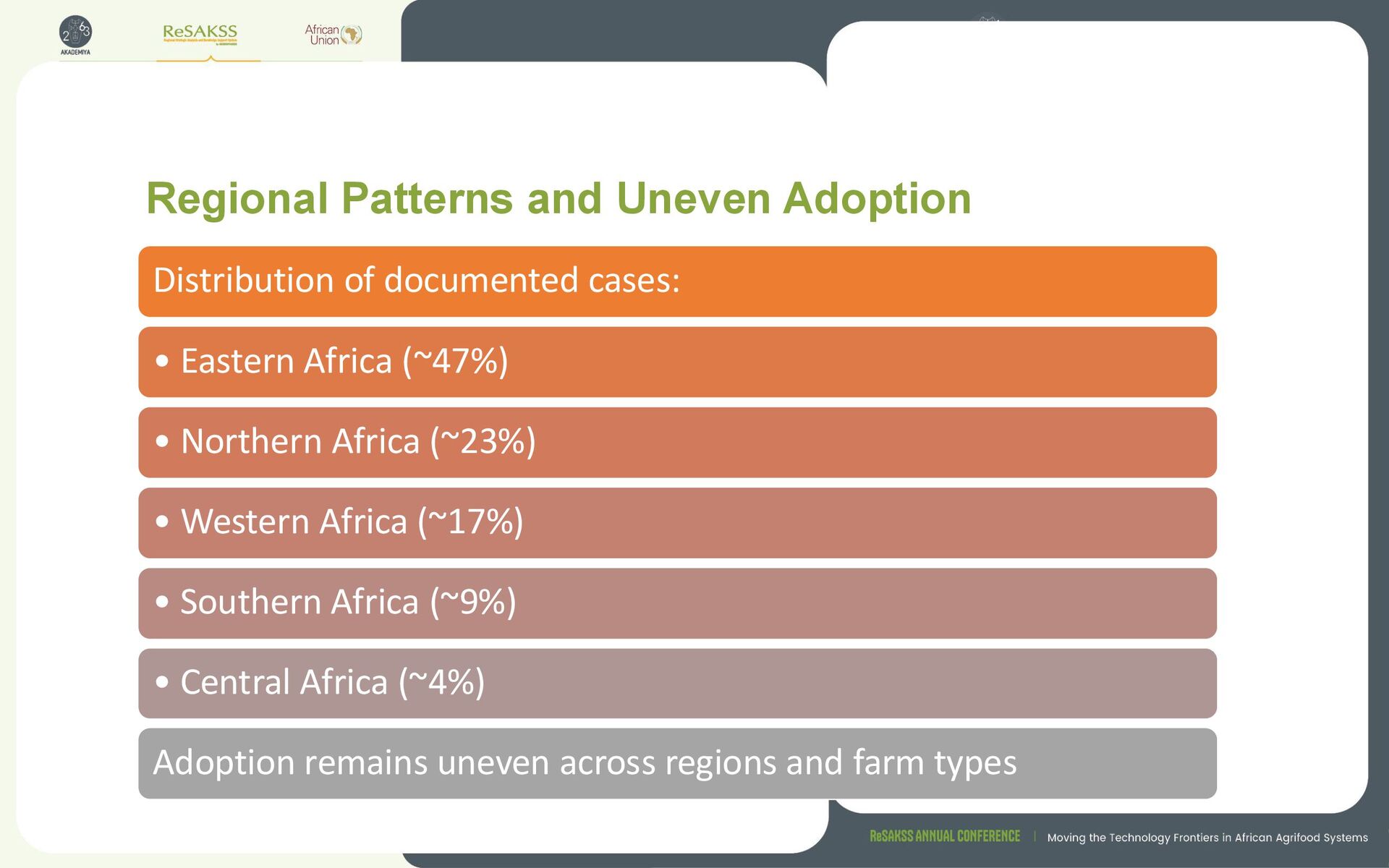
Eastern Africa (~47%) • Northern Africa (~23%) • Western Africa (~17%) • Southern Africa (~9%) • Central Africa (~4%) Adoption remains uneven across regions and farm types
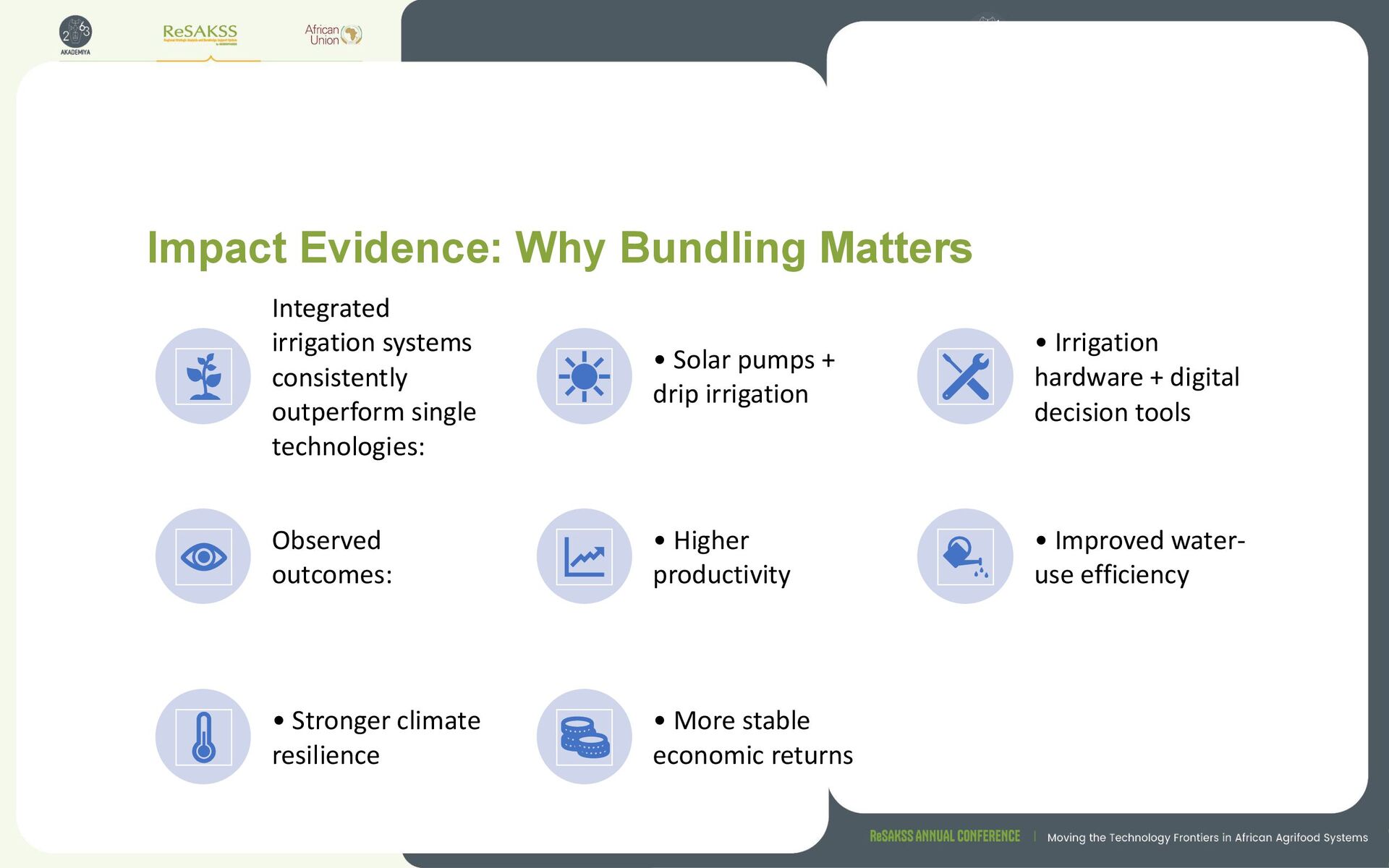
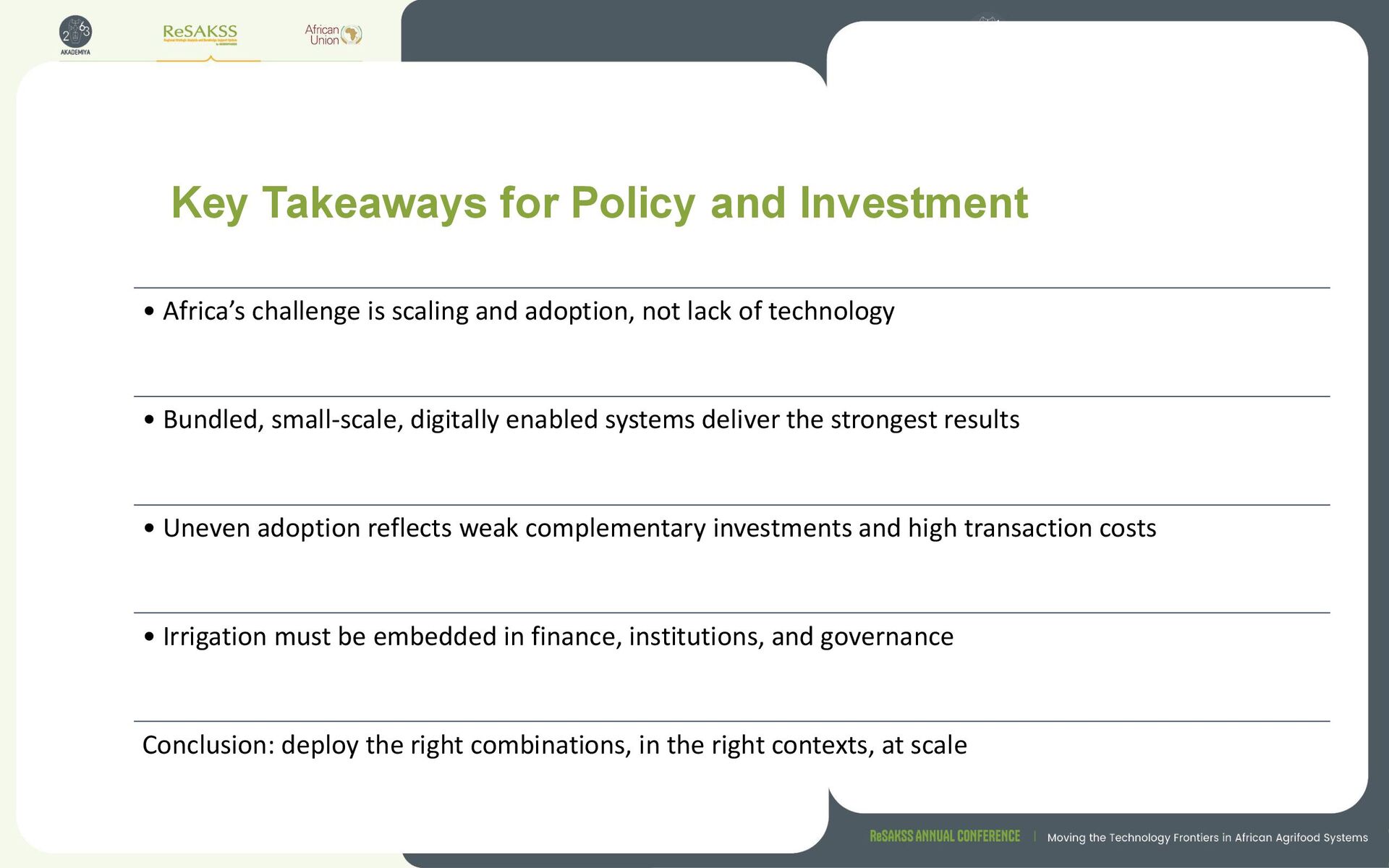
scaling and adoption, not lack of technology • Bundled, small-scale, digitally enabled systems deliver the strongest results • Uneven adoption reflects weak complementary investments and high transaction costs • Irrigation must be embedded in finance, institutions, and governance Conclusion: deploy the right combinations, in the right contexts, at scale


 akademiya2063
 junkashihara
 sokikatayama
 kanekomasahiro
 takasehideki
.png) satai
satai
 tomonom
 ftakahashi
 murakawatakuya
 kinoue_smarthr
 upura
upura
 de9uch1
 institudelelevage
 kimpetersen
 inesmontani
 reverentgeek
 rasagy
 tammyeverts
 seathinner
 ryanjones
 scottboms
 keathley
 rkendrick25
 lfama
lfama
 akashhashmi