Lithium-ion Battery HILS: A Cell Emulator That ...

Lithium-ion Battery HILS: A Cell Emulator That Behaves Like a Real Battery
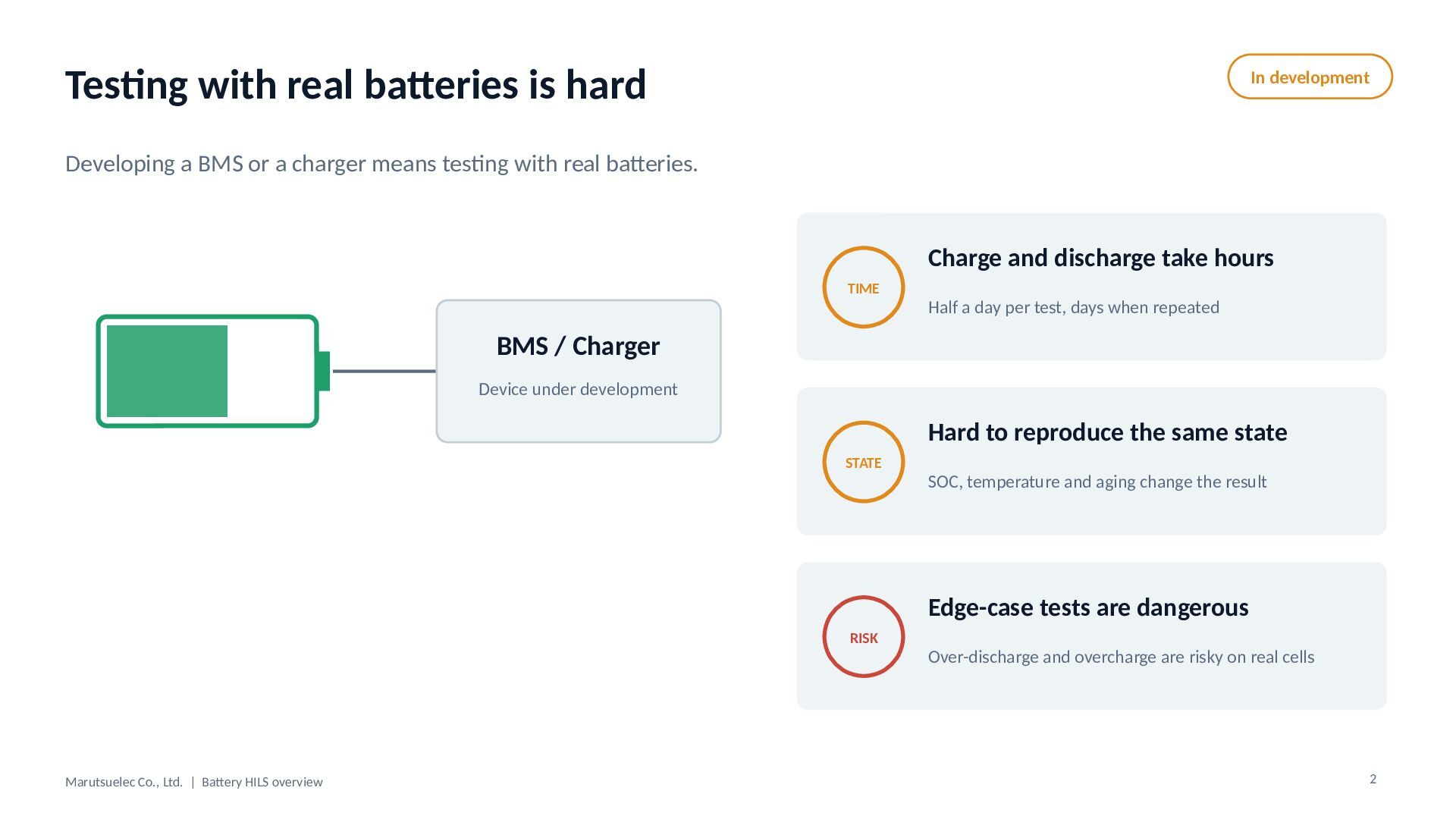
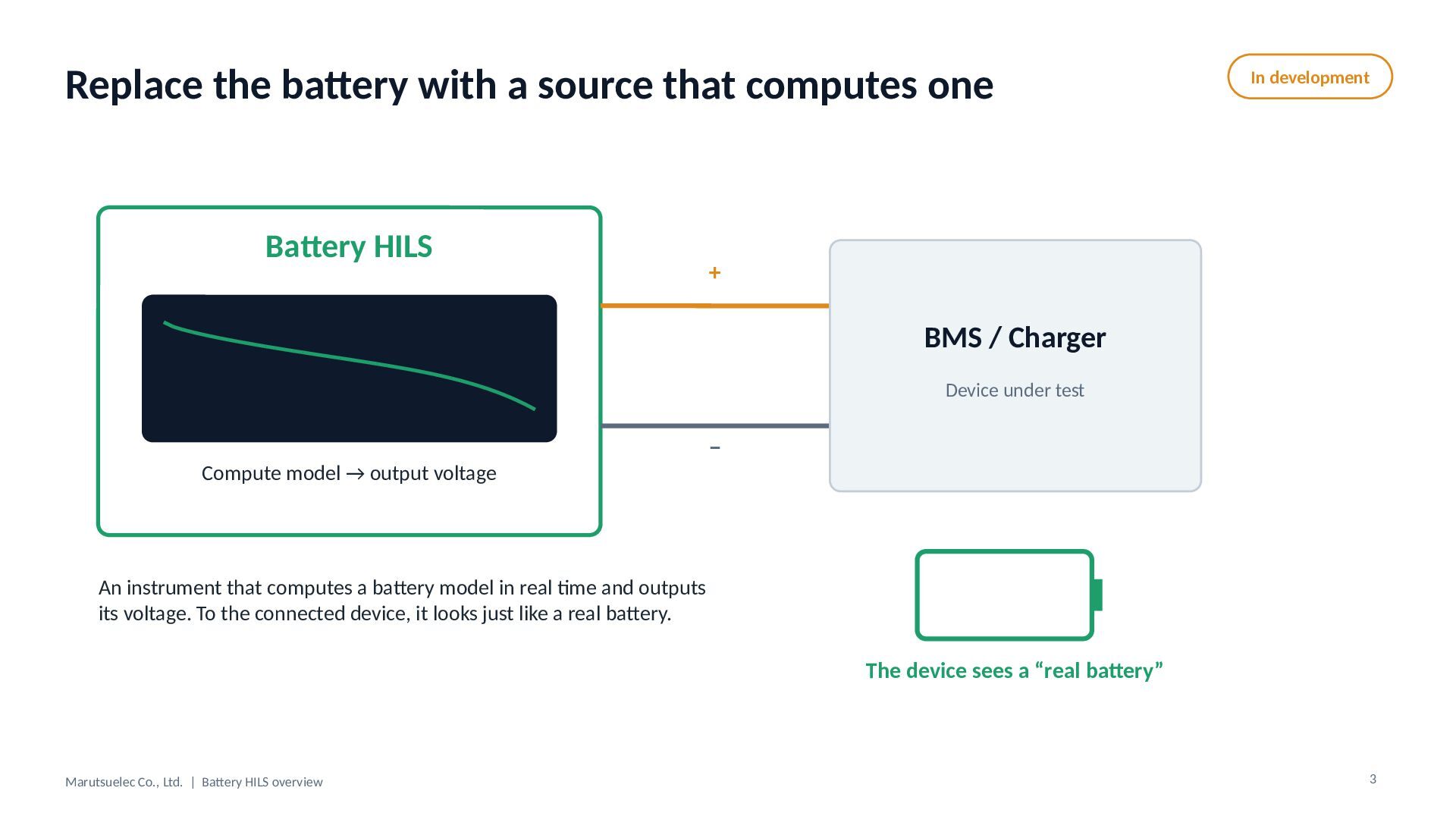
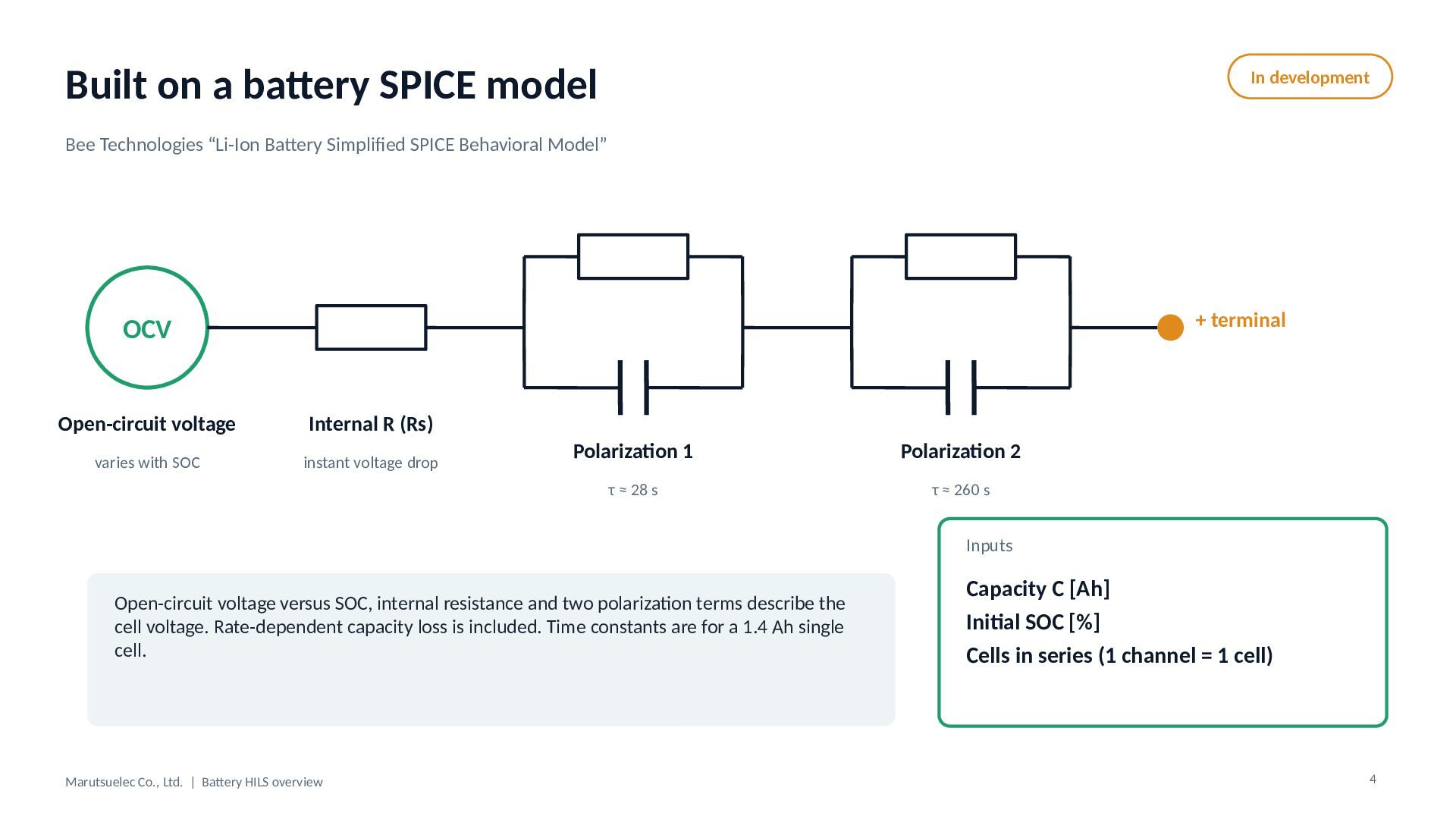
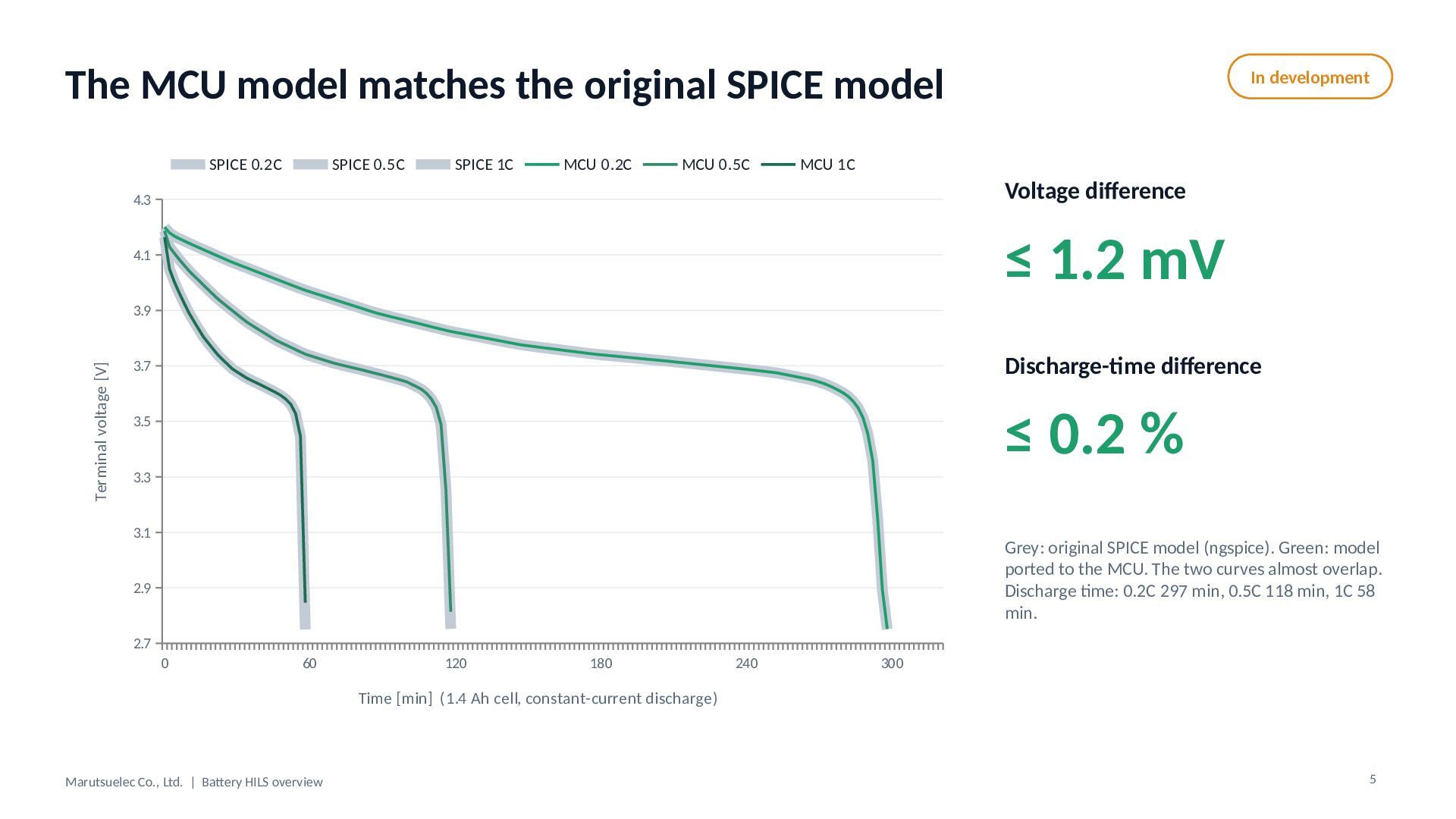
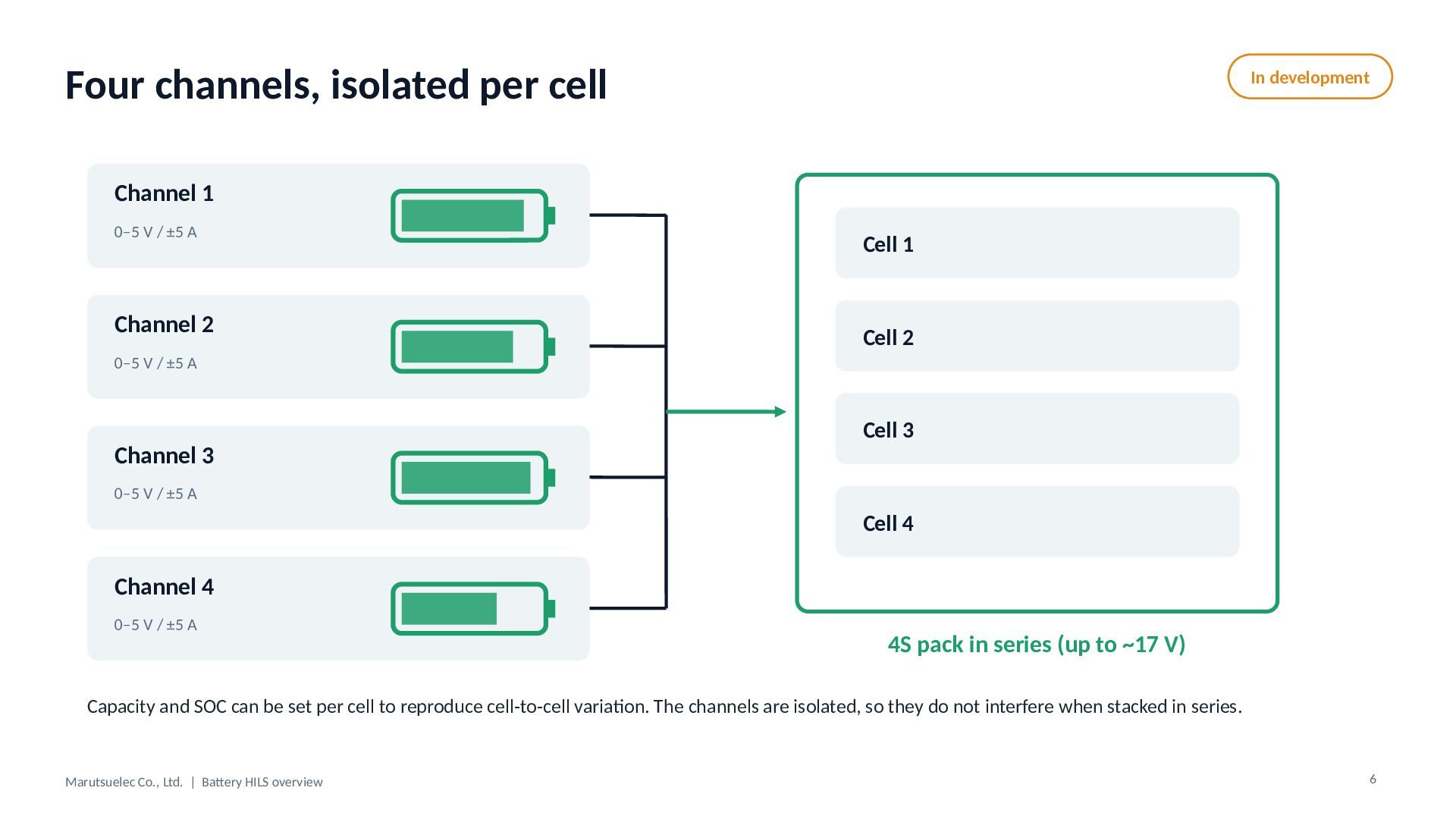
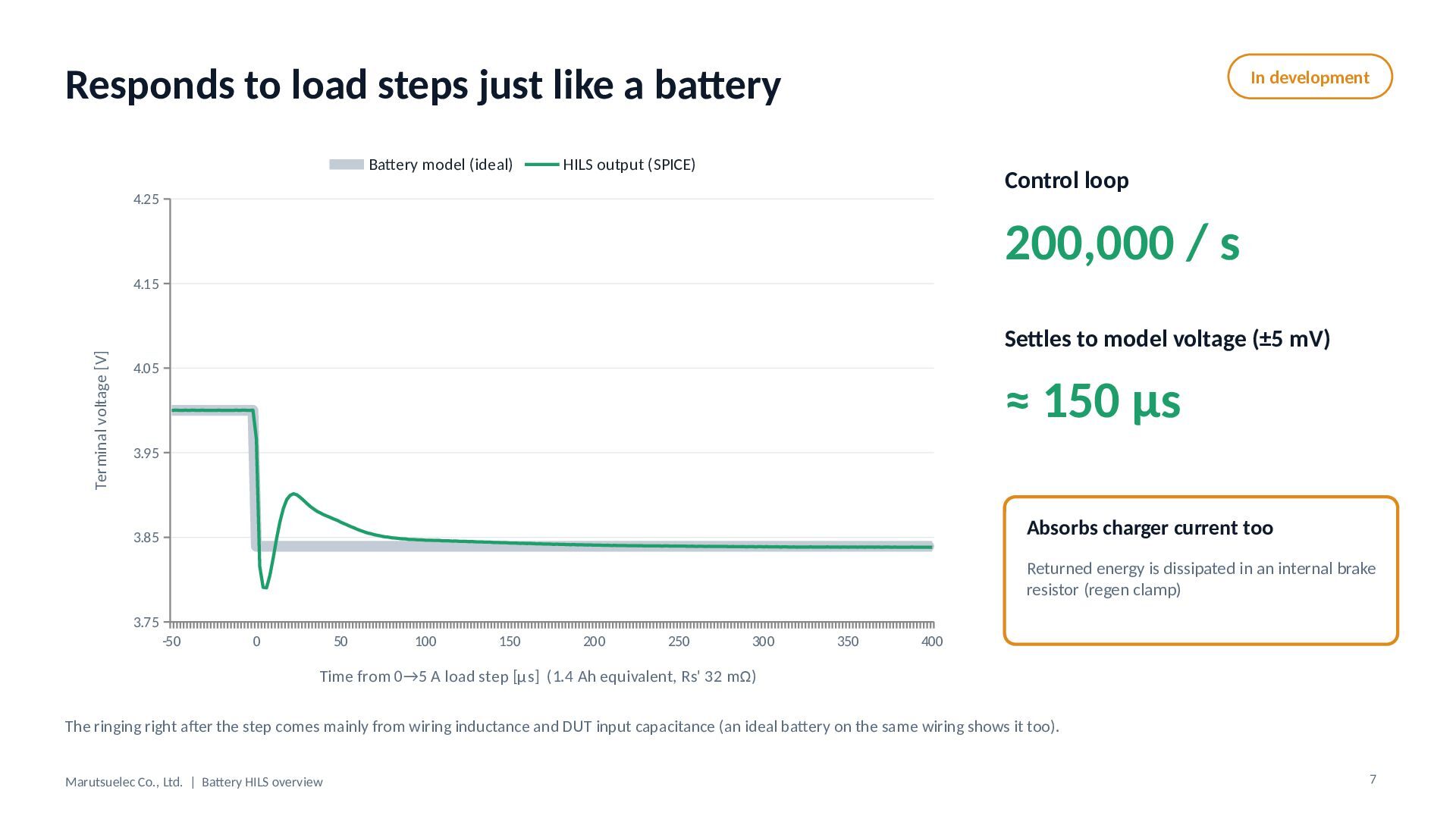
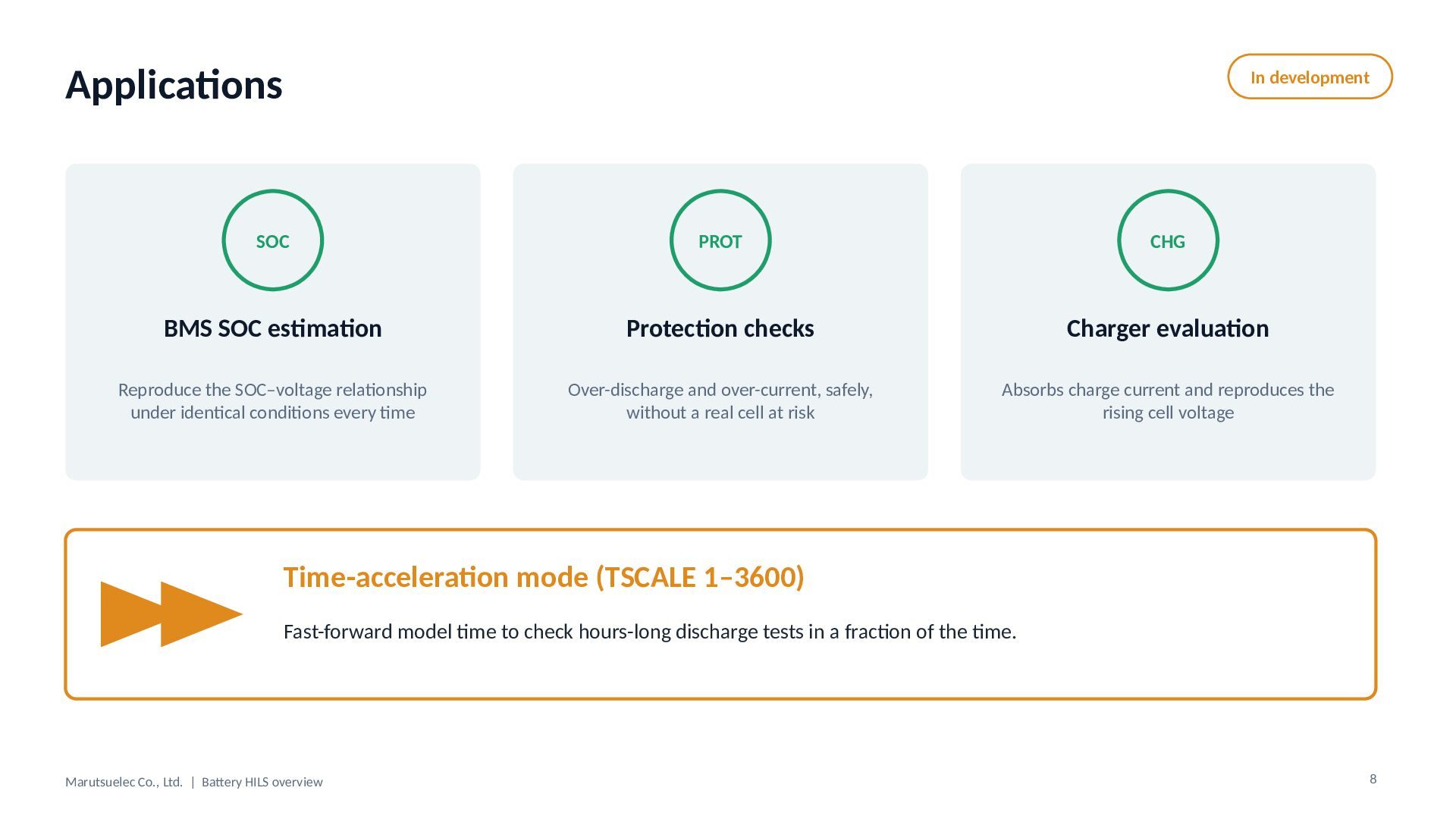
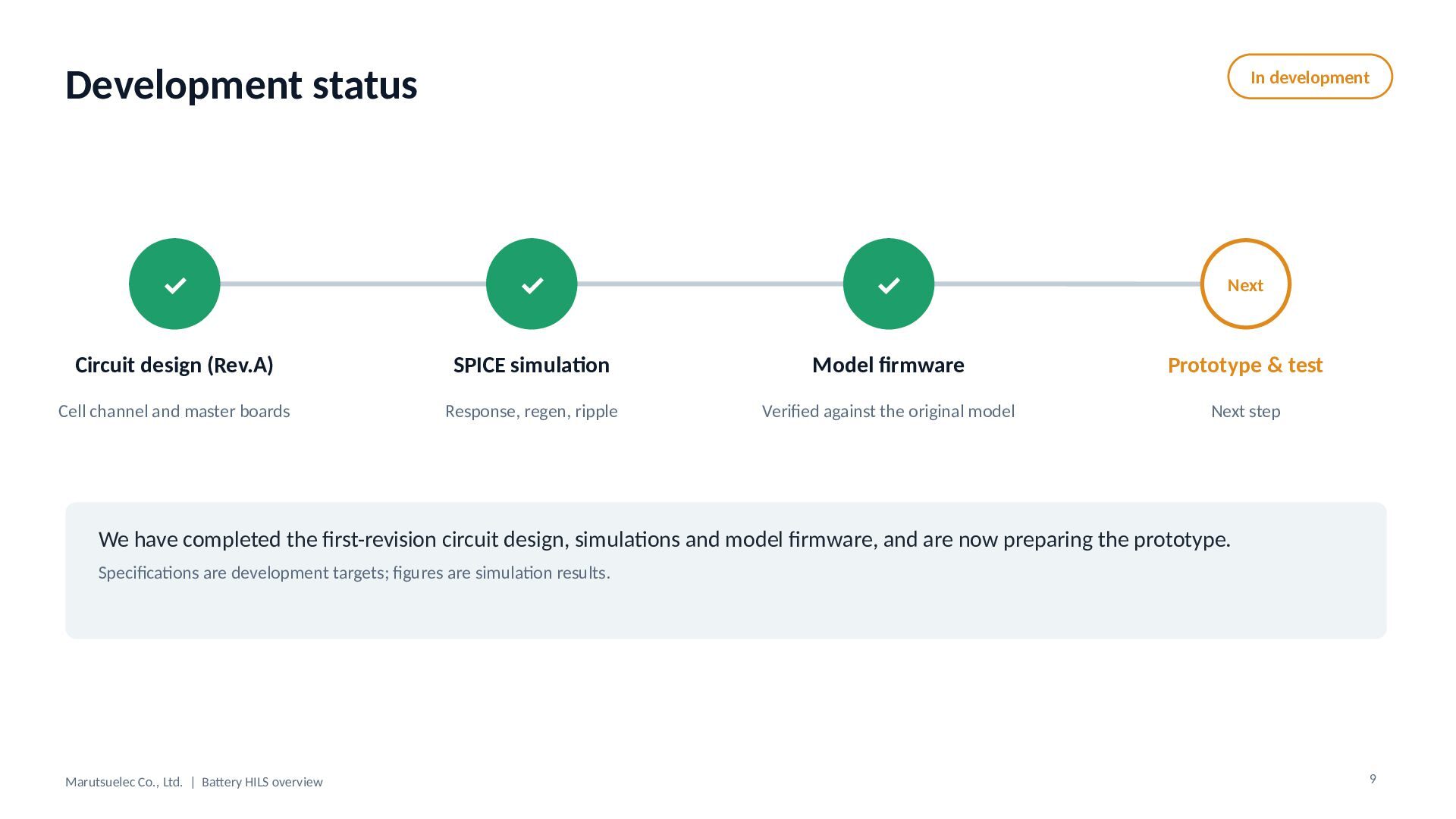
his presentation introduces the overview, technical characteristics, and development status of the Lithium-ion Battery HILS (cell emulator) currently under development by Marutsuelec Co., Ltd. Testing with real batteries during BMS (Battery Management System) or charger development presents several challenges: charge and discharge cycles take hours, reproducing consistent states (SOC, temperature, and aging) is difficult, and edge-case tests such as over-discharge and overcharge pose safety risks. This instrument computes a battery SPICE model in real time on an MCU and outputs the resulting voltage, making it appear to the connected device just like a real battery. Key Features and ApplicationsHigh Model Accuracy and Fast Transient Response: Matches the original SPICE model (ngspice) within a voltage difference of $\le 1.2\text{ mV}$ and a discharge-time difference of $\le 0.2\%$. With a control loop running at 200,000 times per second, it settles to within $\pm 5\text{ mV}$ of the model voltage in approximately $150\ \mu\text{s}$ during a $0 \to 5\text{ A}$ load step, while also absorbing charging current via an internal brake resistor (regen clamp). Four Cell-Isolated Channels: Provides four isolated channels ($0\text{–}5\text{ V} / \pm 5\text{ A}$) that can be stacked in series up to a 4S pack (up to $\sim 17\text{ V}$) without interference, while allowing individual capacity and initial SOC settings to reproduce cell-to-cell variation. Faster and Safer Evaluation: Supports BMS SOC estimation checks, over-discharge and over-current protection tests, and charger evaluation. A time-acceleration mode (TSCALE 1–3600) allows hours-long discharge tests to be verified in a fraction of the time. Circuit design (Rev.A for cell channel and master boards), SPICE simulations, and model firmware verification against the original model have been completed, with prototype preparation and testing next.

 beetech
 hatahata021
 oidfj
 kubell_hr
 butadora
 nejumi
 comi190327
 atalie2m
 ginjihayashi
 ama_ch
 bengo4com
 vivion
 masspeaks
 trishagee
 jonyablonski
 portentint
 nonsquared
 ryanjones
 morganepeng
 lindahogenes
 keathley
 stuffmc
 denniskardys
 reverentgeek
 jeffersonlam