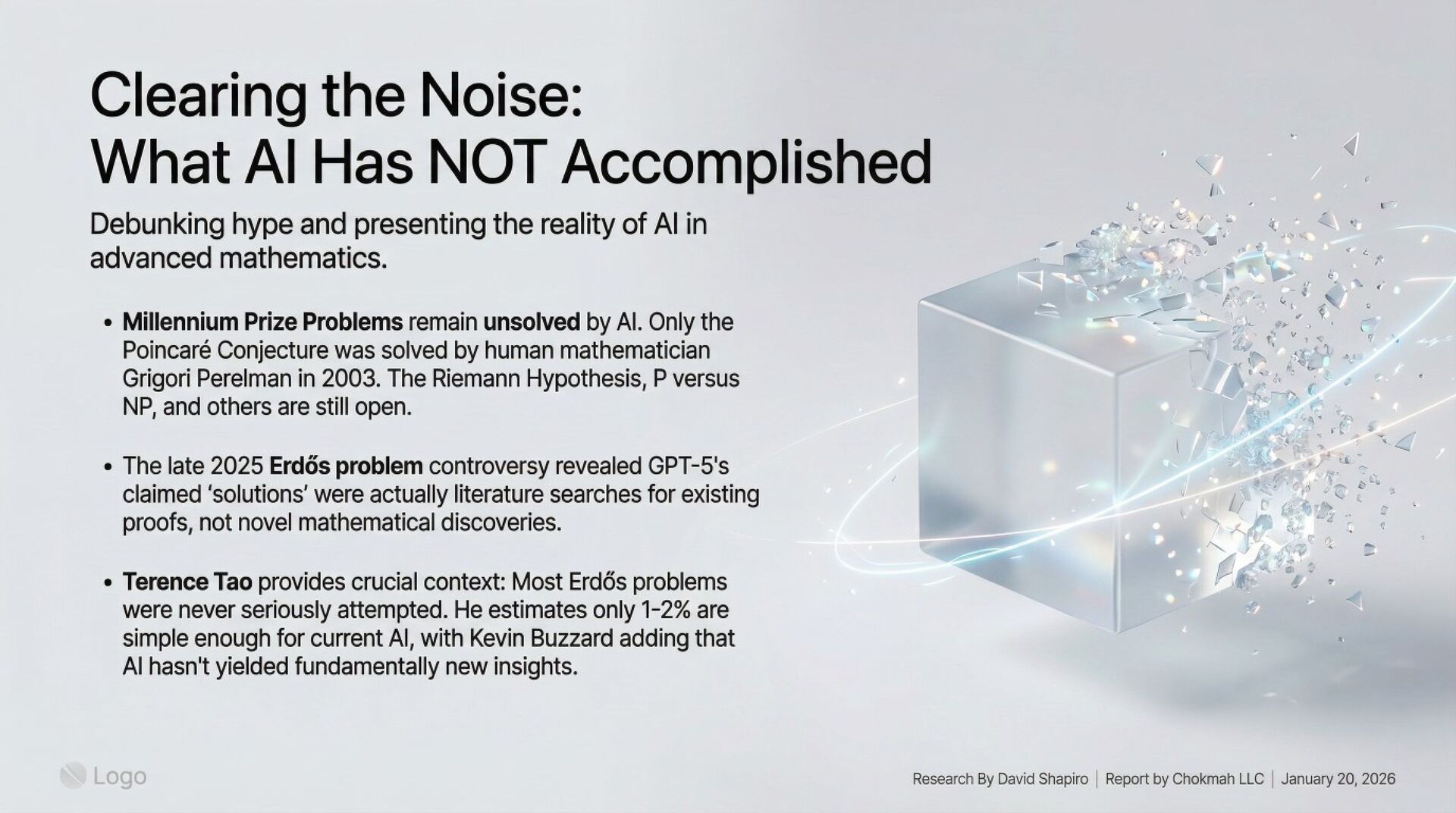
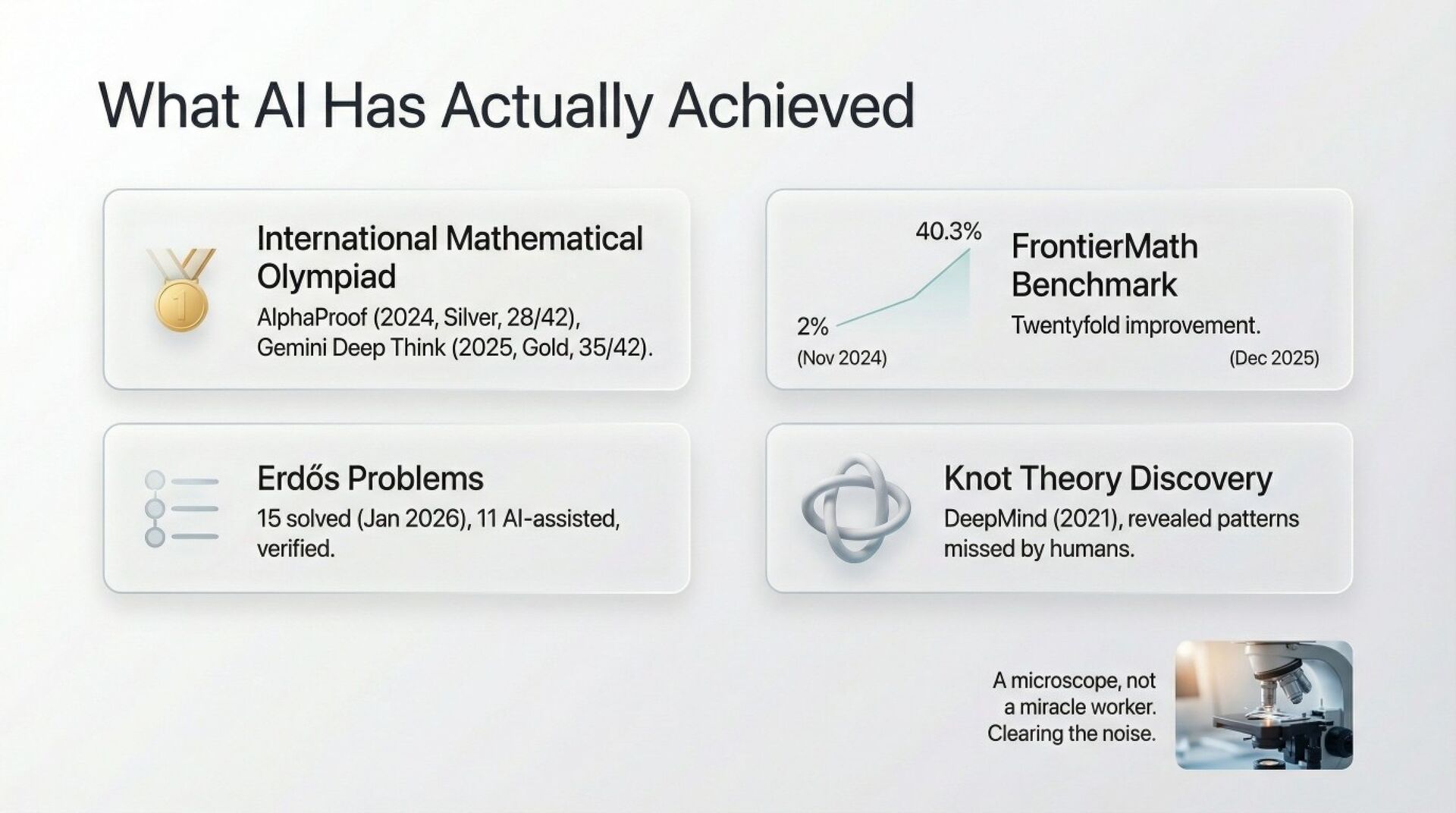
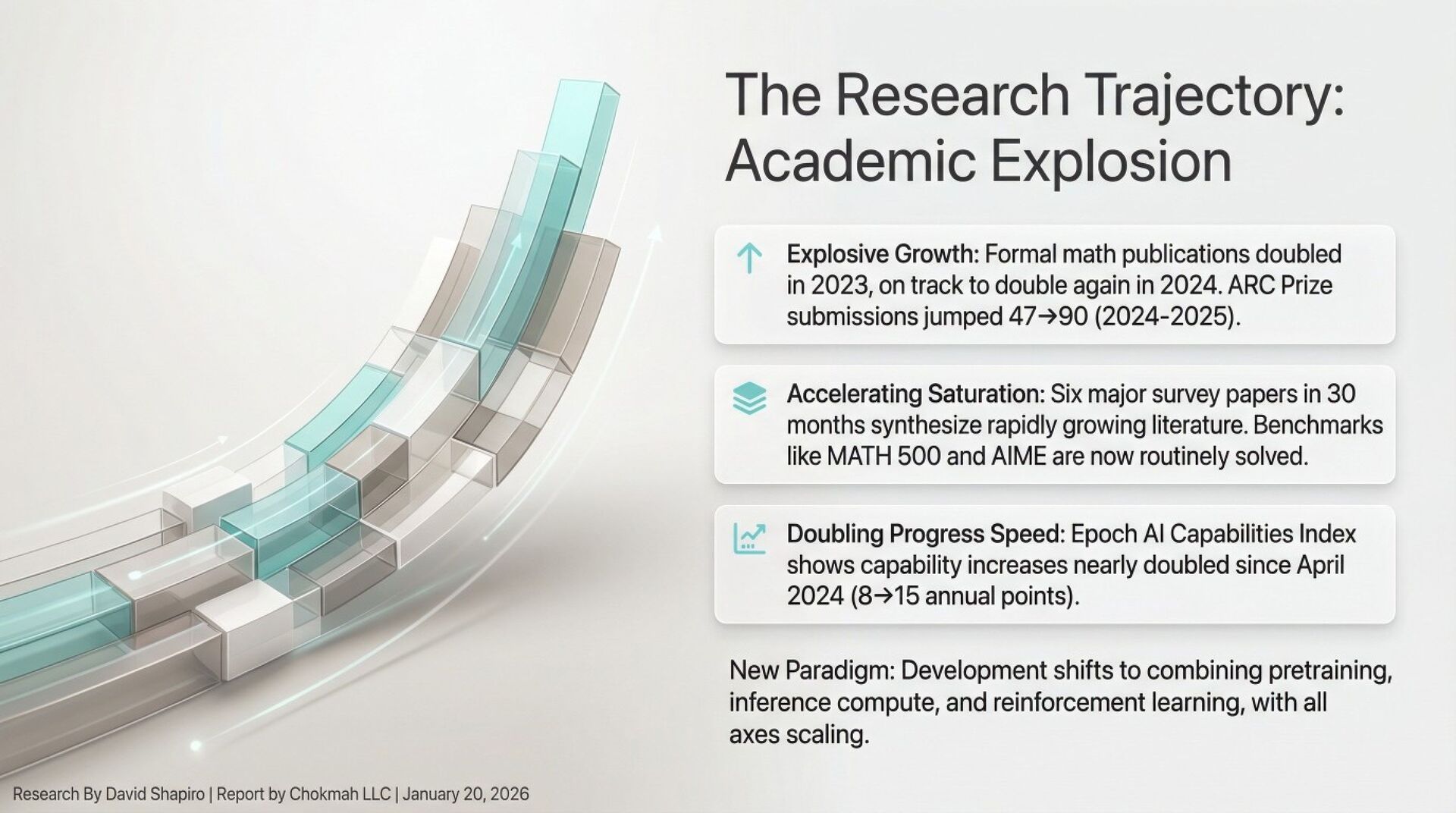
AI mathematical capability has crossed a genuine threshold, but not the one headlines suggest. The achievement is not solving famous unsolved problems—it's commoditizing competent applied mathematical reasoning.
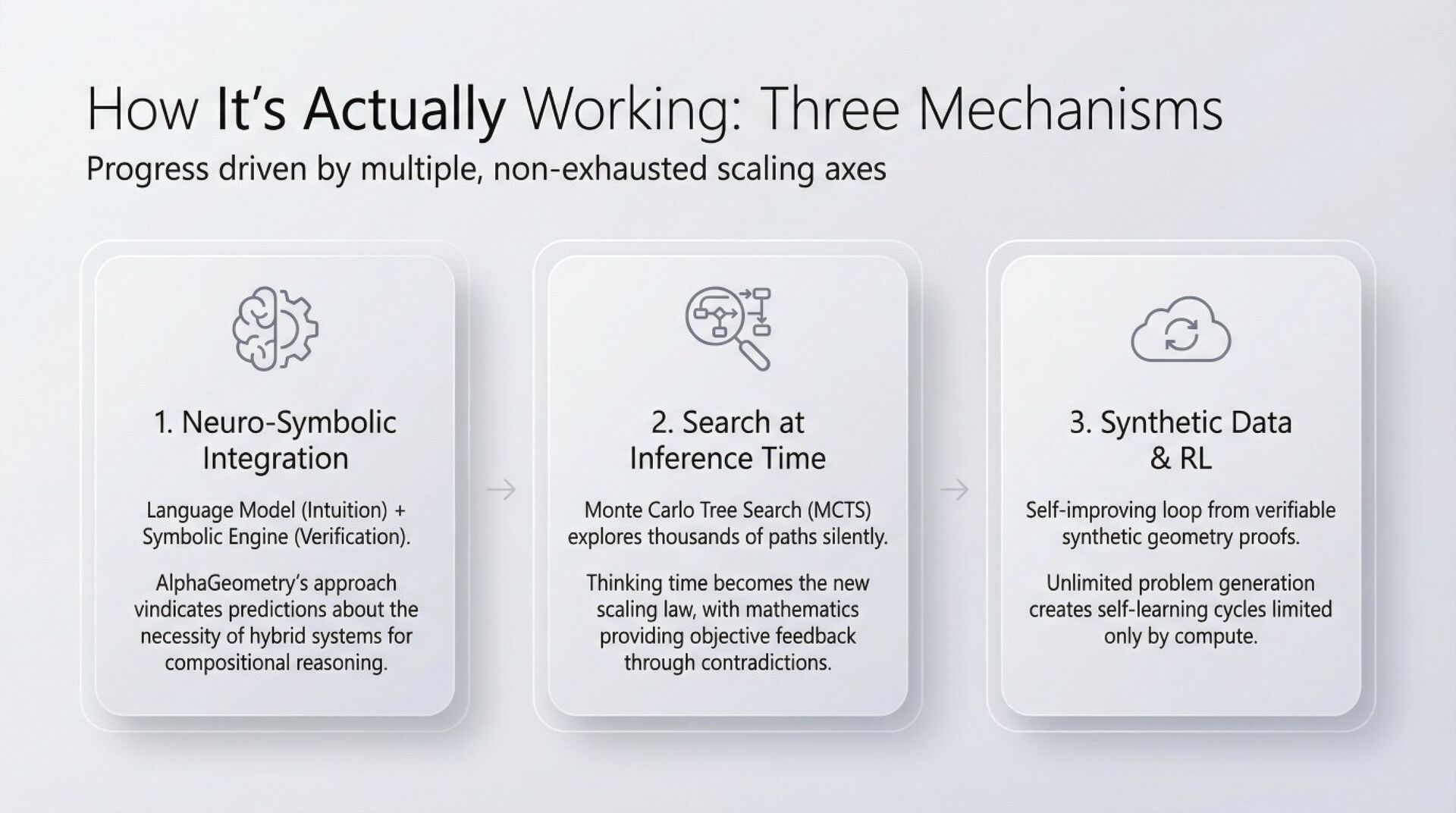
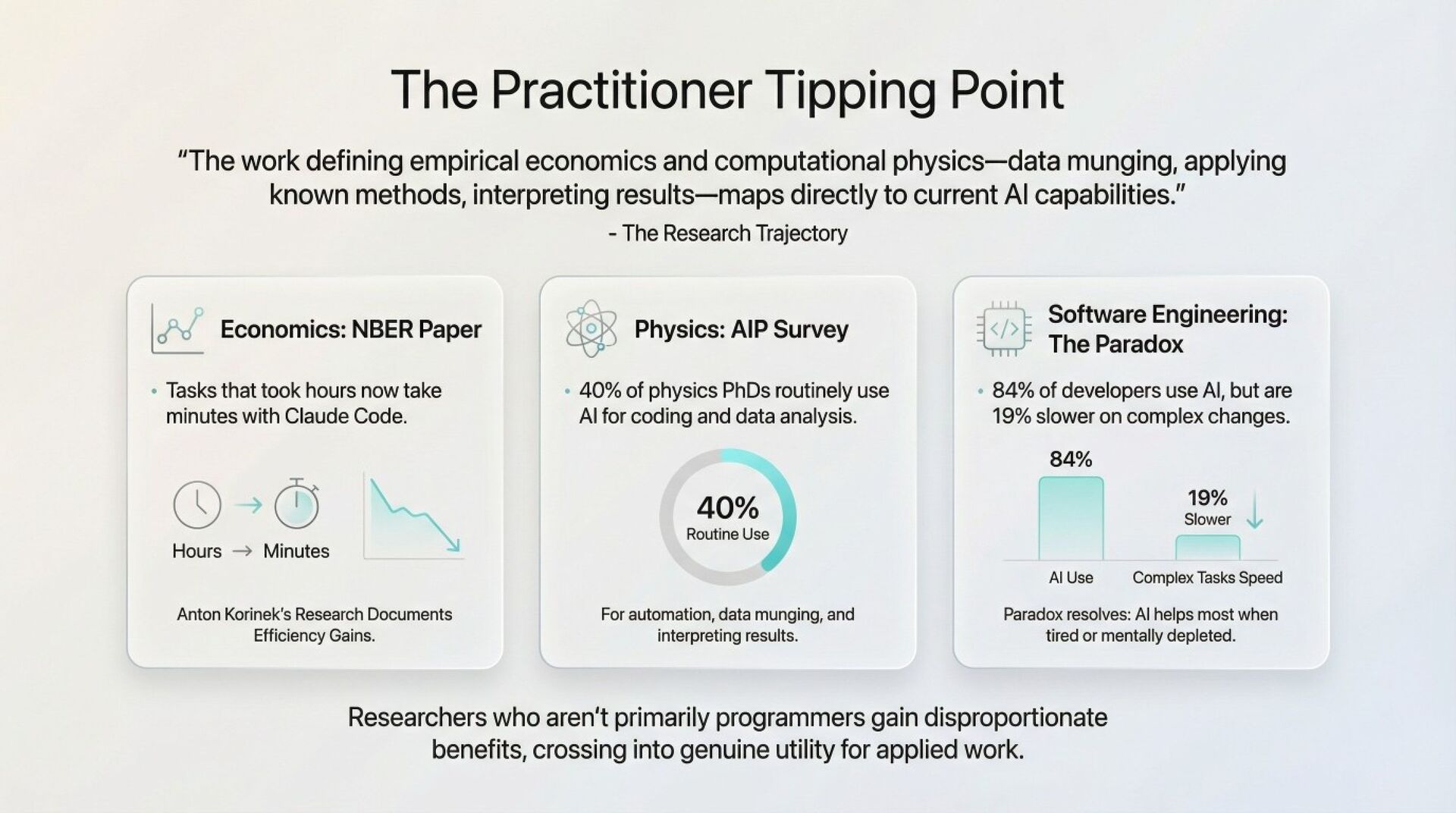
Three mechanisms drive continued progress: neuro-symbolic integration, inference-time search, and reinforcement learning from verifiable rewards. None show signs of exhaustion. Practitioner adoption, not benchmark scores, reveals the tipping point.
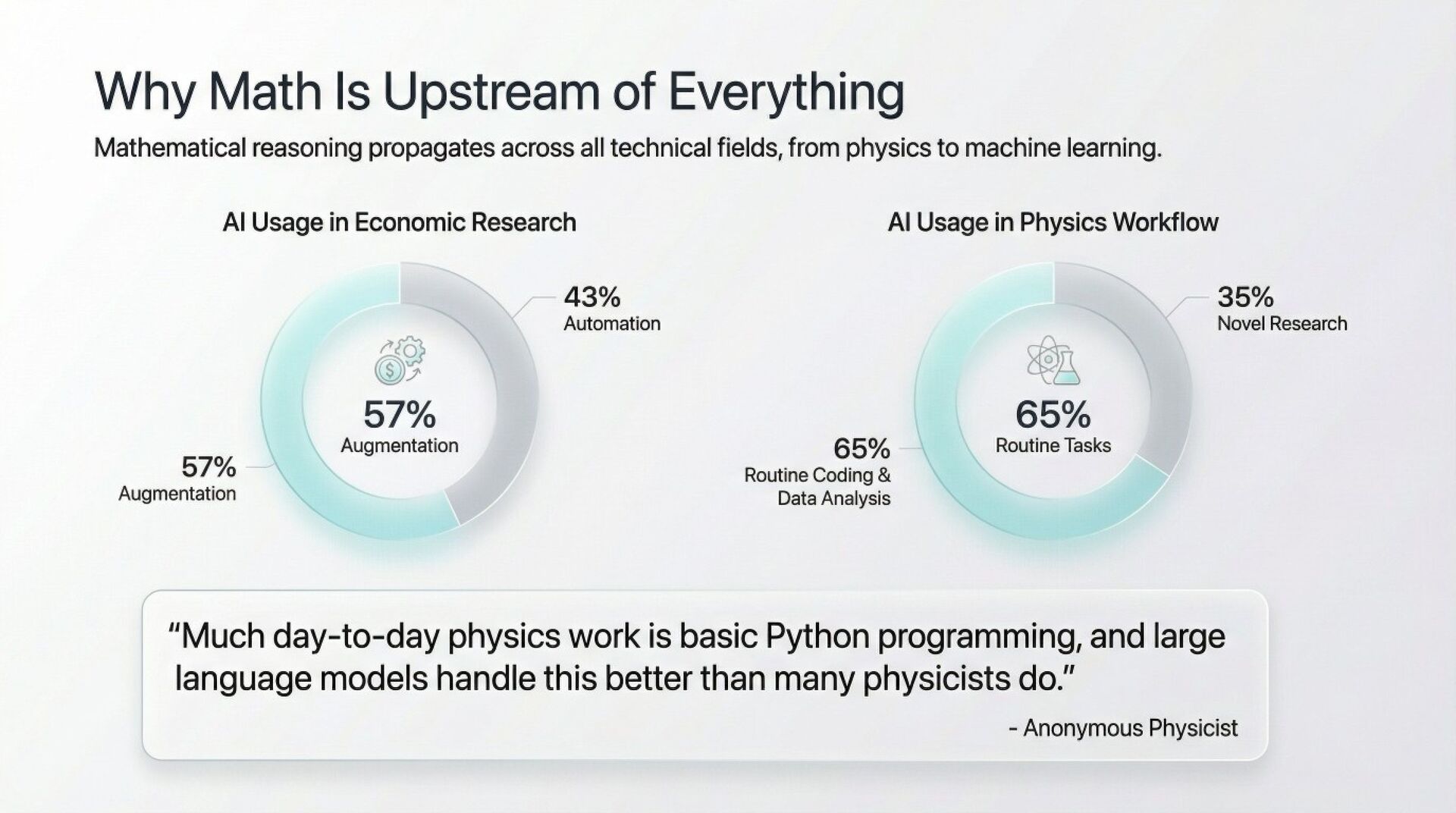
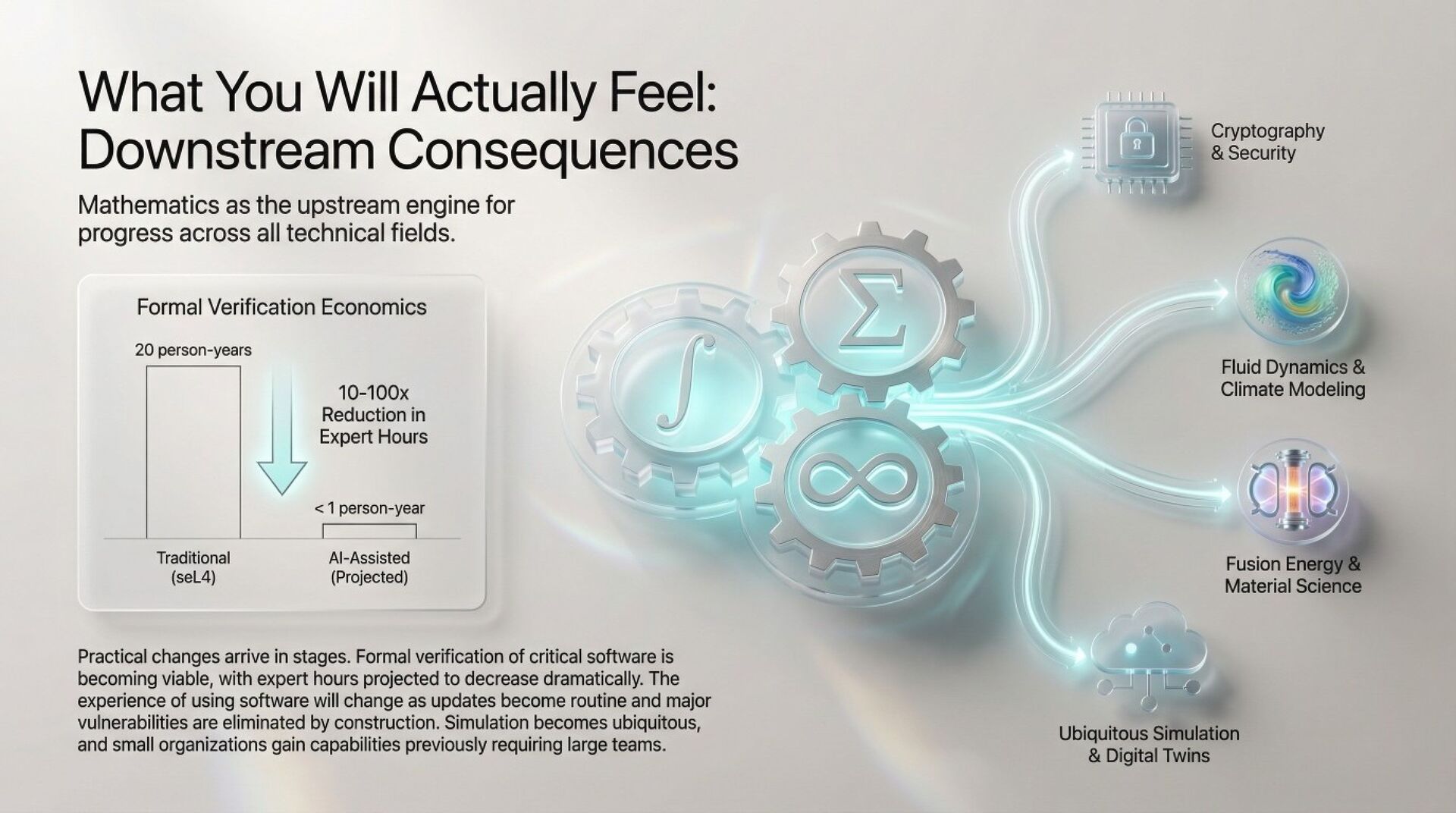
Researchers who aren't primarily programmers gain disproportionate benefits. The downstream effects propagate through every field running on mathematical foundations. Formal verification becomes economical. Simulation becomes ubiquitous. Technical capability democratizes.
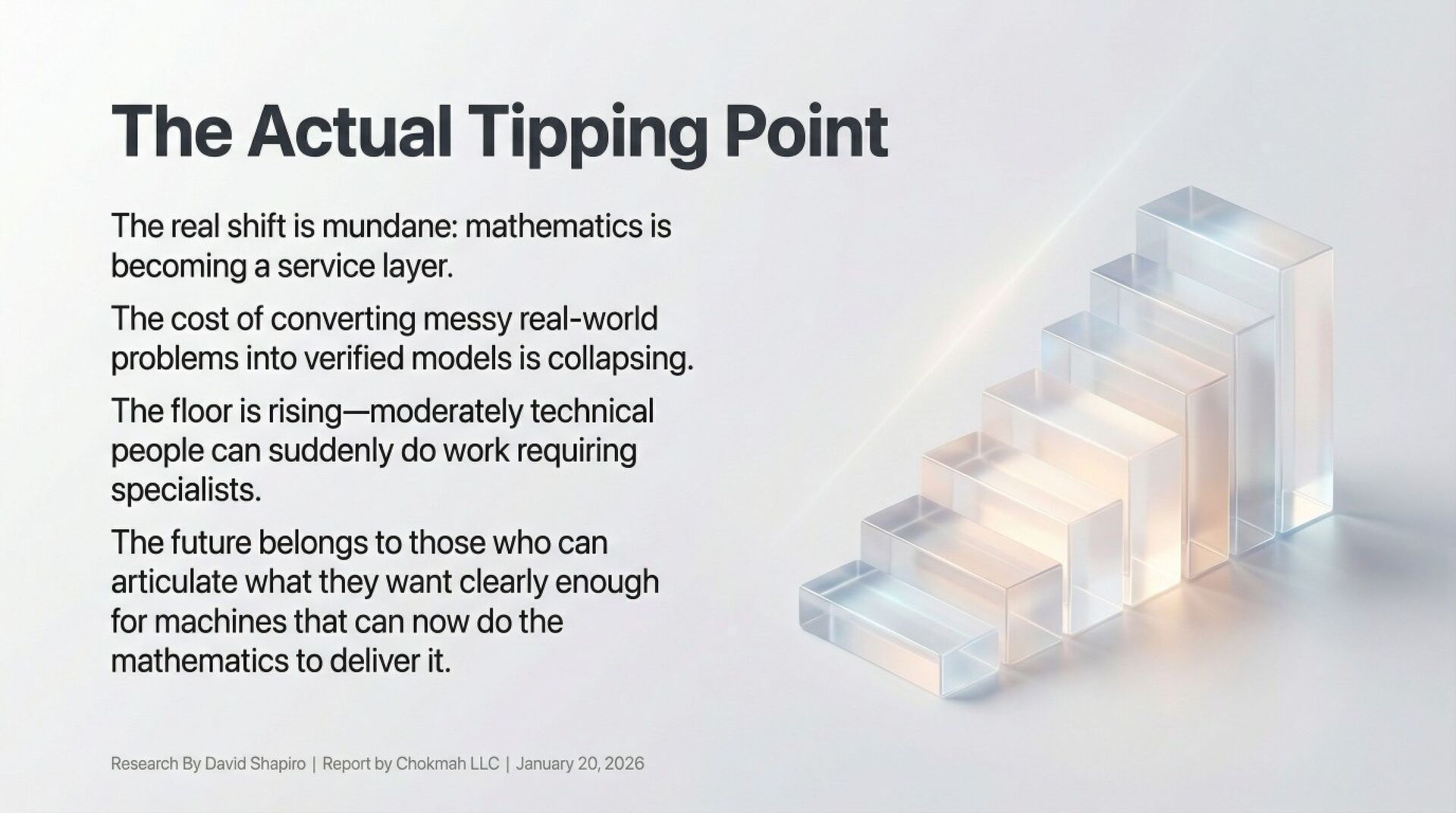
The constraint shifts from computation to experimentation, from reasoning to measurement. The future belongs to those who can articulate what they want clearly enough for machines that can now do the mathematics to deliver it.


 chokmahllc
 naospon
 trycycle
 kanaya
 olachinkei
 brainpadpr
 sshimizu2006
%20square.jpg) baggiponte
baggiponte
 voginip
 taka88
 nozakijcom
 jmmastey
 eileencodes
 mfonobong
 productmarketing
 holman
 elsirapls
 lara
lara
 chriscoyier
 skoyamalab
 lauravandoore
 aleyda
 retrage