Upgrade to Pro — share decks privately, control downloads, hide ads and more …

An overview of word embeddings

Sponsored · Your Podcast. Everywhere. Effortlessly. Share. Educate. Inspire. Entertain. You do you. We'll handle the rest. →
Olivier Grisel
November 19, 2014

An overview of word embeddings

Olivier Grisel

November 19, 2014

Transcript

43 slides
  1. Outline • Neural Word Models • word2vec & GloVe •

    Computing word analogies with word vectors • Applications, implementations & pre-trained models • Extensions: RNNs for Machine Translation
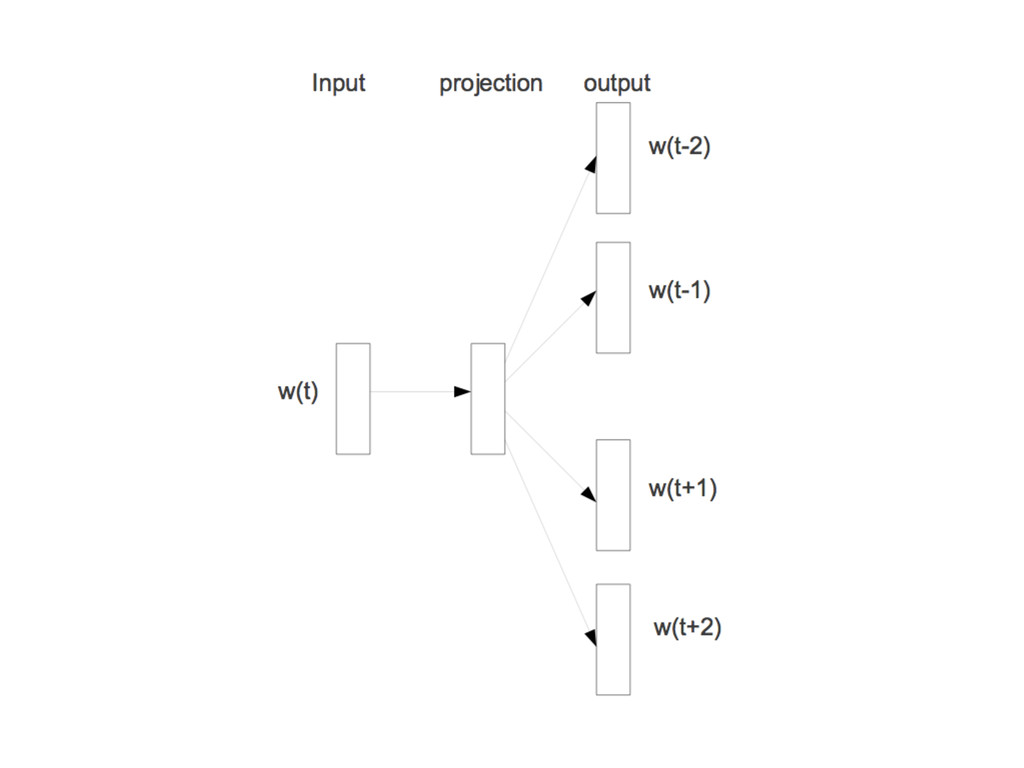
  2. Neural Language Models • Each word is represented by a

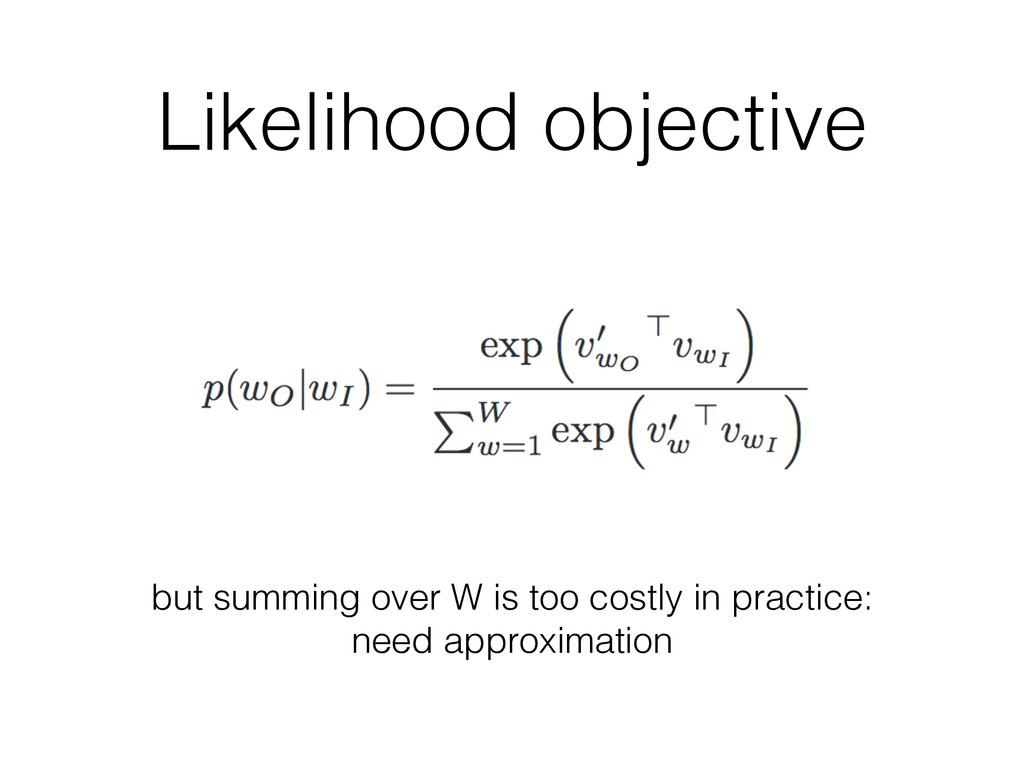
    fixed dimensional vector • Goal is to predict target word given ~5-10 words context from a random sentence in Wikipedia • Use NN-style training to optimize the vector coefficients typically with log-likelihood objective (bi-linear, deep or recurrent architectures)
  3. Trend in 2013 / 2014 • Simple linear models (word2vec)

    benefit from larger training data (1B+ words) and dimensions (typically 50-300) • Some models (GloVe) closer to matrix factorization than neural networks • Can successfully uncover semantic and syntactic word relationships from unlabeled corpora (wikipedia, Google News, Common Crawl).
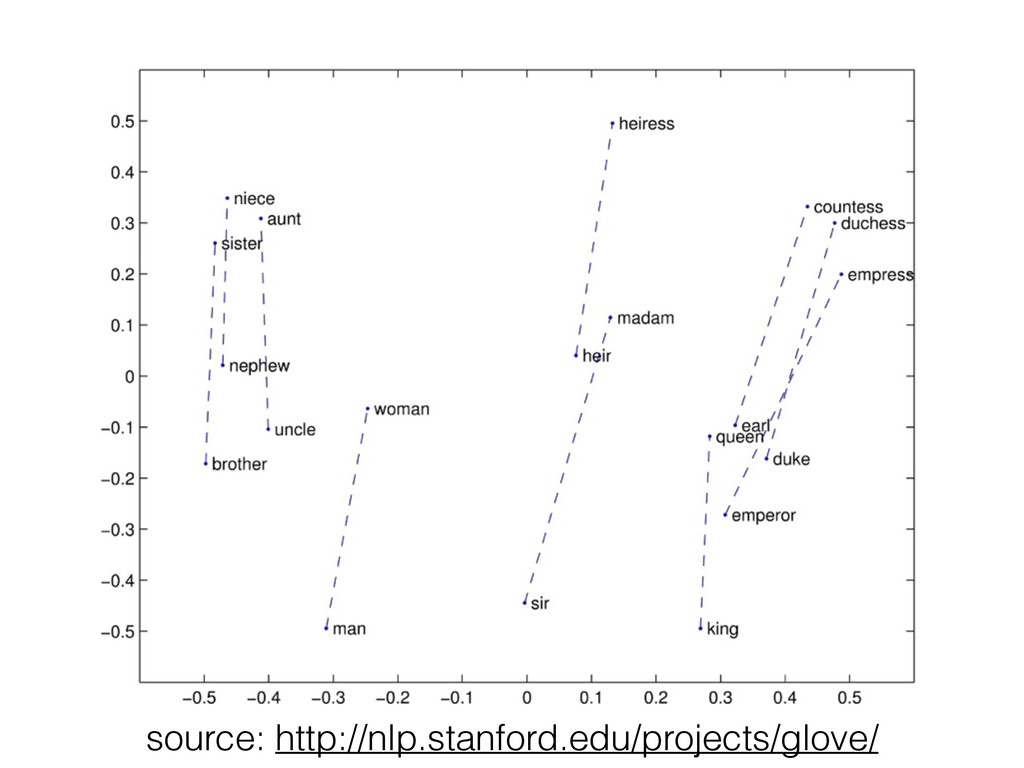
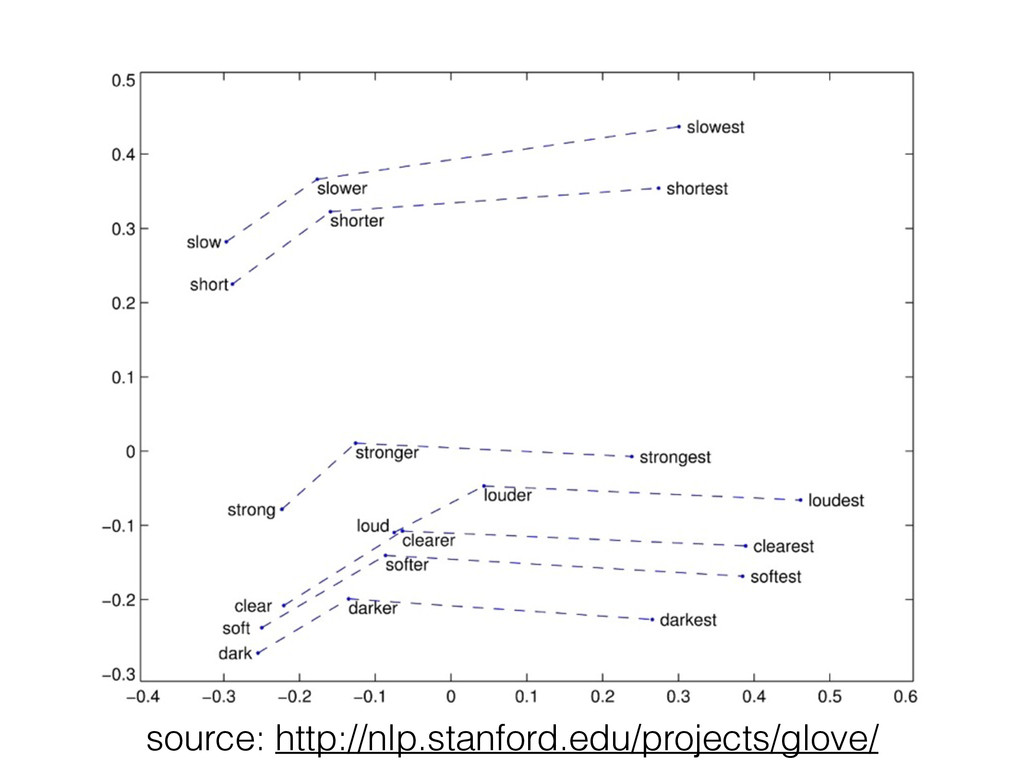
  4. Analogies • [king] - [male] + [female] ~= [queen] •

    [Berlin] - [Germany] + [France] ~= [Paris] • [eating] - [eat] + [fly] ~= [flying]
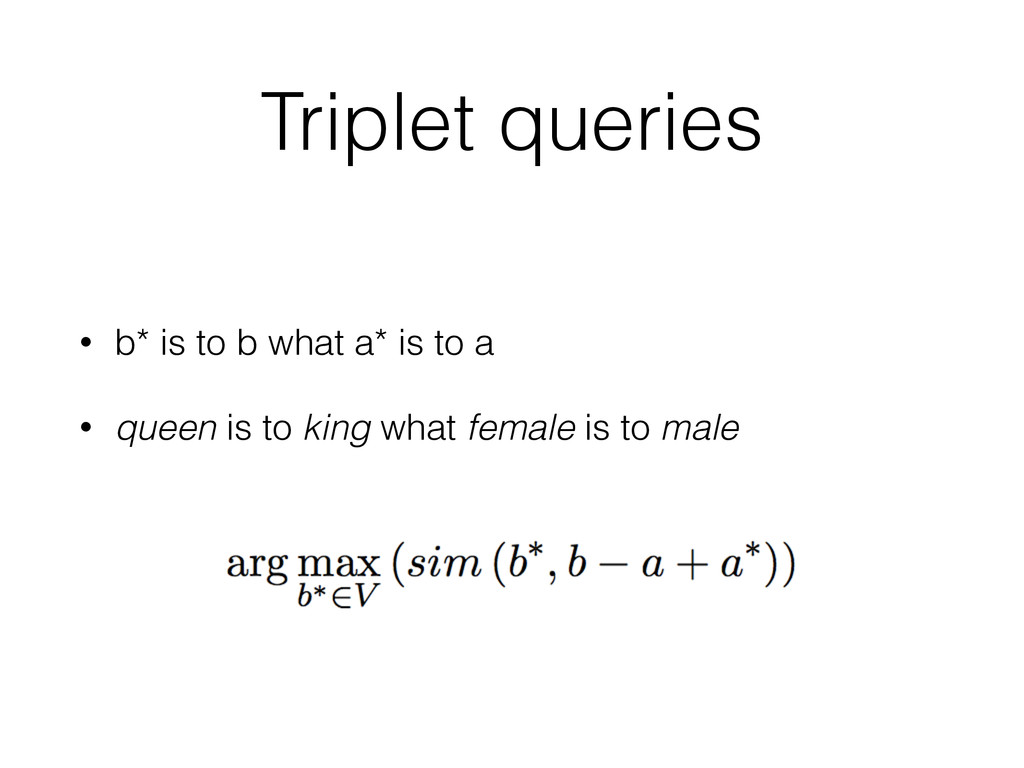
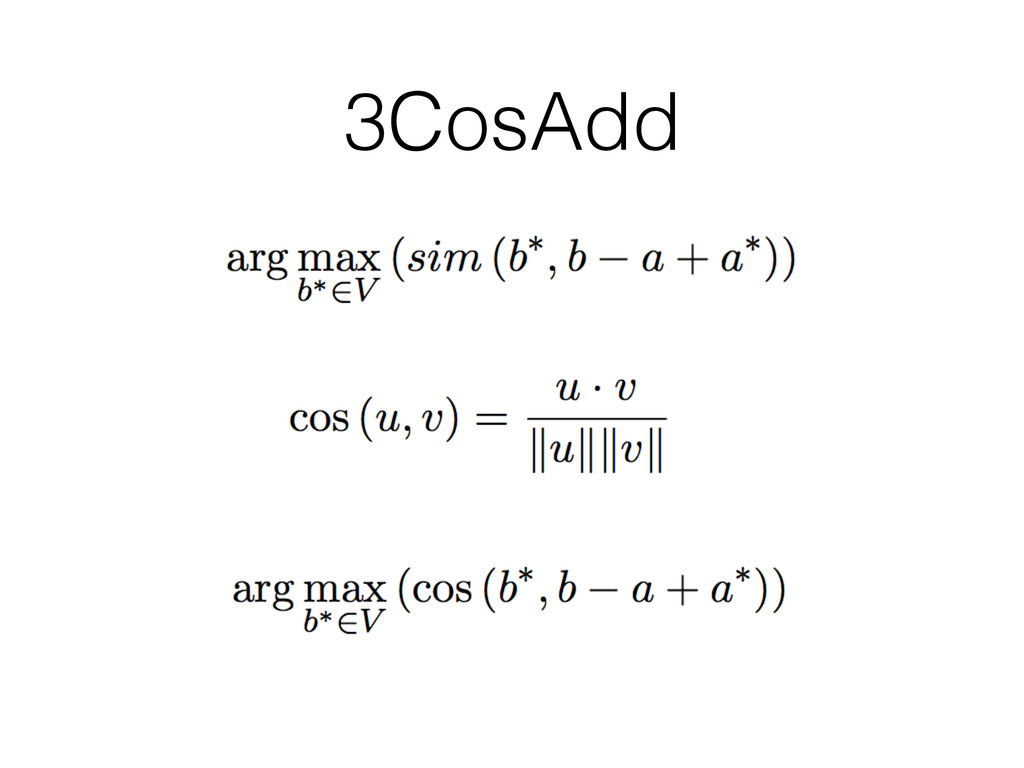
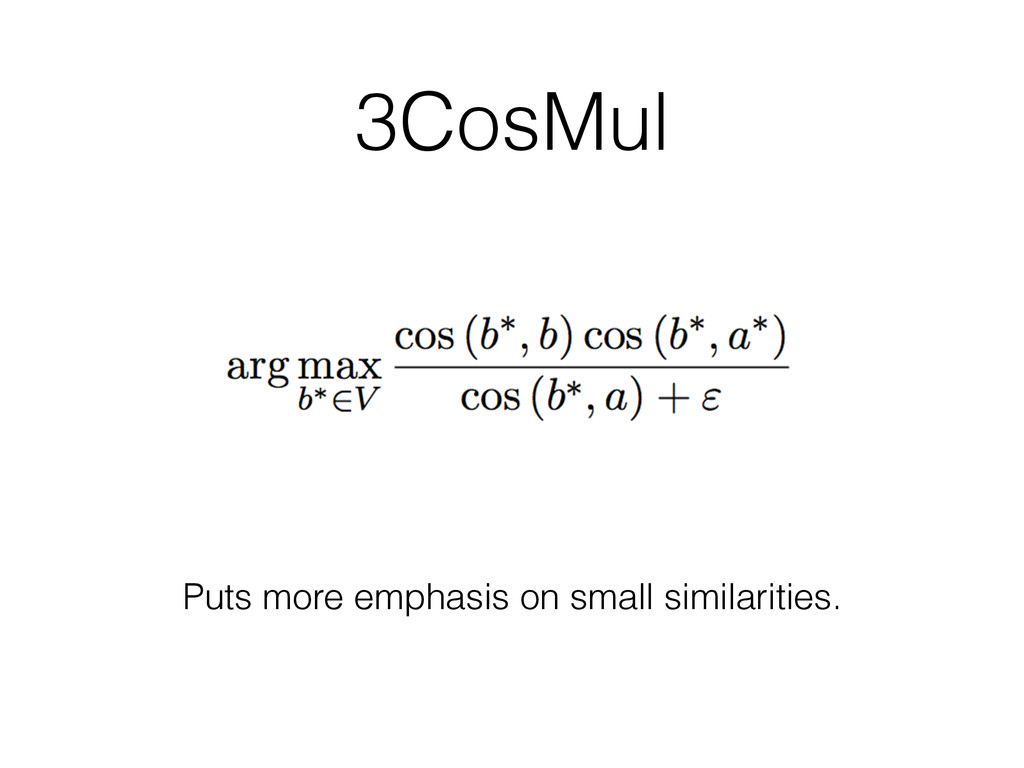
  5. Triplet queries • b* is to b what a* is

    to a • queen is to king what female is to male
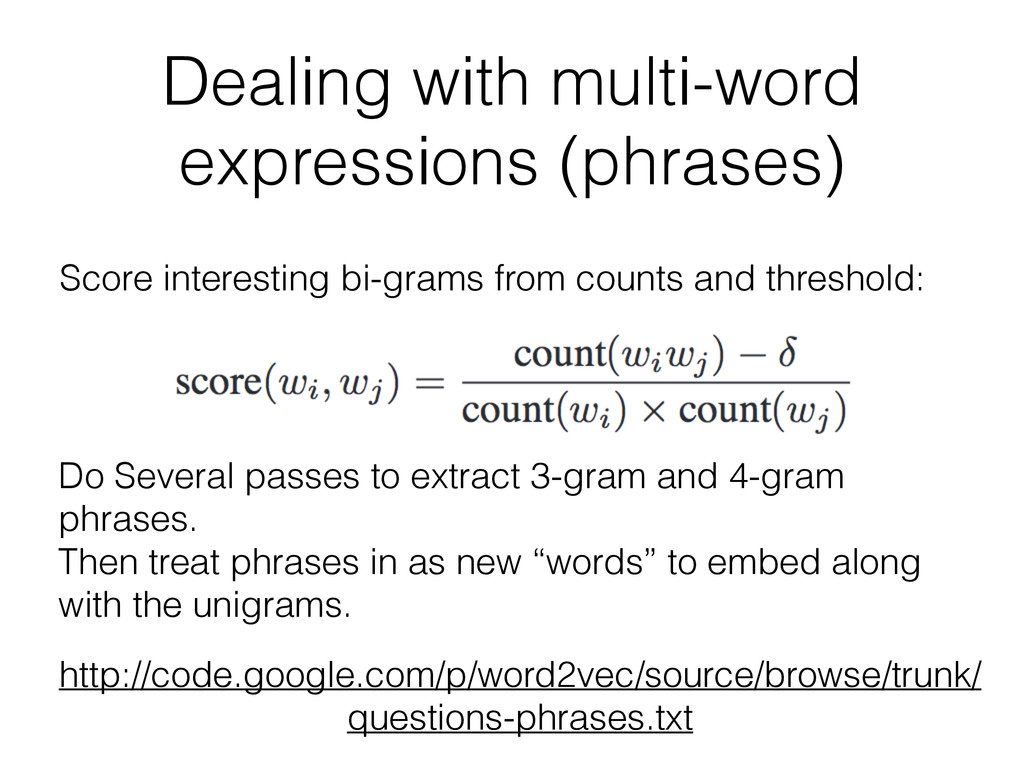
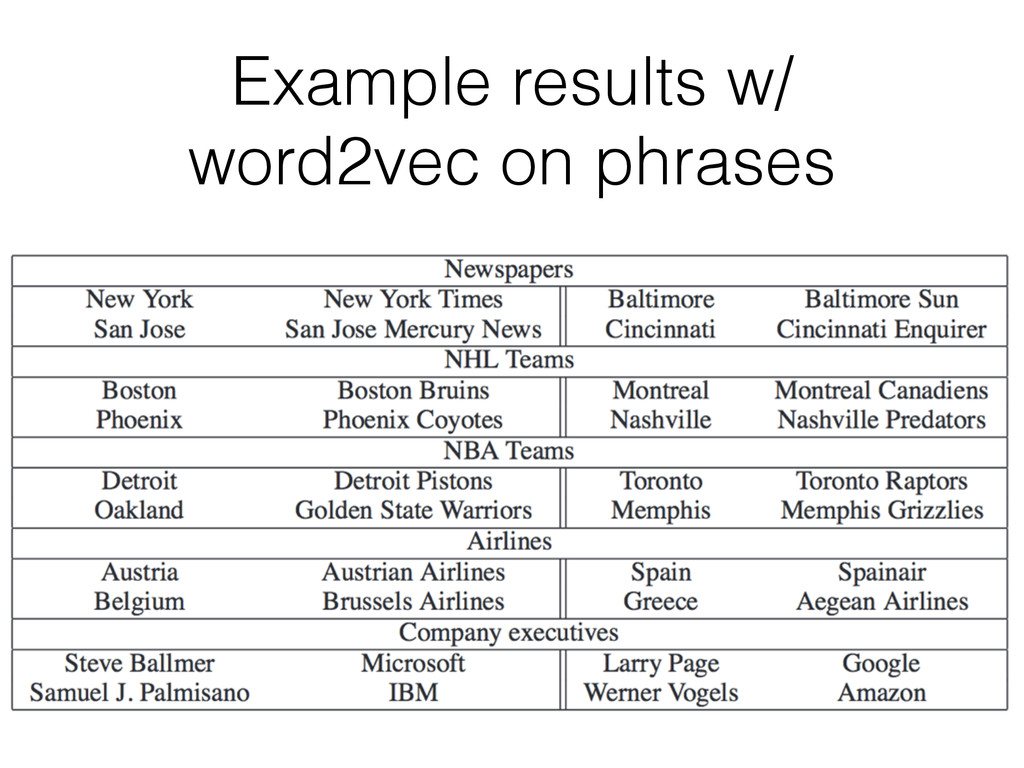
  6. Dealing with multi-word expressions (phrases) http://code.google.com/p/word2vec/source/browse/trunk/ questions-phrases.txt Do Several passes

    to extract 3-gram and 4-gram phrases. Then treat phrases in as new “words” to embed along with the unigrams. Score interesting bi-grams from counts and threshold:
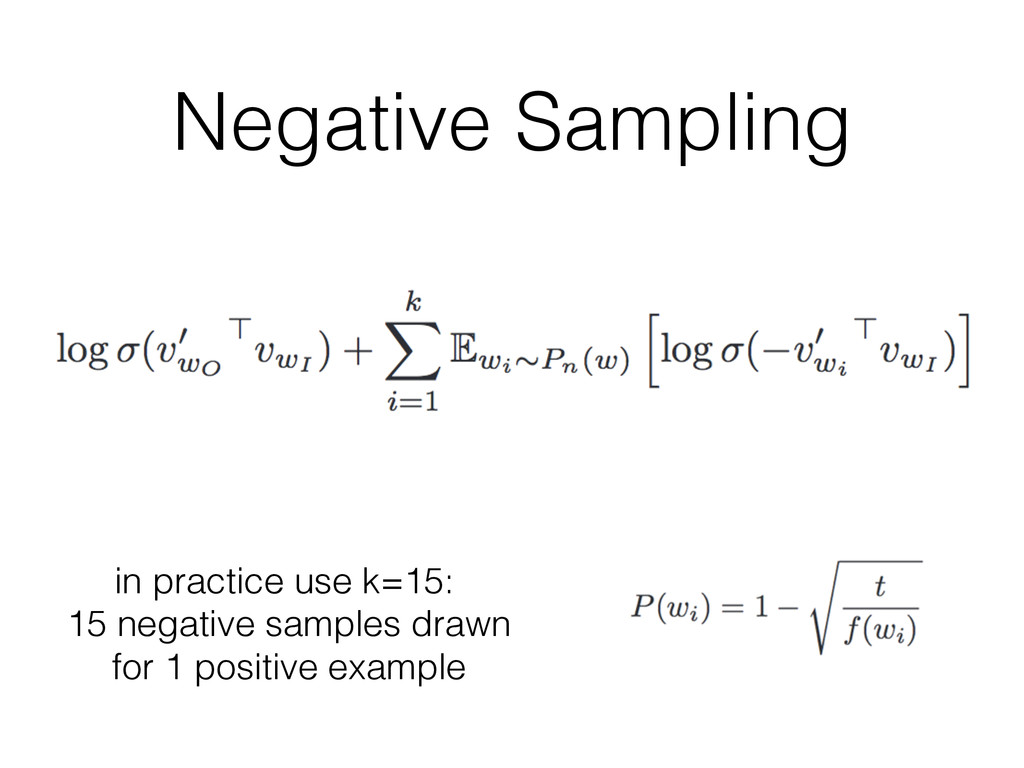
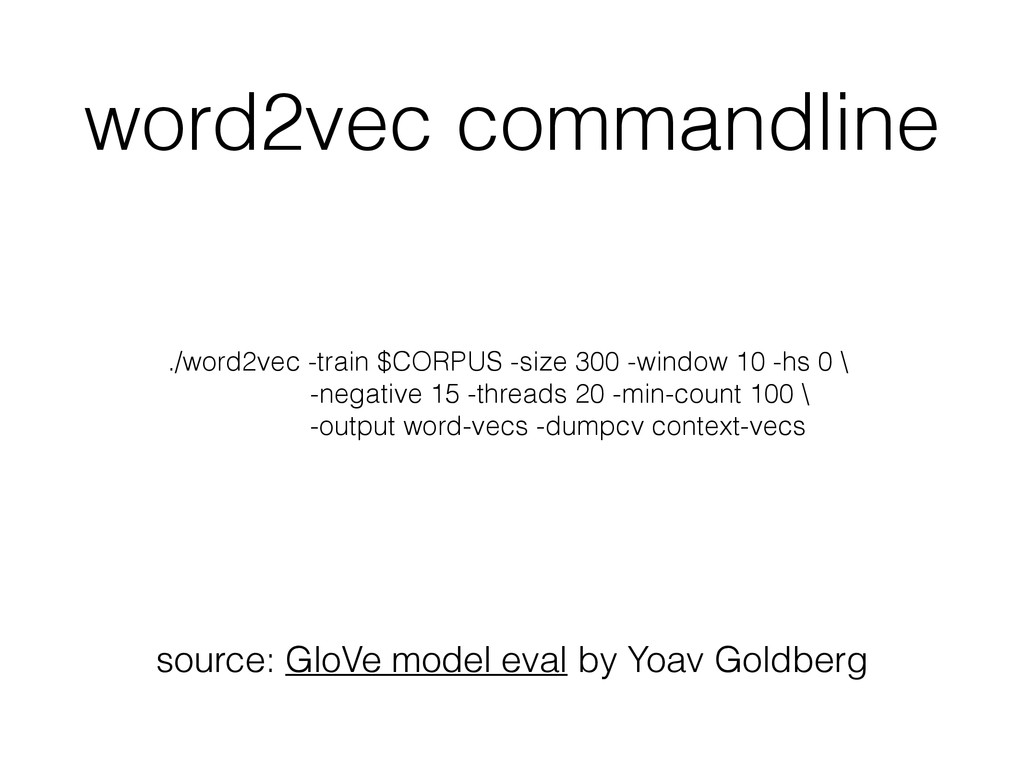
  7. word2vec commandline ./word2vec -train $CORPUS -size 300 -window 10 -hs

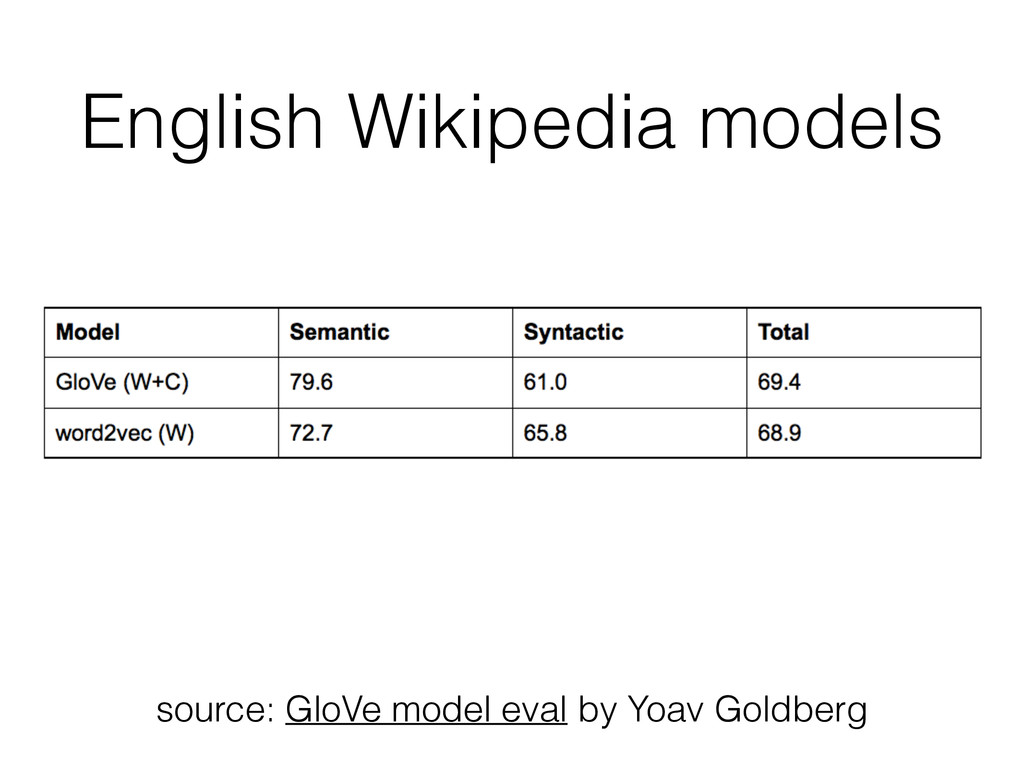
    0 \ -negative 15 -threads 20 -min-count 100 \ -output word-vecs -dumpcv context-vecs source: GloVe model eval by Yoav Goldberg
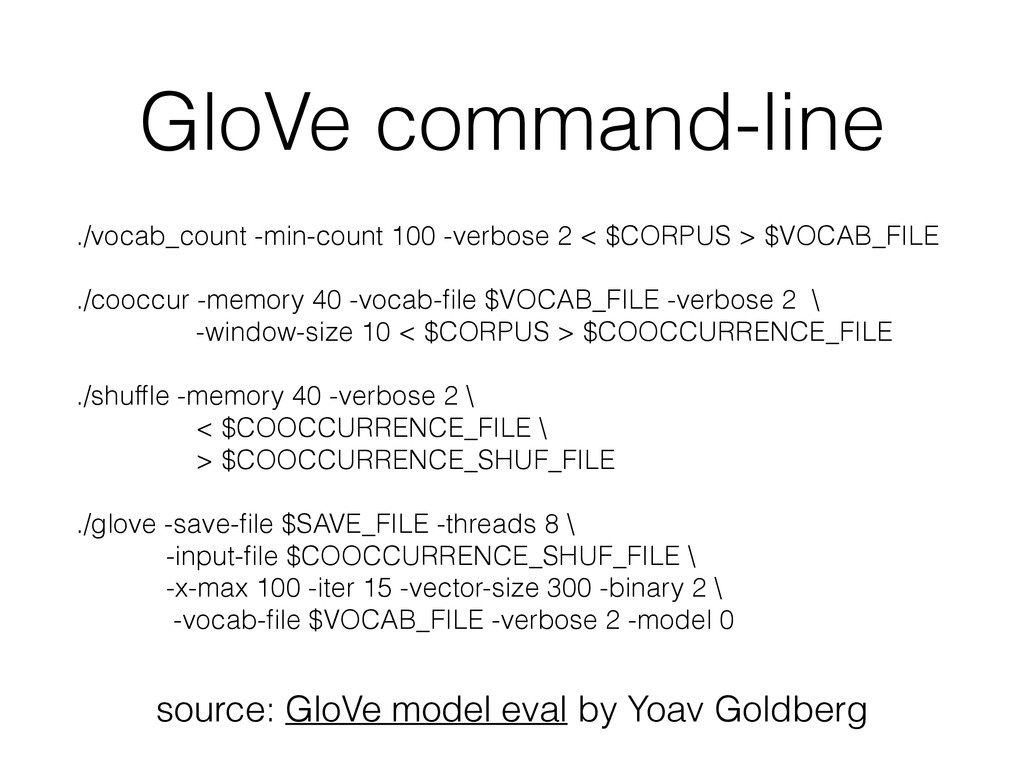
  8. GloVe command-line ./vocab_count -min-count 100 -verbose 2 < $CORPUS >

    $VOCAB_FILE ./cooccur -memory 40 -vocab-file $VOCAB_FILE -verbose 2 \ -window-size 10 < $CORPUS > $COOCCURRENCE_FILE ./shuffle -memory 40 -verbose 2 \ < $COOCCURRENCE_FILE \ > $COOCCURRENCE_SHUF_FILE ./glove -save-file $SAVE_FILE -threads 8 \ -input-file $COOCCURRENCE_SHUF_FILE \ -x-max 100 -iter 15 -vector-size 300 -binary 2 \ -vocab-file $VOCAB_FILE -verbose 2 -model 0 source: GloVe model eval by Yoav Goldberg
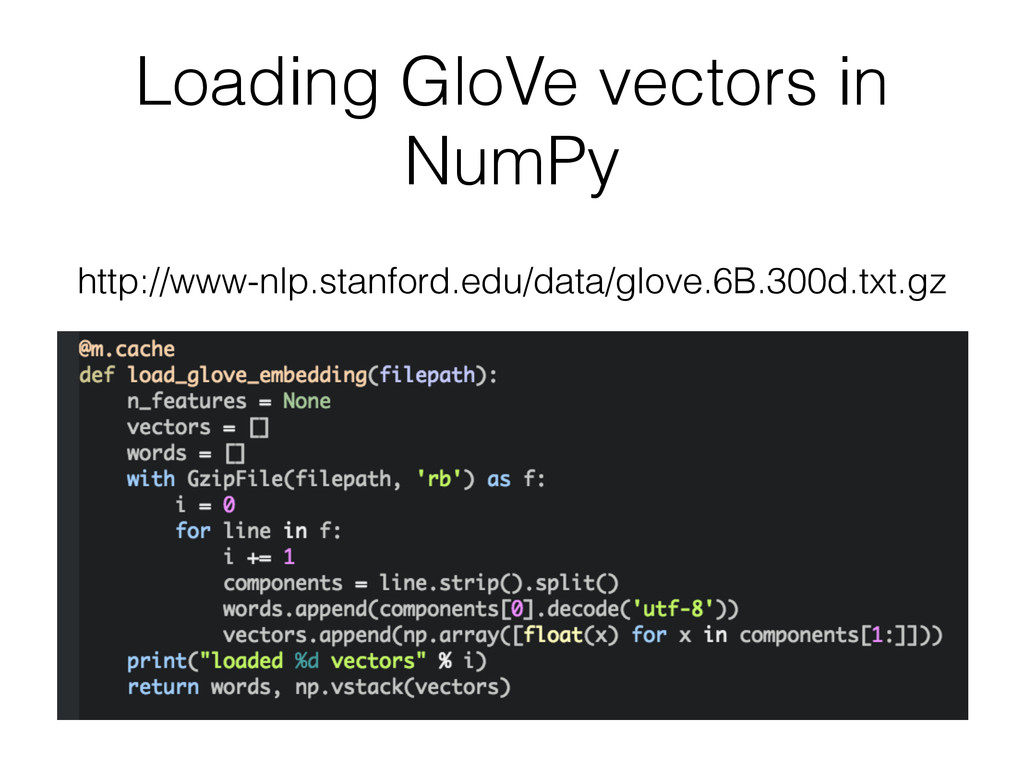
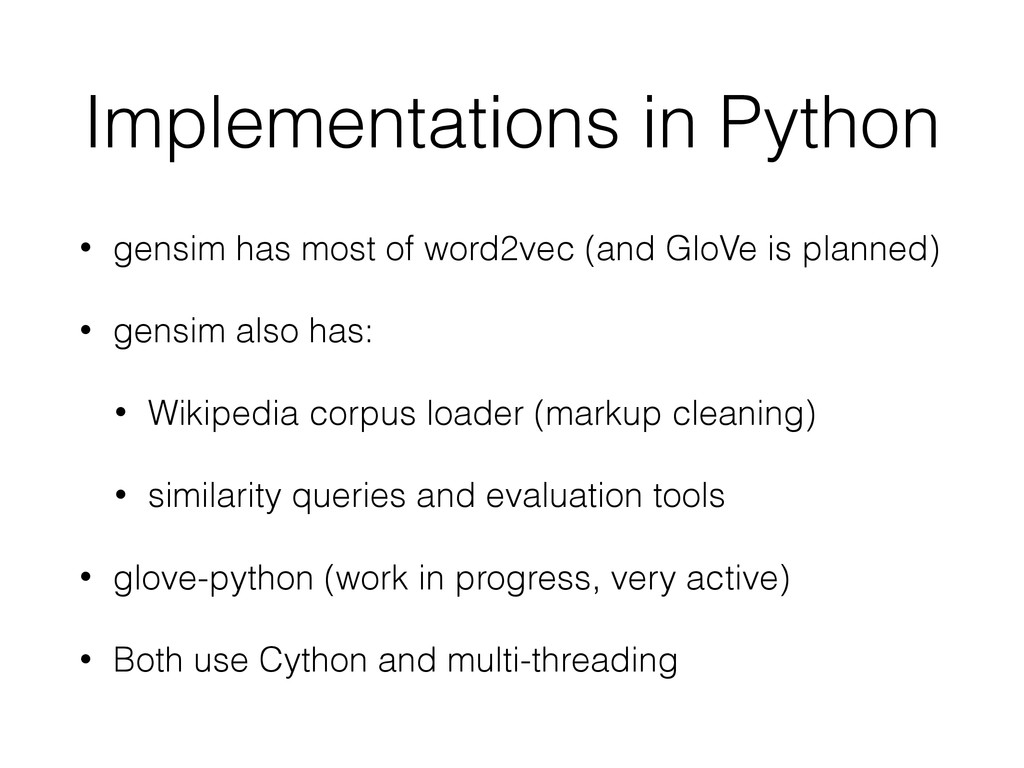
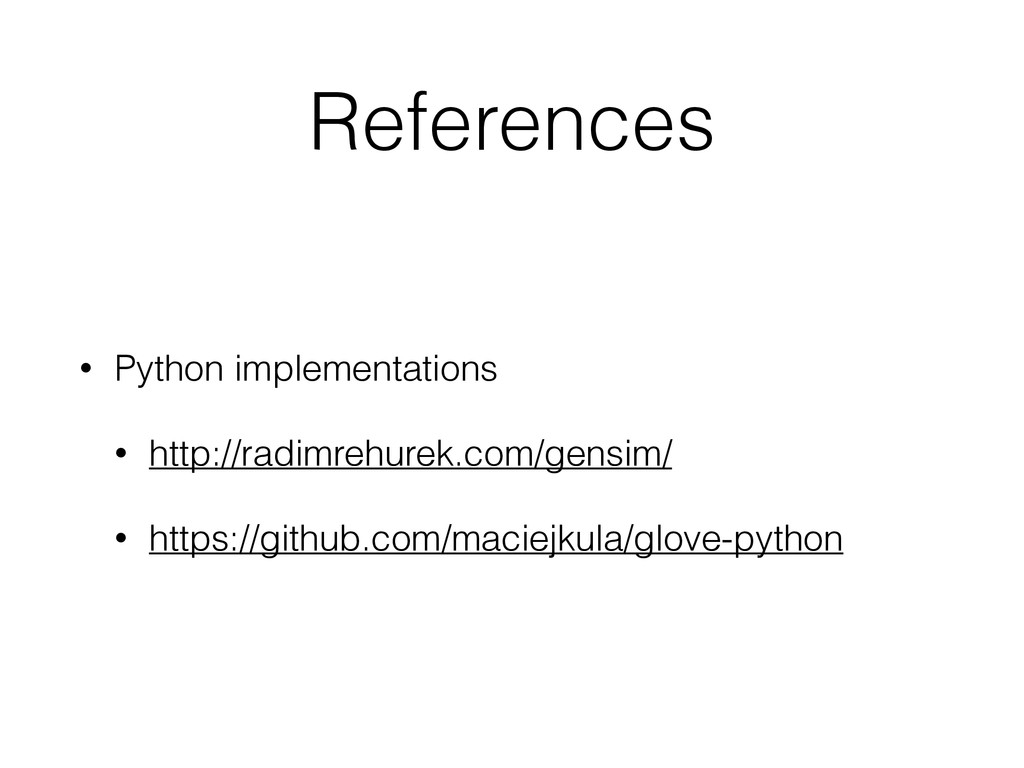
  9. Implementations in Python • gensim has most of word2vec (and

    GloVe is planned) • gensim also has: • Wikipedia corpus loader (markup cleaning) • similarity queries and evaluation tools • glove-python (work in progress, very active) • Both use Cython and multi-threading
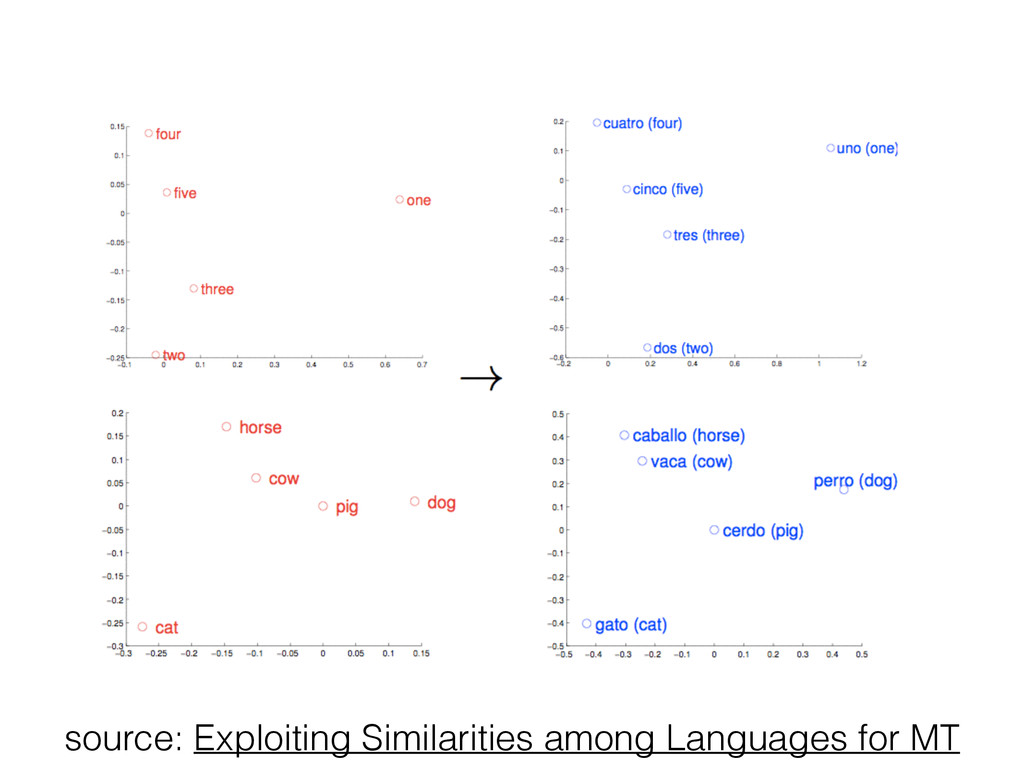
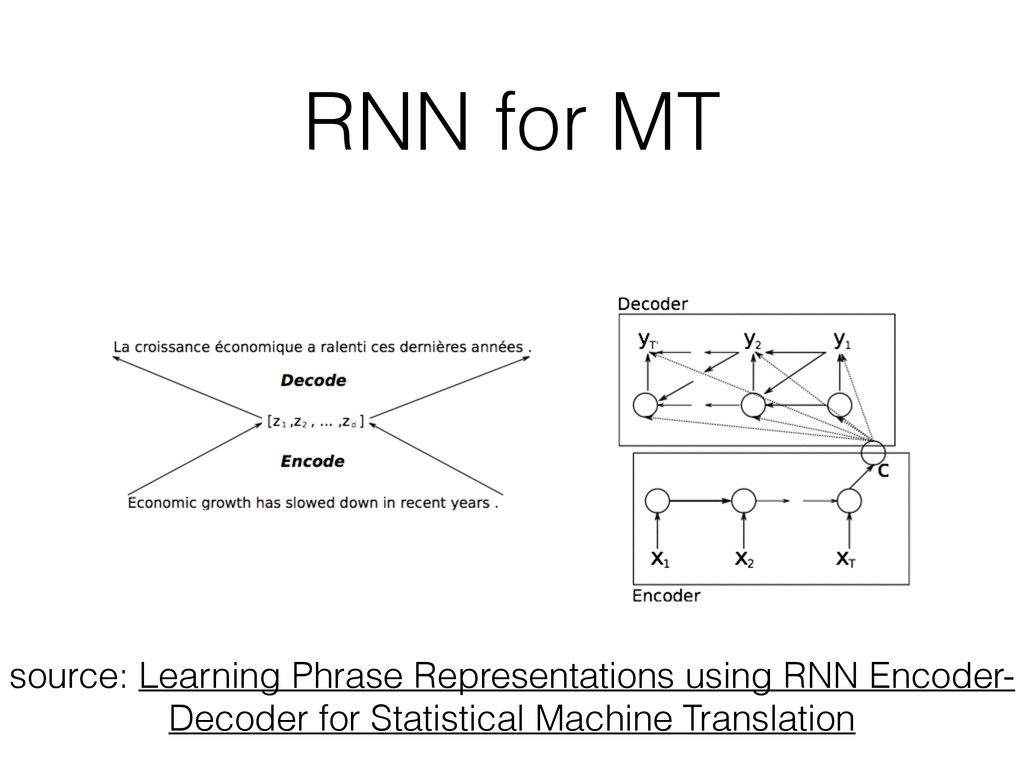
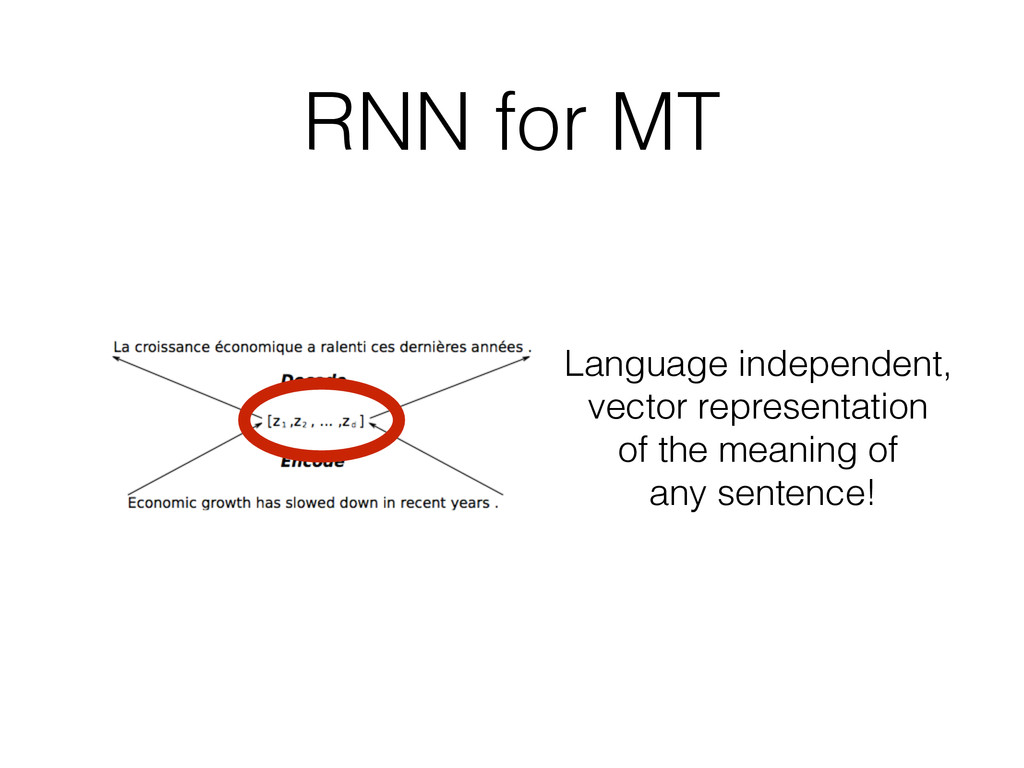
  10. RNN for MT source: Learning Phrase Representations using RNN Encoder-

    Decoder for Statistical Machine Translation
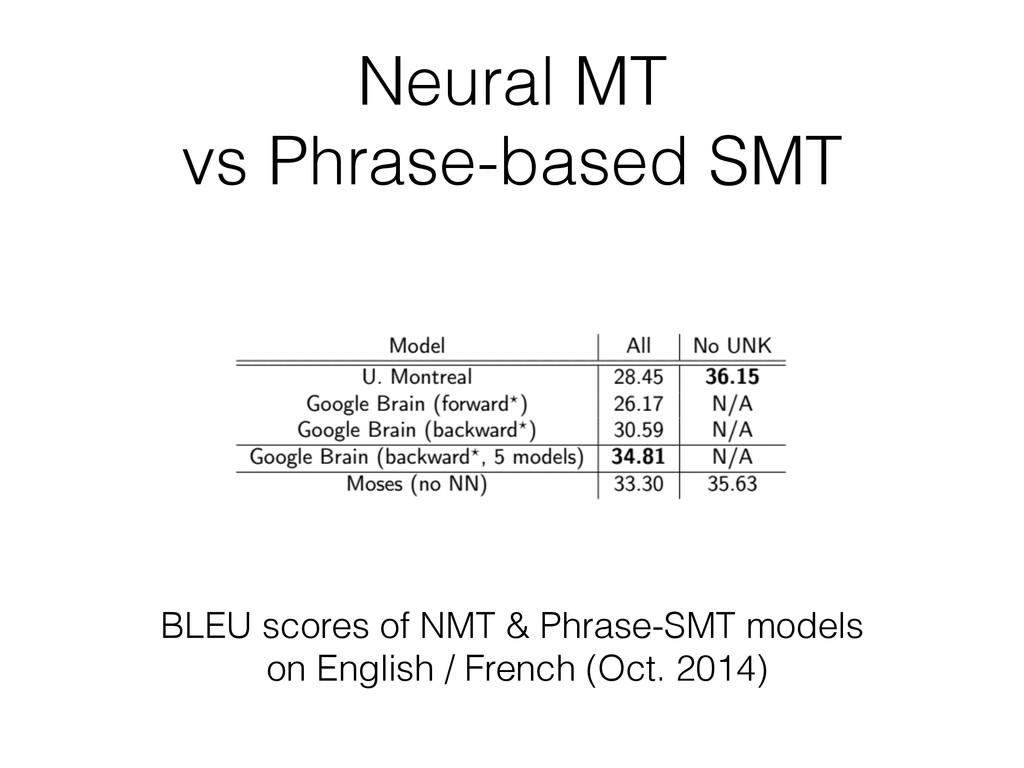
  11. Neural MT vs Phrase-based SMT BLEU scores of NMT &

    Phrase-SMT models on English / French (Oct. 2014)
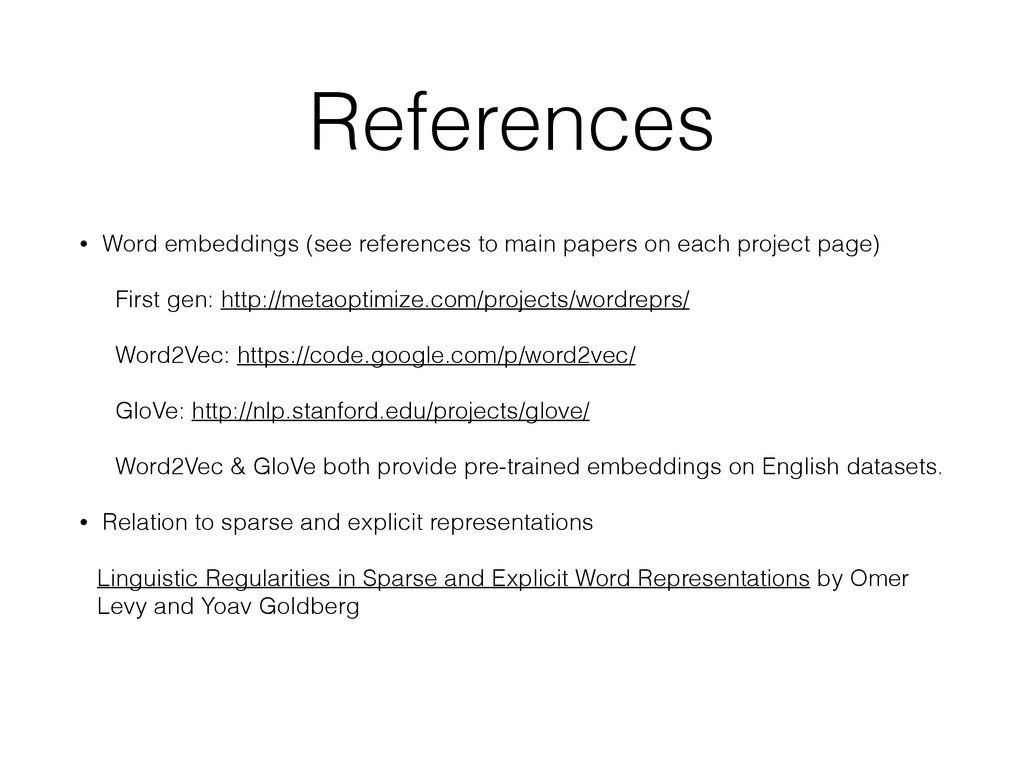
  12. References • Word embeddings (see references to main papers on

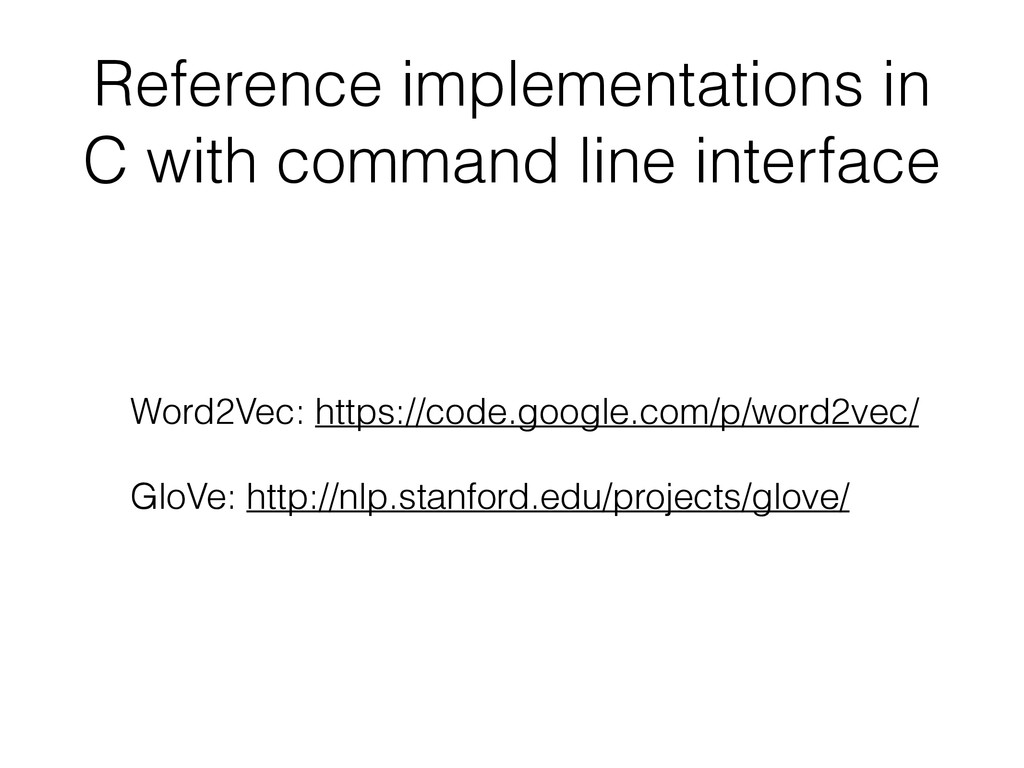
    each project page) First gen: http://metaoptimize.com/projects/wordreprs/ Word2Vec: https://code.google.com/p/word2vec/ GloVe: http://nlp.stanford.edu/projects/glove/ Word2Vec & GloVe both provide pre-trained embeddings on English datasets. • Relation to sparse and explicit representations Linguistic Regularities in Sparse and Explicit Word Representations by Omer Levy and Yoav Goldberg
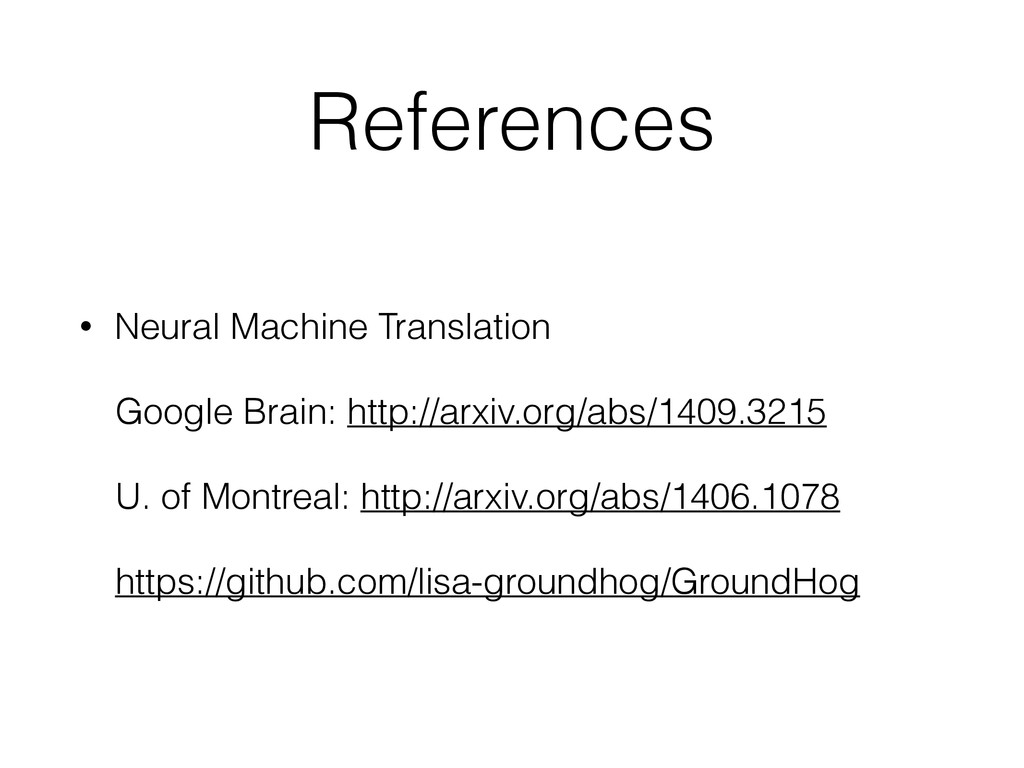
  13. References • Neural Machine Translation Google Brain: http://arxiv.org/abs/1409.3215 U. of

    Montreal: http://arxiv.org/abs/1406.1078 https://github.com/lisa-groundhog/GroundHog
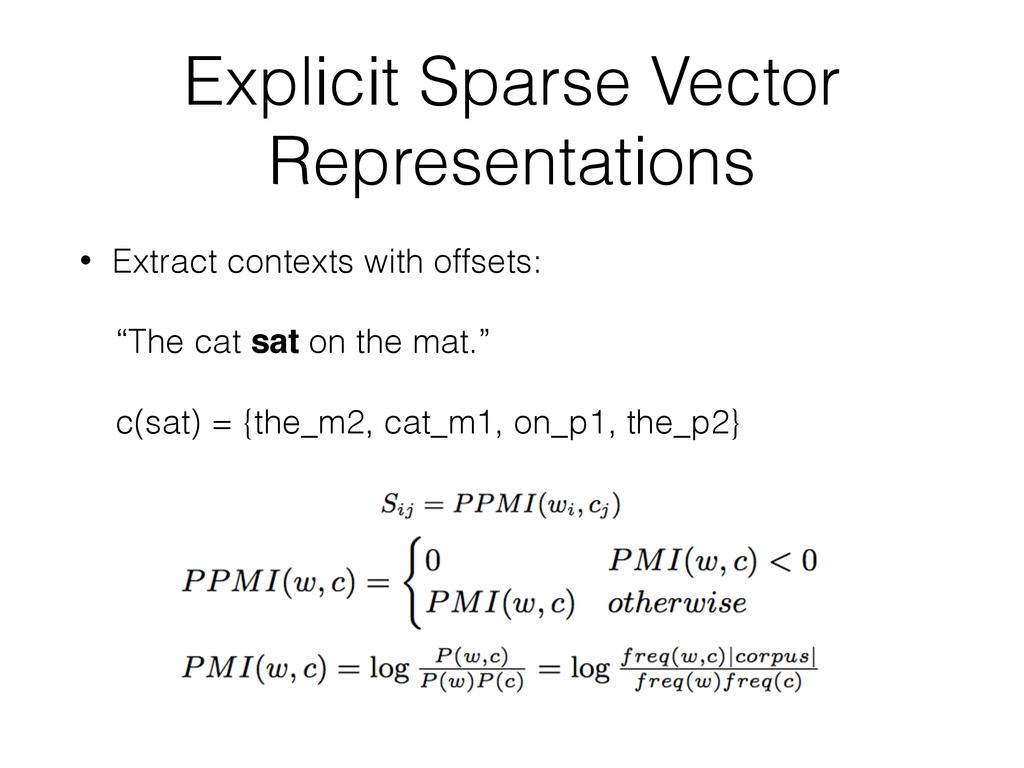
  14. Explicit Sparse Vector Representations • Extract contexts with offsets: “The

    cat sat on the mat.” c(sat) = {the_m2, cat_m1, on_p1, the_p2}

More Decks by Olivier Grisel

Other Decks in Science