Upgrade to Pro — share decks privately, control downloads, hide ads and more …

Social Media Research: Rare Beauty Audience Ana...

Social Media Research: Rare Beauty Audience Analysis

Avatar for Victoria Adams

Victoria Adams

January 04, 2026
Tweet

More Decks by Victoria Adams

Other Decks in Business

Transcript

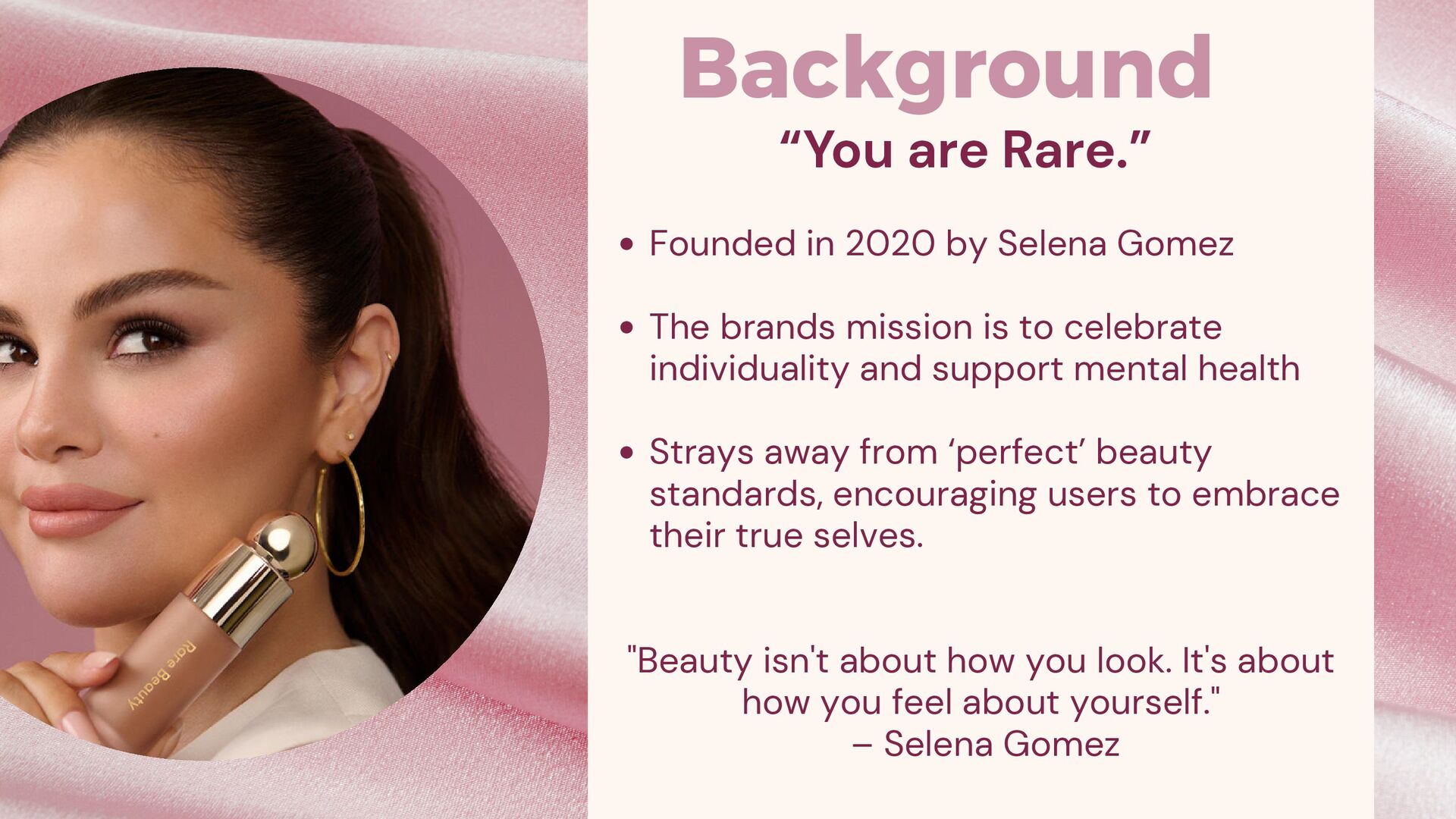
  1. Background Founded in 2020 by Selena Gomez The brands mission

    is to celebrate individuality and support mental health Strays away from ‘perfect’ beauty standards, encouraging users to embrace their true selves. "Beauty isn't about how you look. It's about how you feel about yourself." – Selena Gomez “You are Rare.”
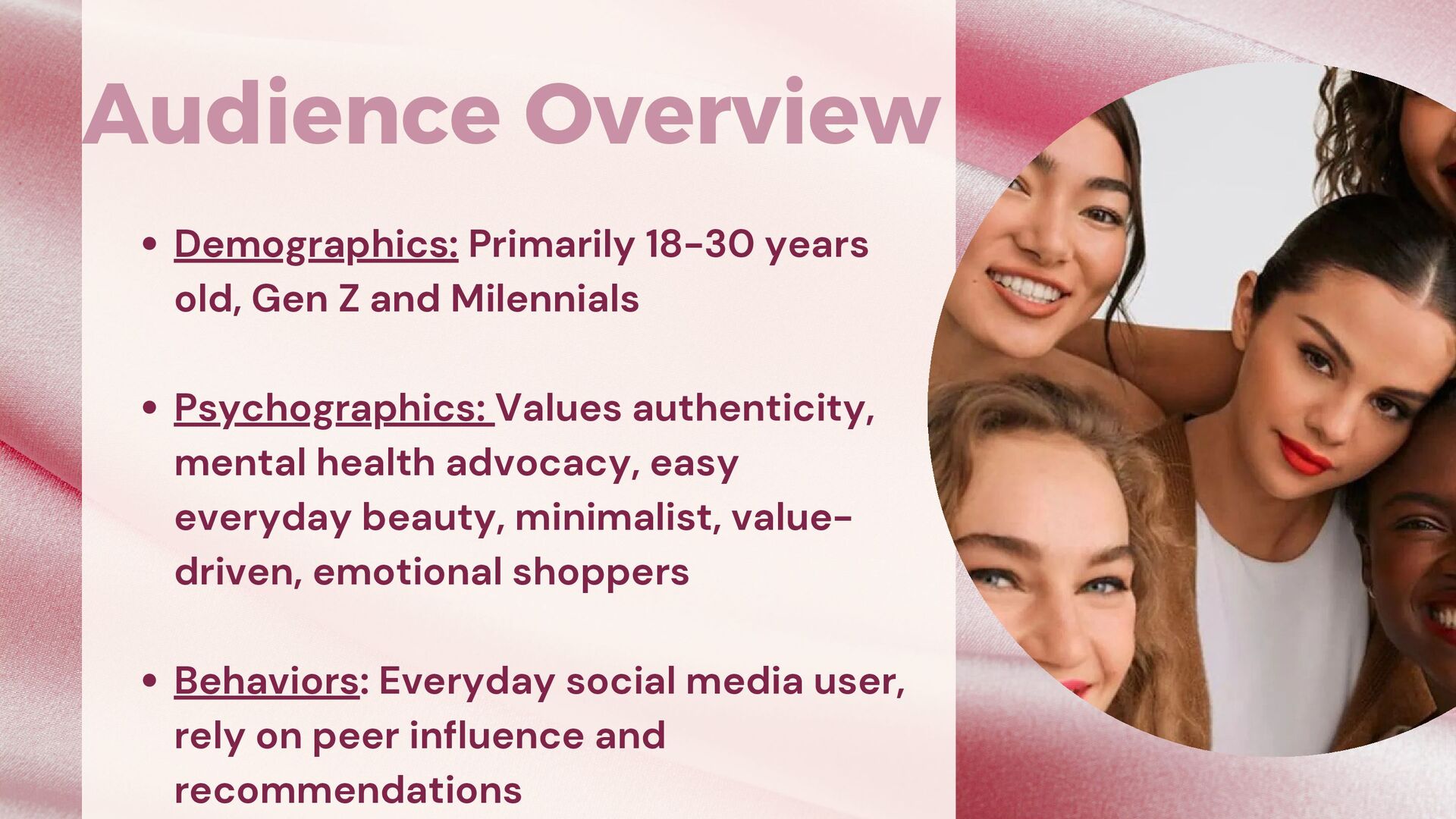
  2. Demographics: Primarily 18-30 years old, Gen Z and Milennials Psychographics:

    Values authenticity, mental health advocacy, easy everyday beauty, minimalist, value- driven, emotional shoppers Behaviors: Everyday social media user, rely on peer influence and recommendations Audience Overview
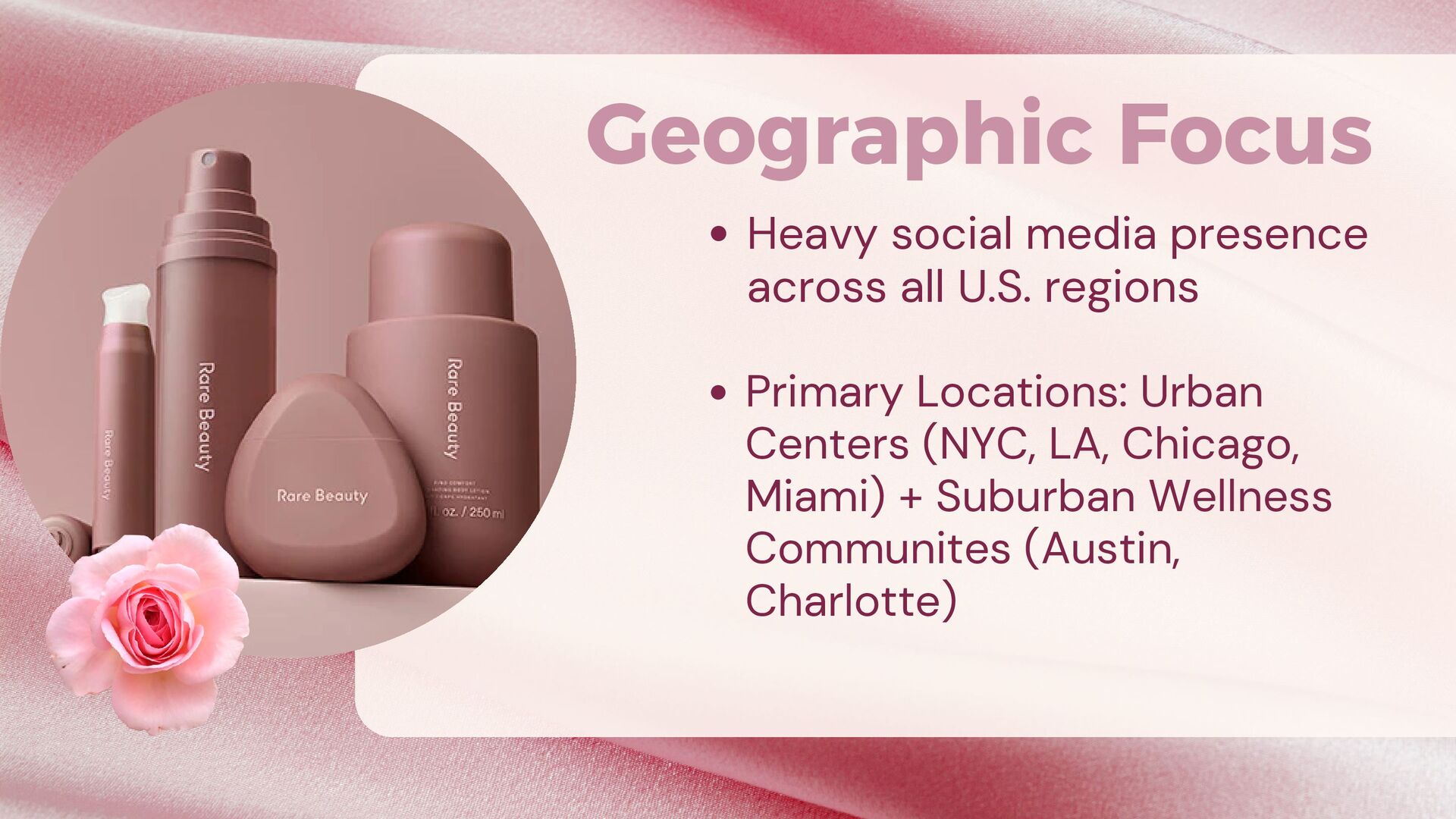
  3. Geographic Focus Heavy social media presence across all U.S. regions

    Primary Locations: Urban Centers (NYC, LA, Chicago, Miami) + Suburban Wellness Communites (Austin, Charlotte)
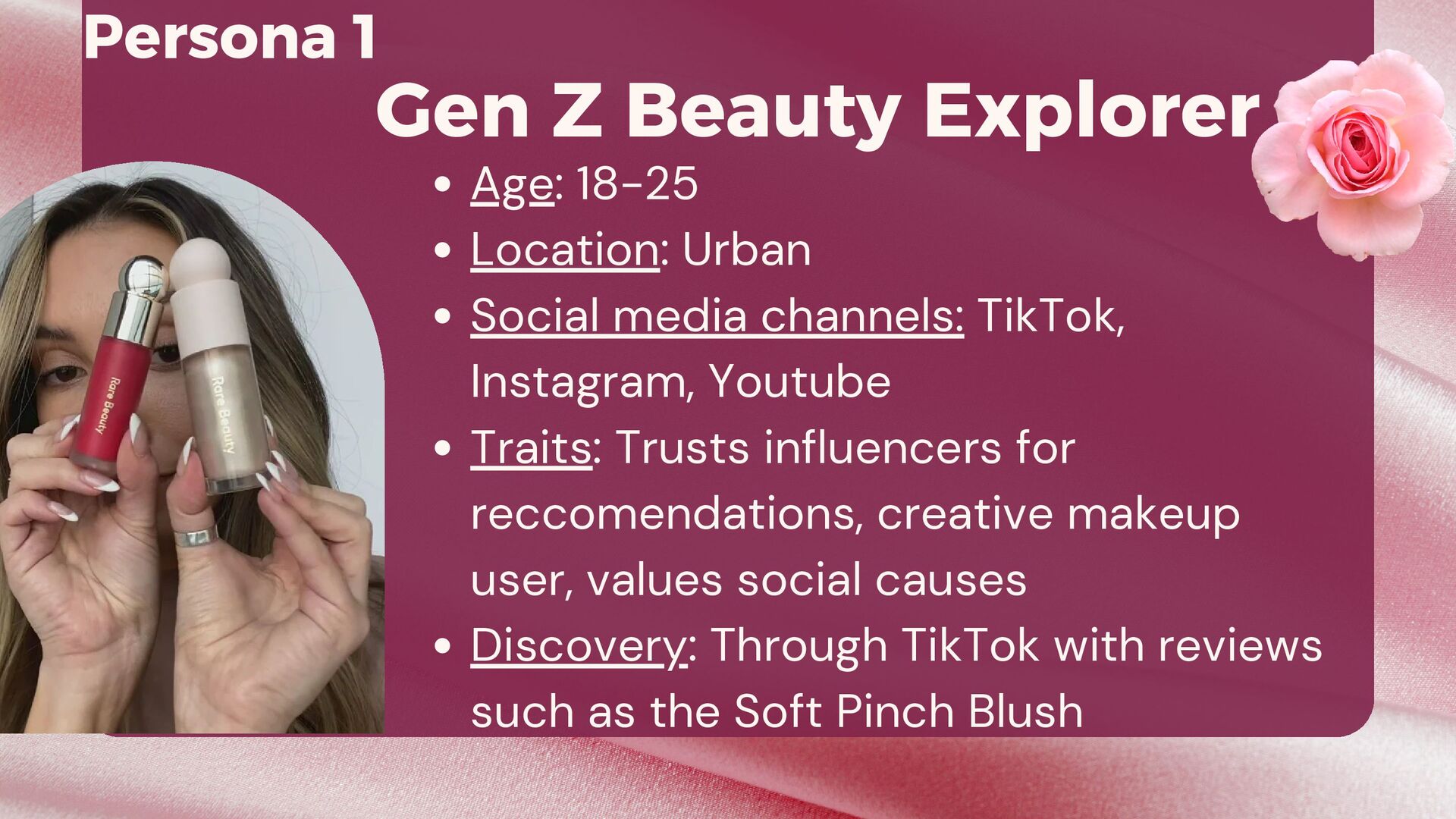
  4. Persona 1 Age: 18-25 Location: Urban Social media channels: TikTok,

    Instagram, Youtube Traits: Trusts influencers for reccomendations, creative makeup user, values social causes Discovery: Through TikTok with reviews such as the Soft Pinch Blush Gen Z Beauty Explorer
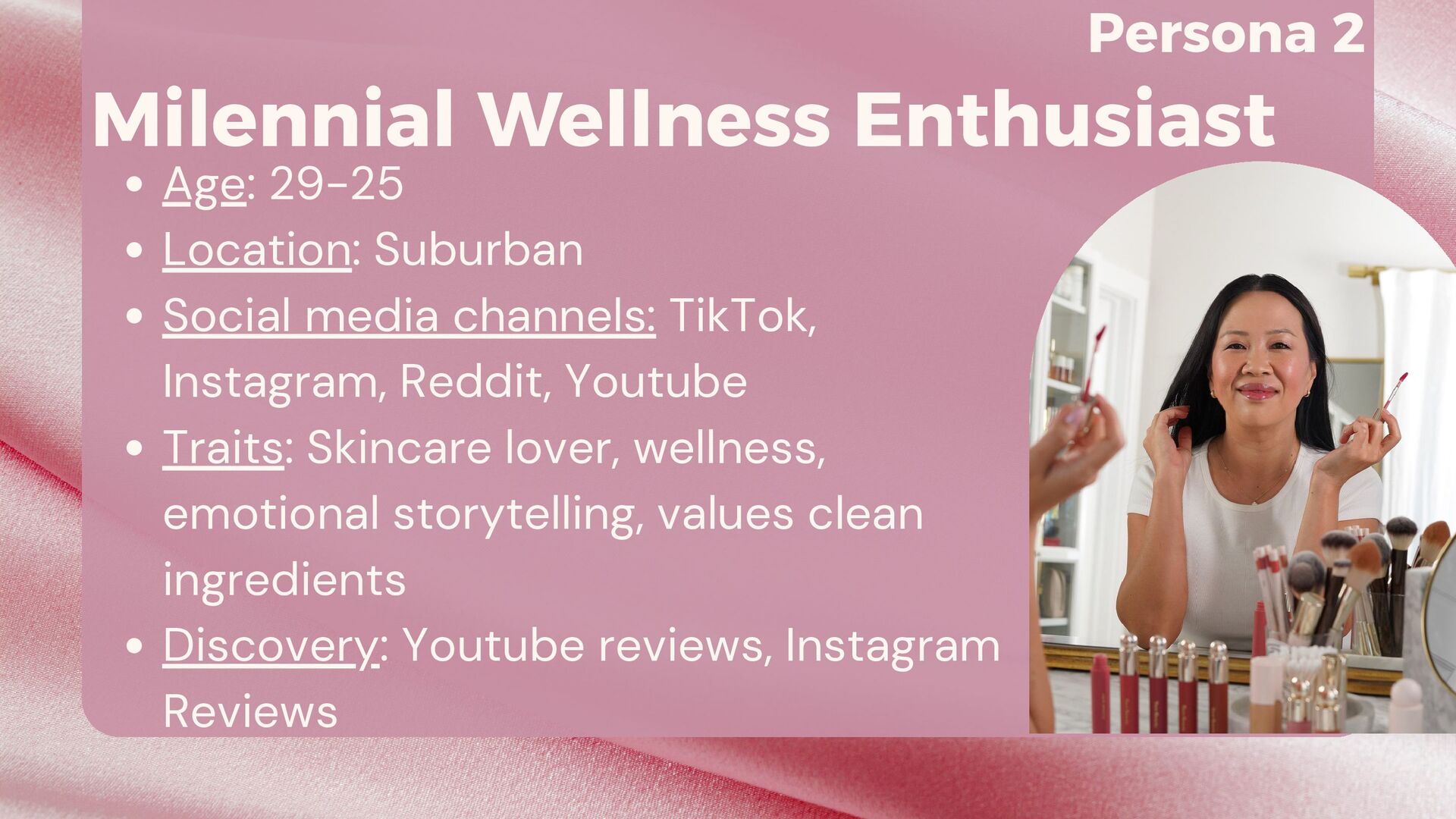
  5. Persona 2 Age: 29-25 Location: Suburban Social media channels: TikTok,

    Instagram, Reddit, Youtube Traits: Skincare lover, wellness, emotional storytelling, values clean ingredients Discovery: Youtube reviews, Instagram Reviews Milennial Wellness Enthusiast
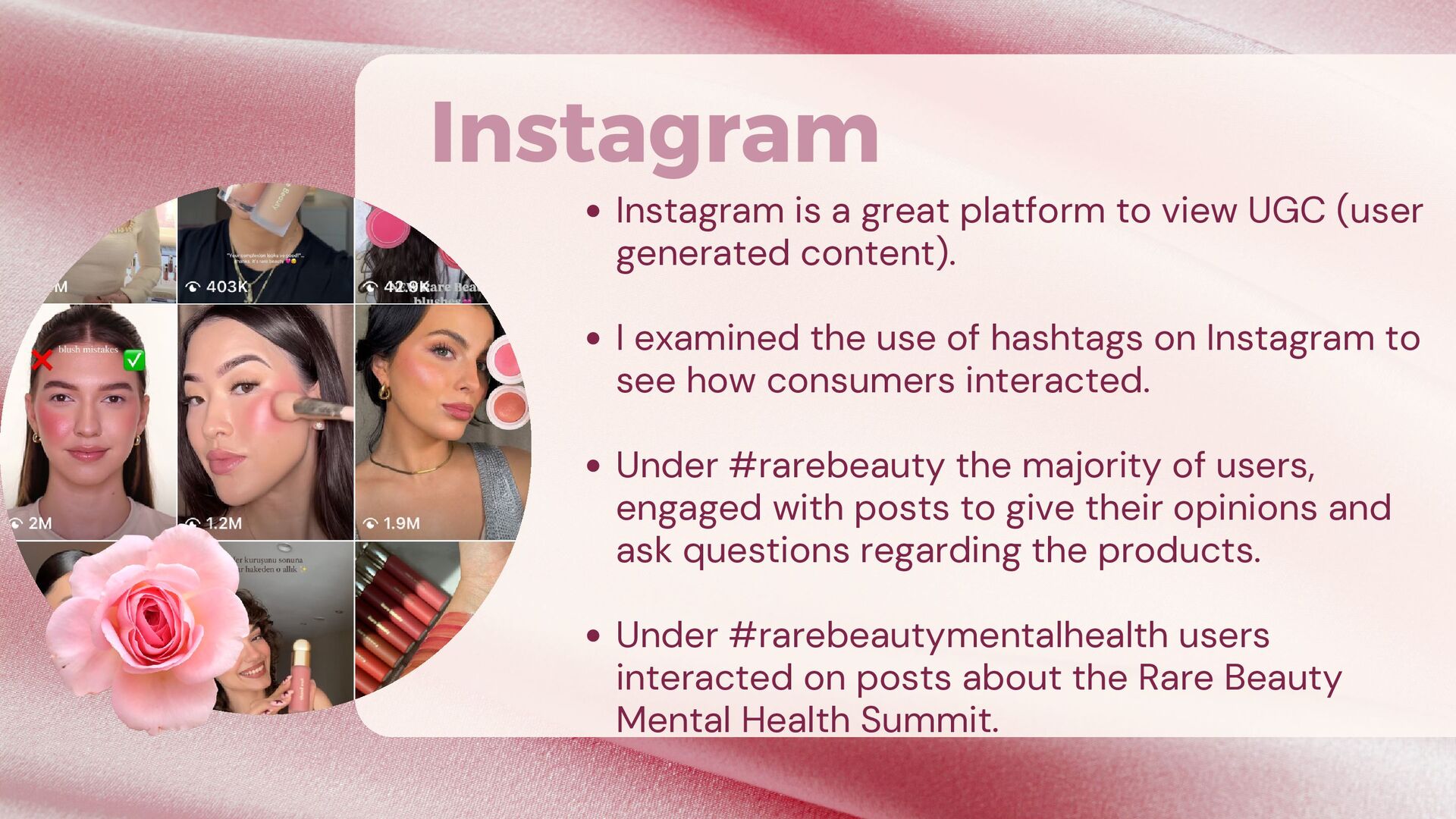
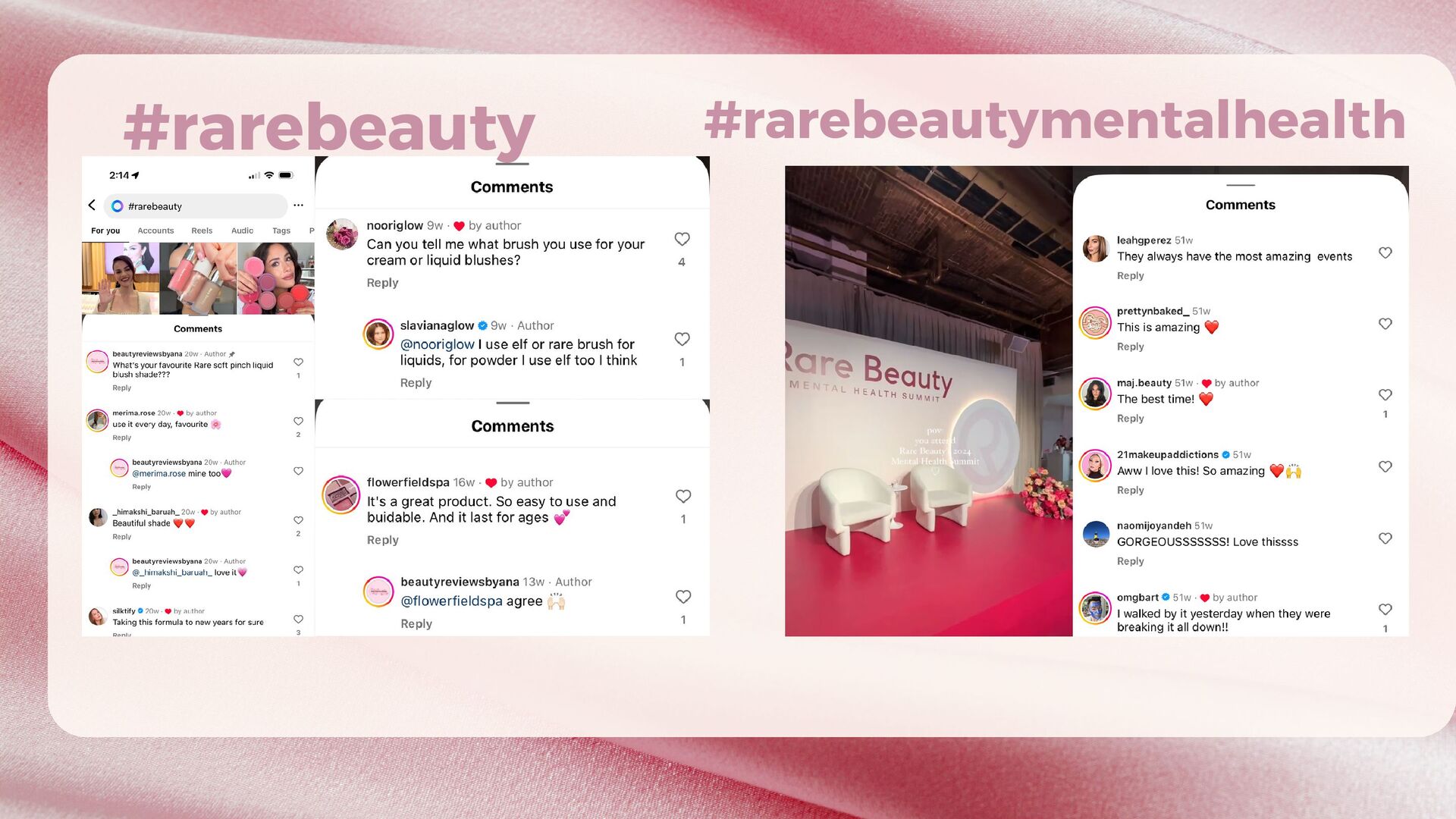
  6. Instagram Instagram is a great platform to view UGC (user

    generated content). I examined the use of hashtags on Instagram to see how consumers interacted. Under #rarebeauty the majority of users, engaged with posts to give their opinions and ask questions regarding the products. Under #rarebeautymentalhealth users interacted on posts about the Rare Beauty Mental Health Summit.
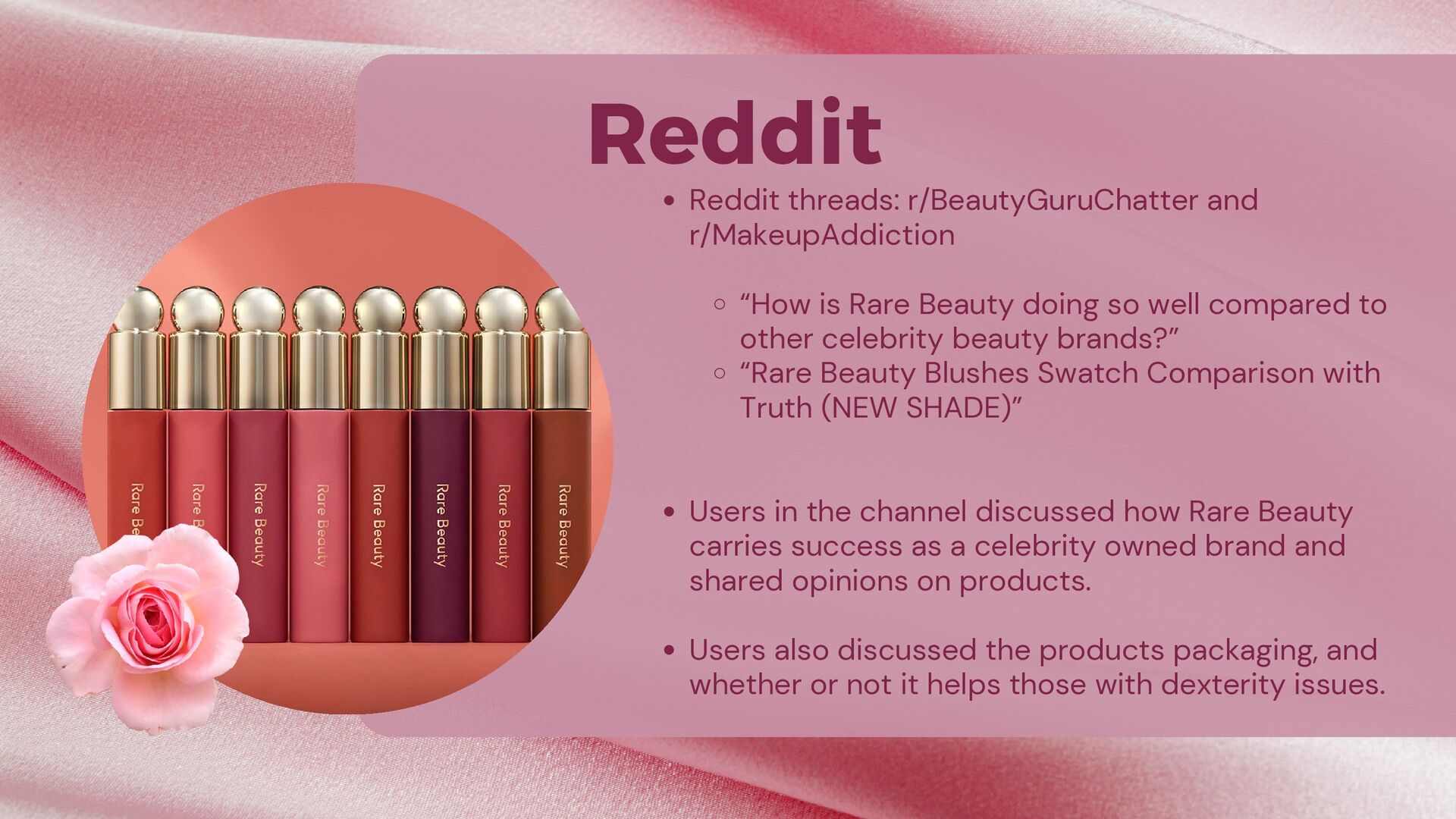
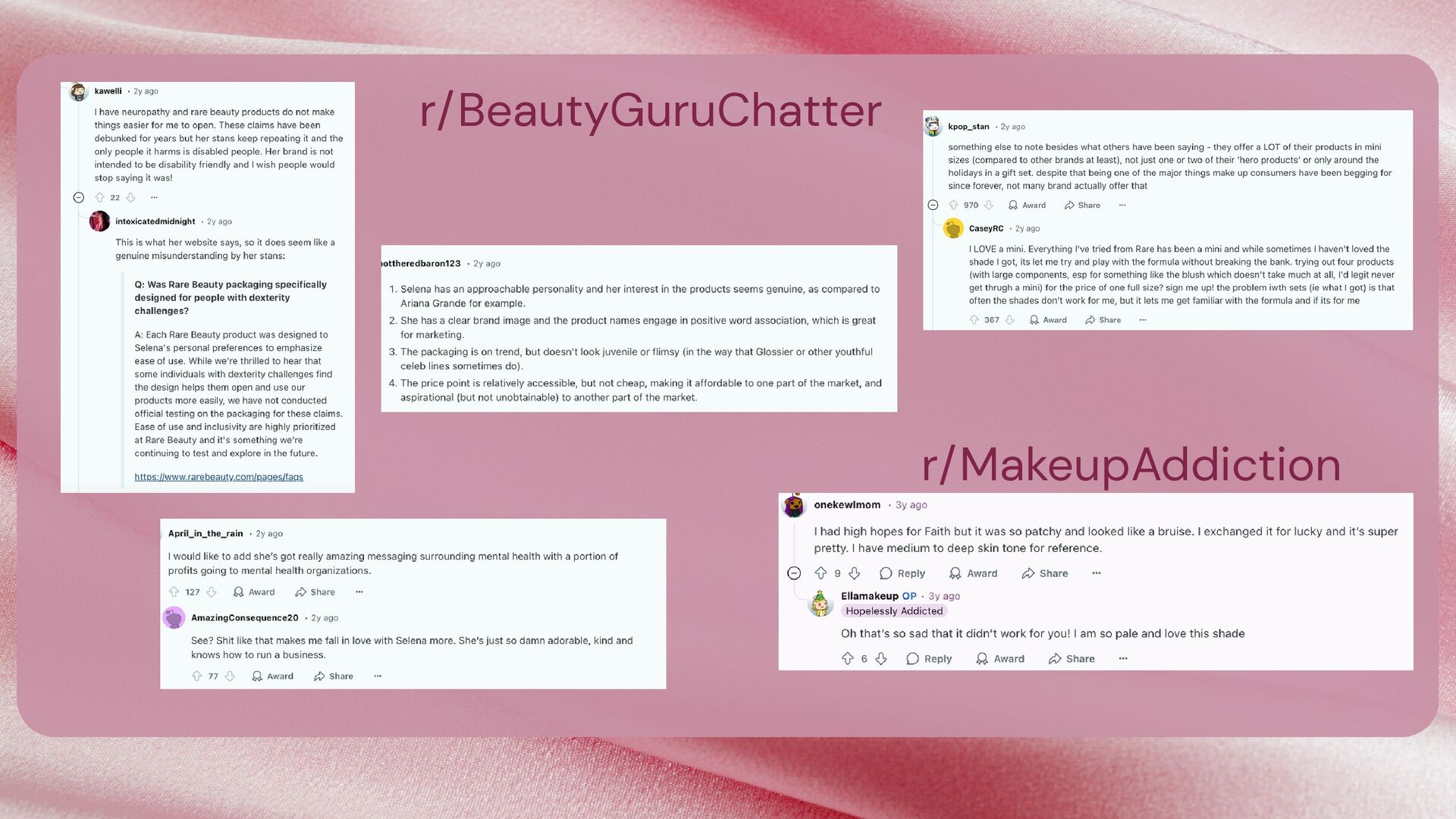
  7. Reddit Reddit threads: r/BeautyGuruChatter and r/MakeupAddiction “How is Rare Beauty

    doing so well compared to other celebrity beauty brands?” “Rare Beauty Blushes Swatch Comparison with Truth (NEW SHADE)” Users in the channel discussed how Rare Beauty carries success as a celebrity owned brand and shared opinions on products. Users also discussed the products packaging, and whether or not it helps those with dexterity issues.
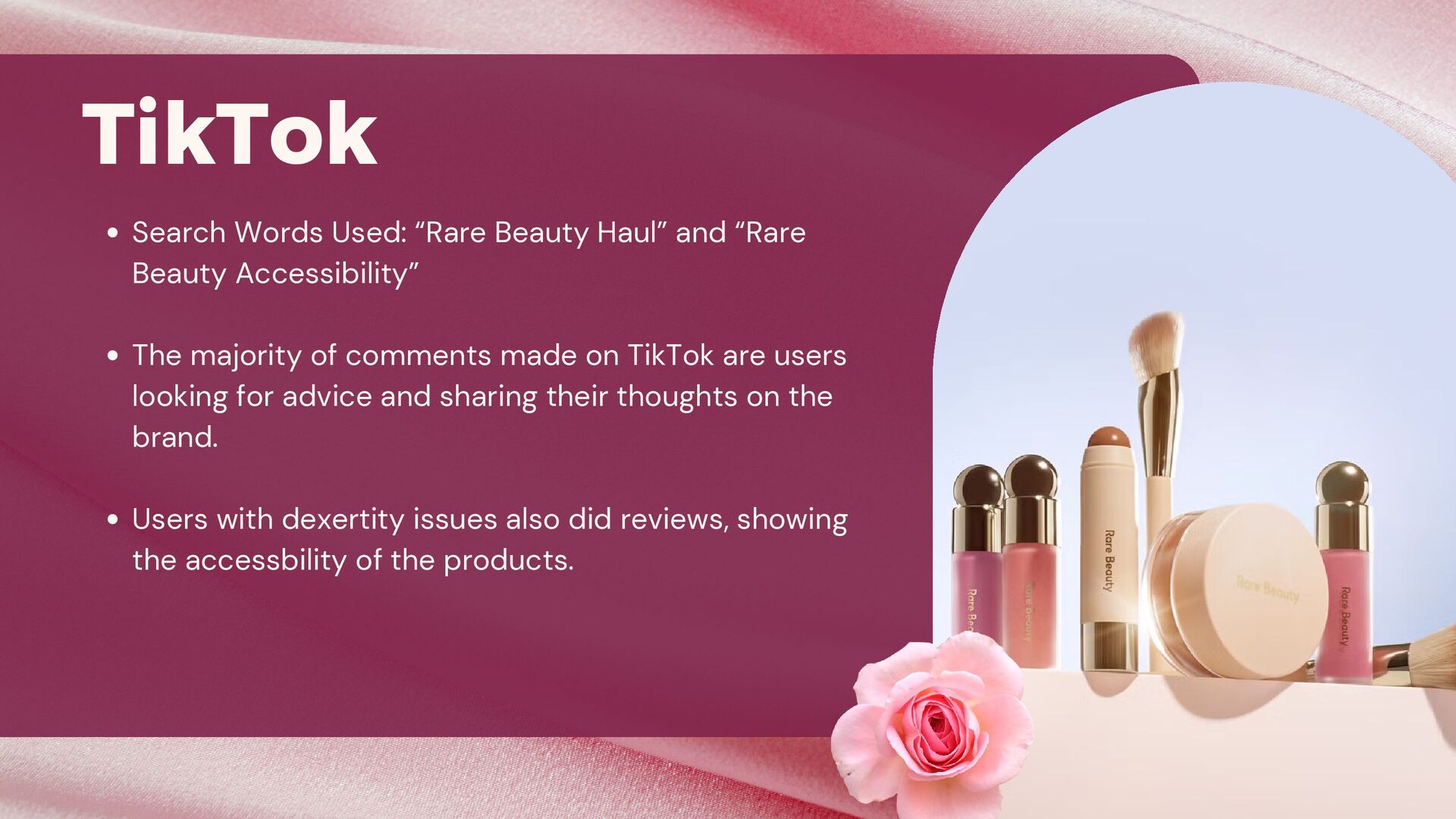
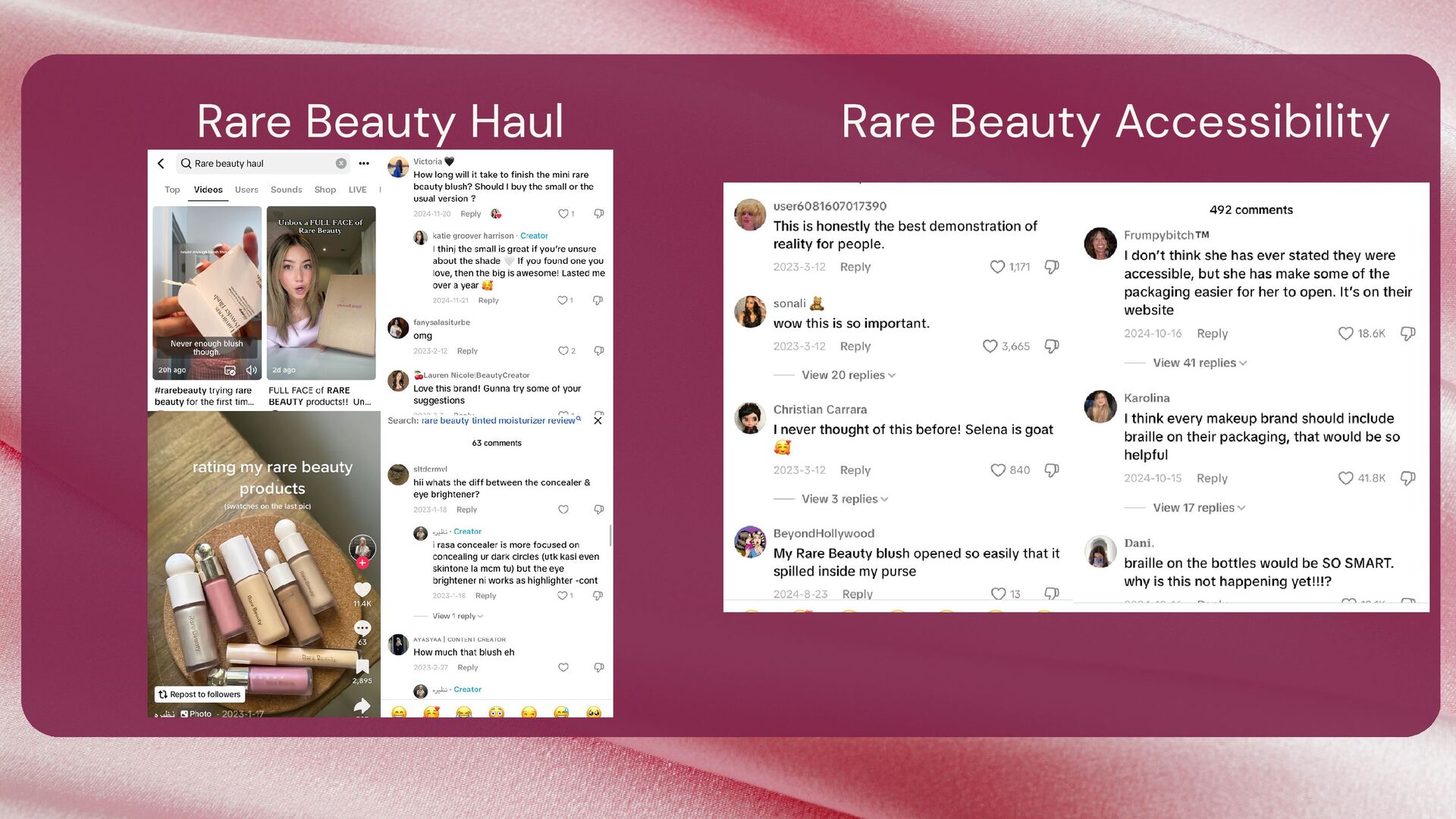
  8. TikTok Search Words Used: “Rare Beauty Haul” and “Rare Beauty

    Accessibility” The majority of comments made on TikTok are users looking for advice and sharing their thoughts on the brand. Users with dexertity issues also did reviews, showing the accessbility of the products.
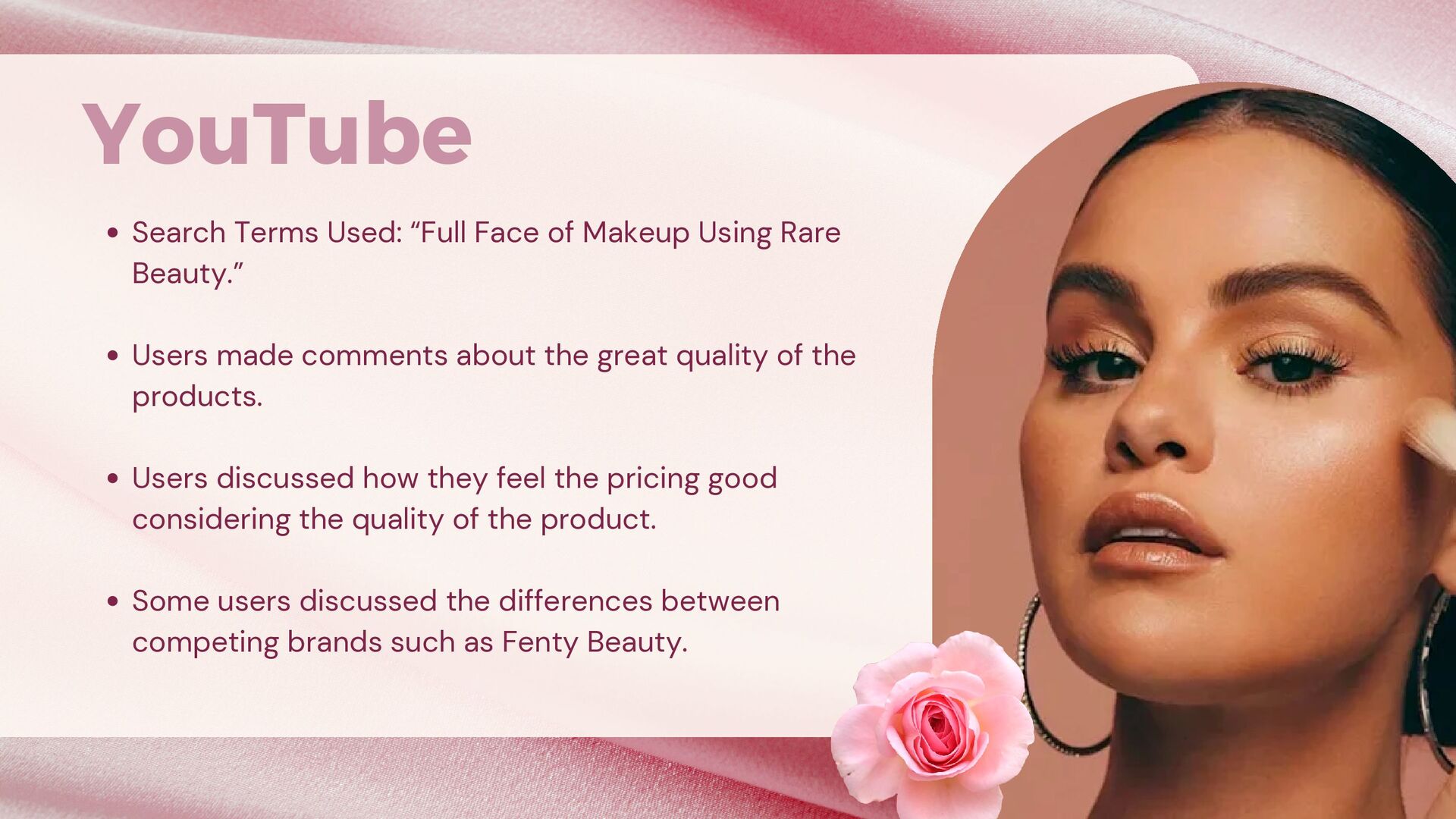
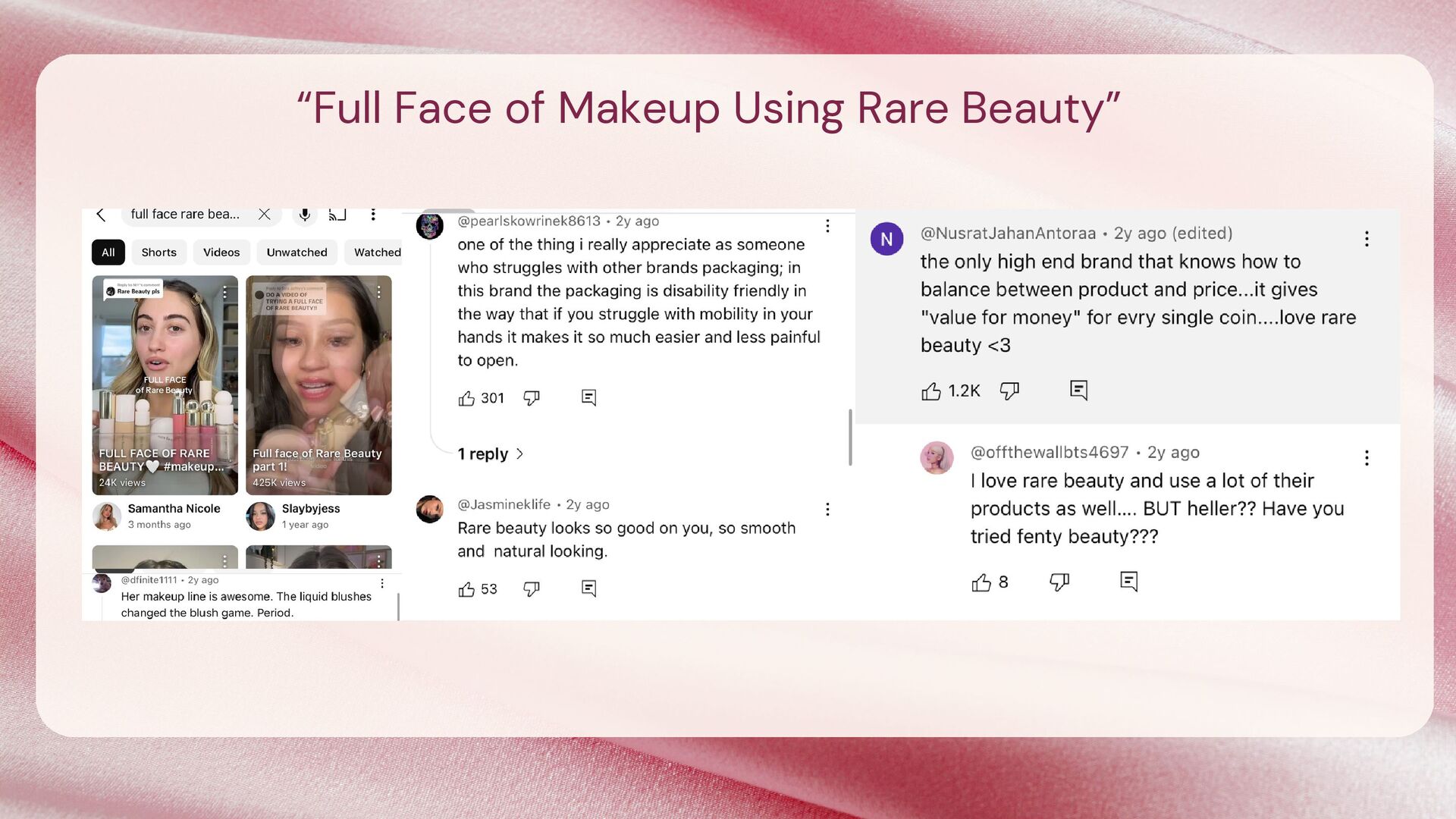
  9. YouTube Search Terms Used: “Full Face of Makeup Using Rare

    Beauty.” Users made comments about the great quality of the products. Users discussed how they feel the pricing good considering the quality of the product. Some users discussed the differences between competing brands such as Fenty Beauty.
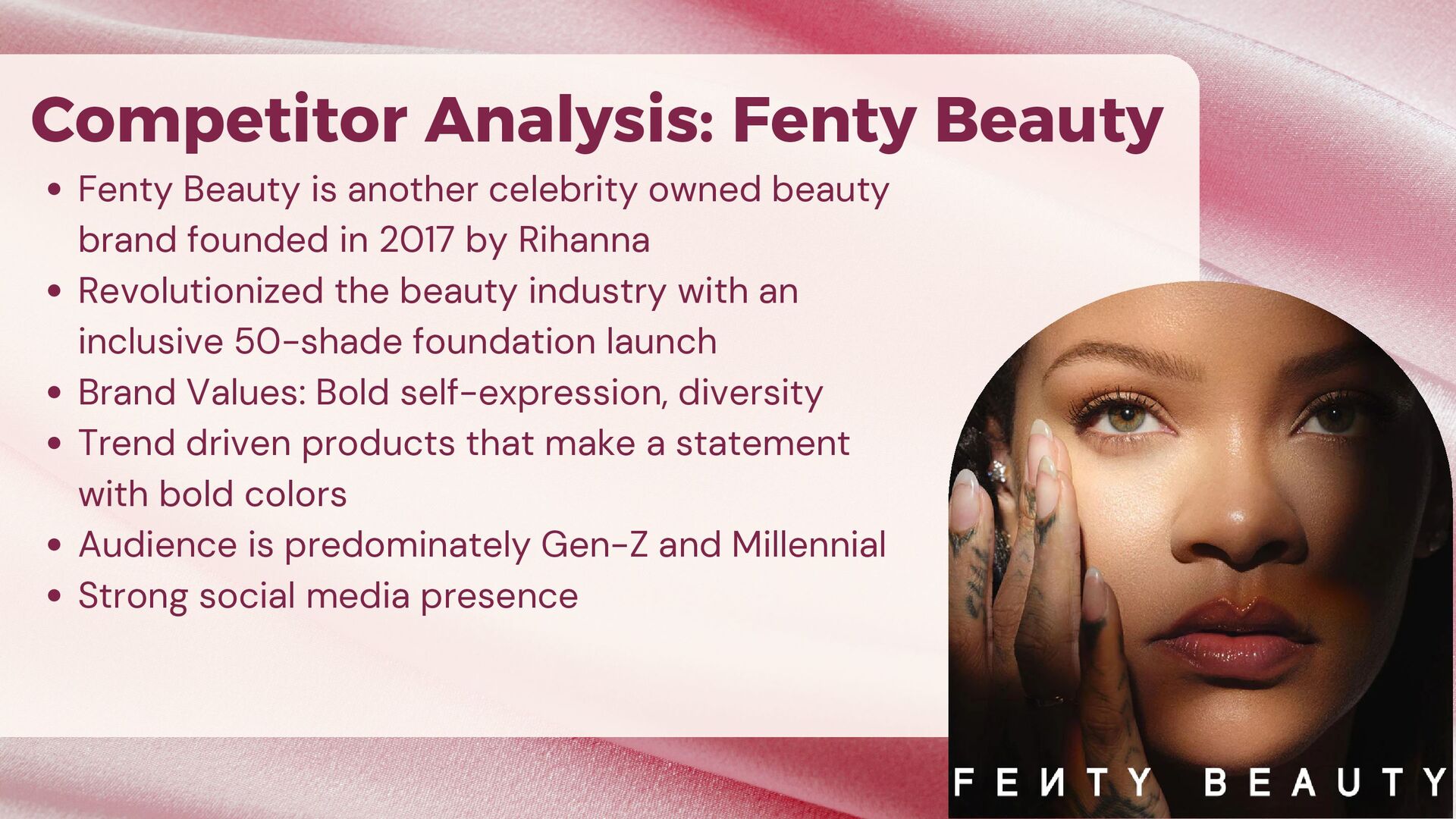
  10. Competitor Analysis: Fenty Beauty Fenty Beauty is another celebrity owned

    beauty brand founded in 2017 by Rihanna Revolutionized the beauty industry with an inclusive 50-shade foundation launch Brand Values: Bold self-expression, diversity Trend driven products that make a statement with bold colors Audience is predominately Gen-Z and Millennial Strong social media presence
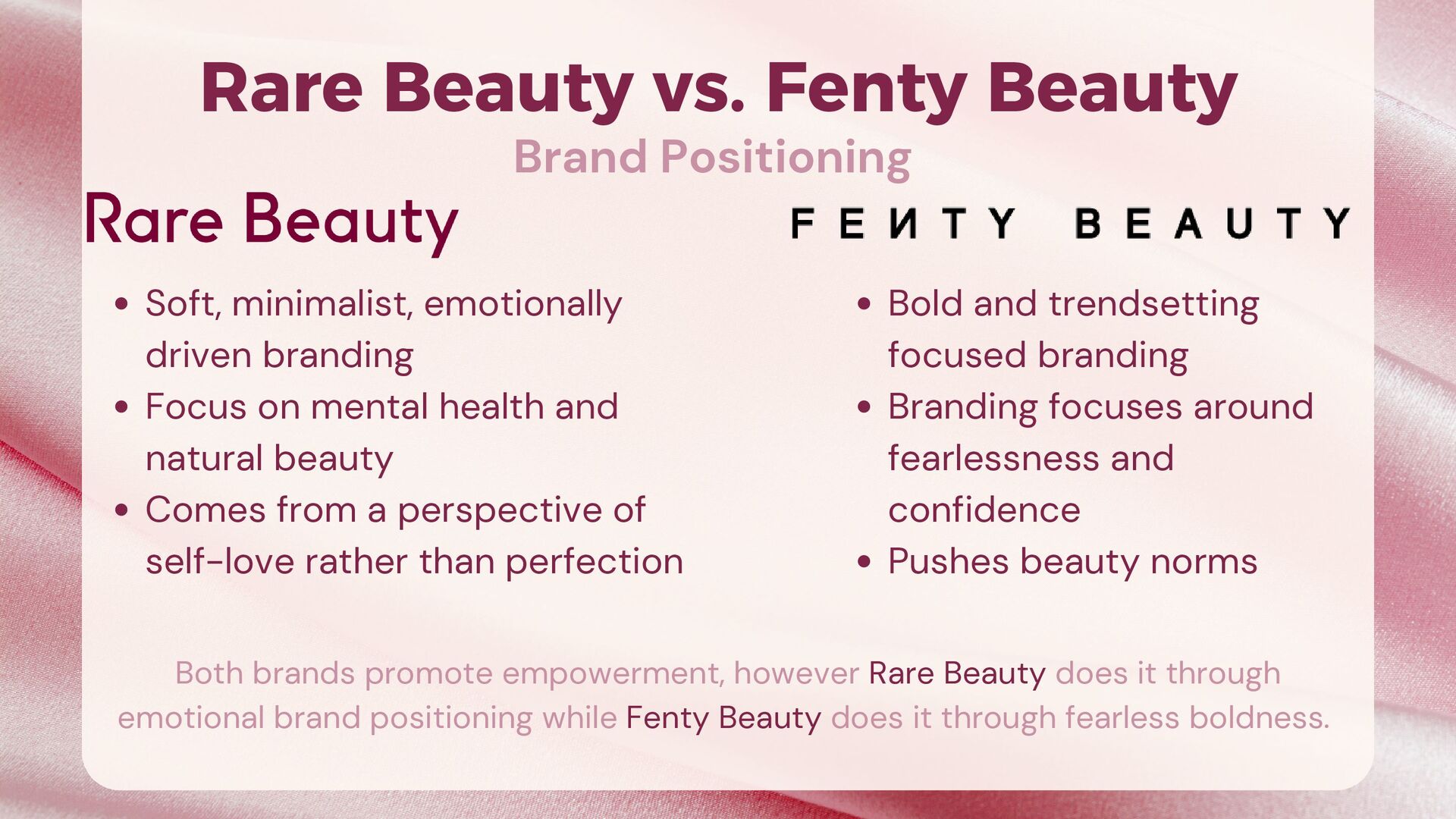
  11. Rare Beauty vs. Fenty Beauty Brand Positioning Soft, minimalist, emotionally

    driven branding Focus on mental health and natural beauty Comes from a perspective of self-love rather than perfection Bold and trendsetting focused branding Branding focuses around fearlessness and confidence Pushes beauty norms Both brands promote empowerment, however Rare Beauty does it through emotional brand positioning while Fenty Beauty does it through fearless boldness.
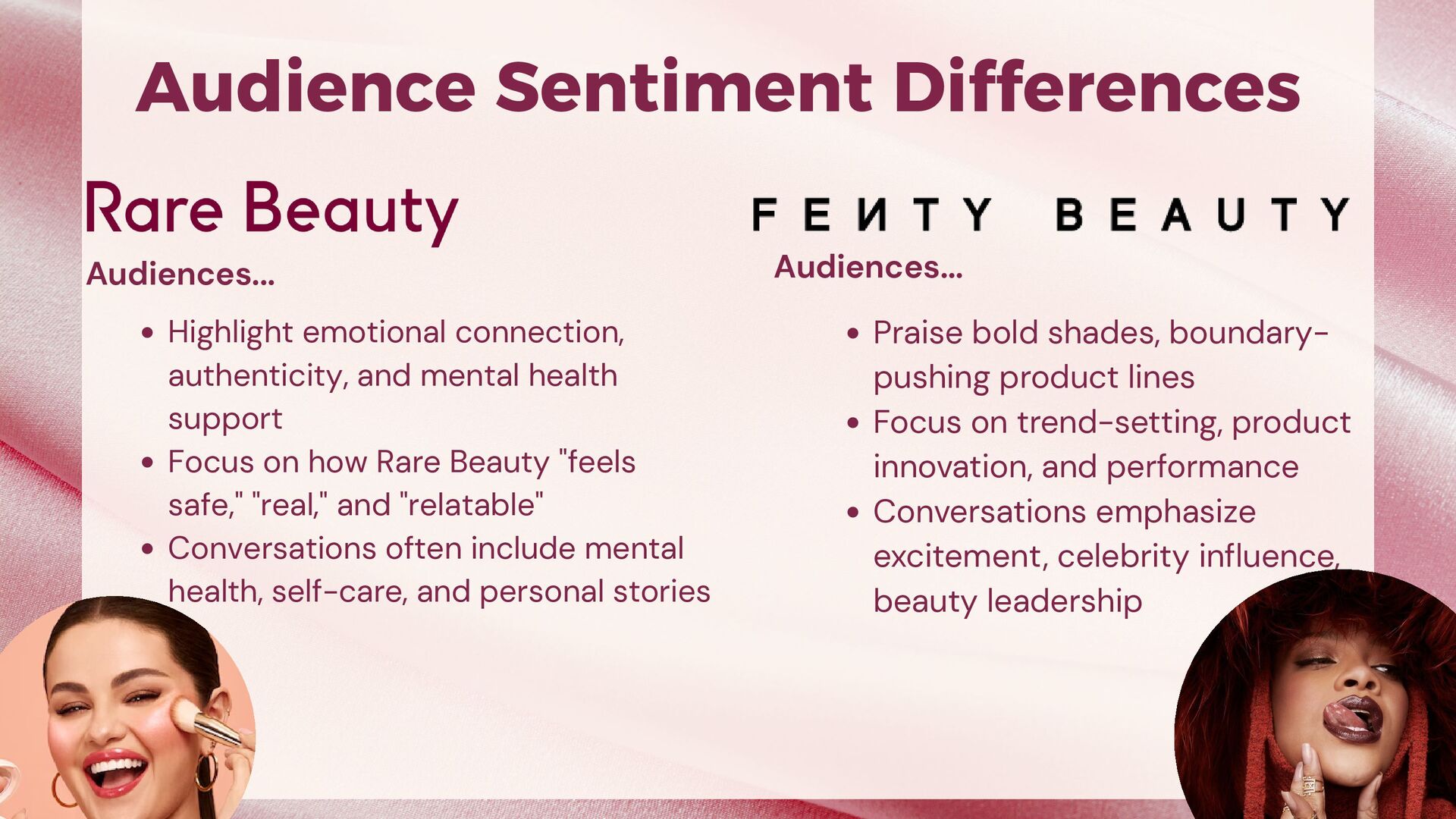
  12. Praise bold shades, boundary- pushing product lines Focus on trend-setting,

    product innovation, and performance Conversations emphasize excitement, celebrity influence, beauty leadership Audience Sentiment Differences Highlight emotional connection, authenticity, and mental health support Focus on how Rare Beauty "feels safe," "real," and "relatable" Conversations often include mental health, self-care, and personal stories Audiences... Audiences...
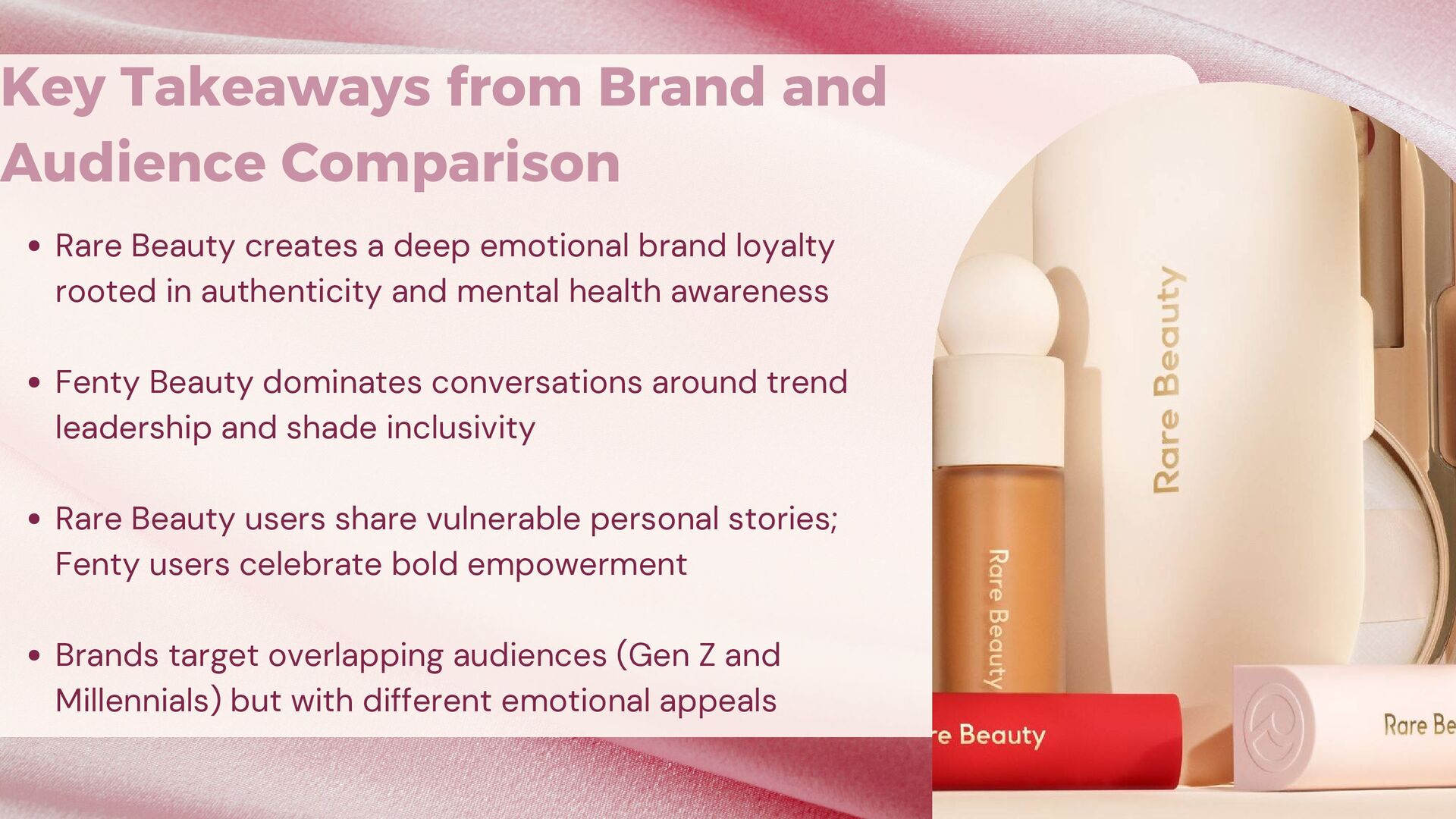
  13. Key Takeaways from Brand and Audience Comparison Rare Beauty creates

    a deep emotional brand loyalty rooted in authenticity and mental health awareness Fenty Beauty dominates conversations around trend leadership and shade inclusivity Rare Beauty users share vulnerable personal stories; Fenty users celebrate bold empowerment Brands target overlapping audiences (Gen Z and Millennials) but with different emotional appeals
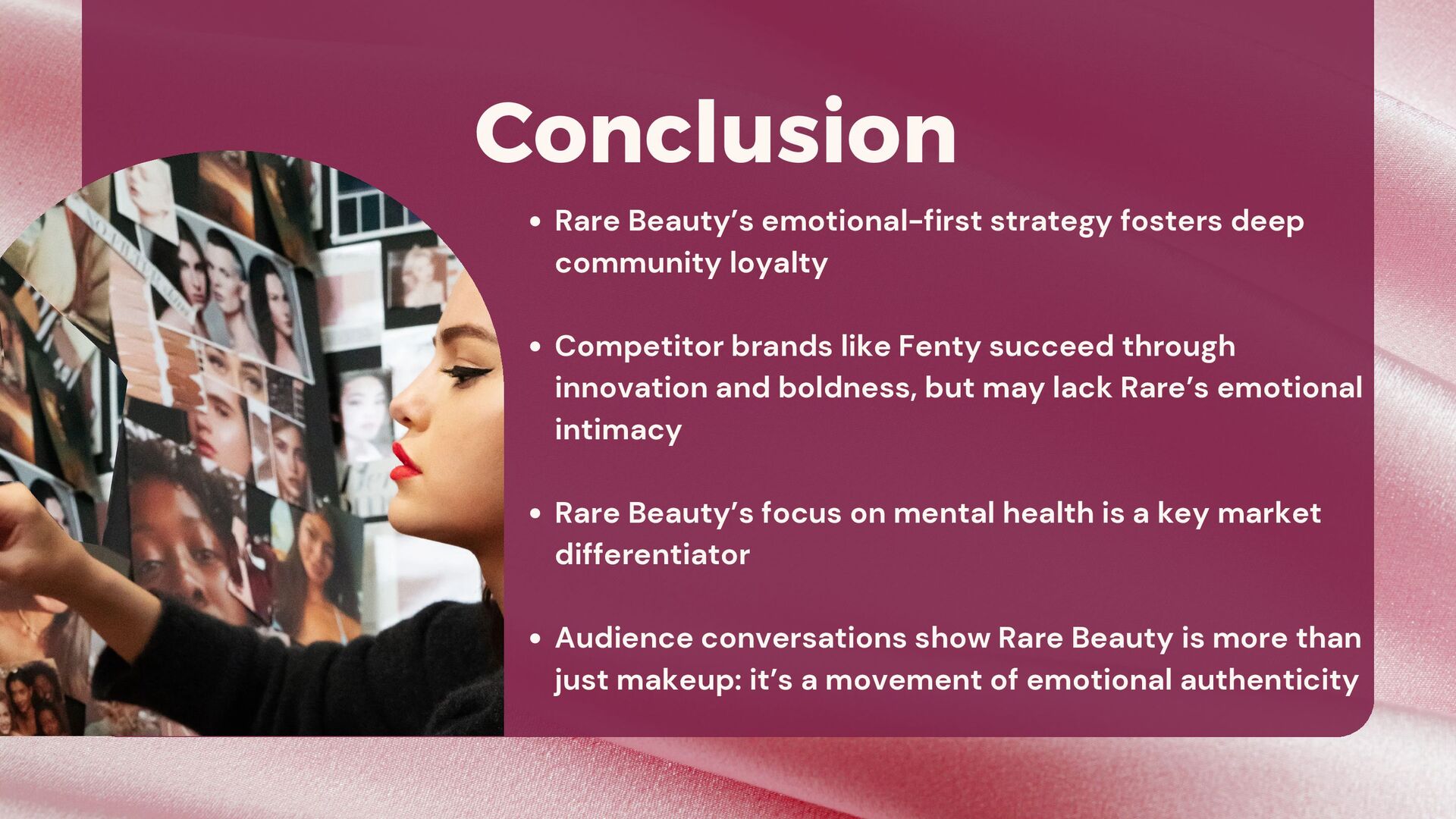
  14. Conclusion Rare Beauty’s emotional-first strategy fosters deep community loyalty Competitor

    brands like Fenty succeed through innovation and boldness, but may lack Rare’s emotional intimacy Rare Beauty’s focus on mental health is a key market differentiator Audience conversations show Rare Beauty is more than just makeup: it’s a movement of emotional authenticity
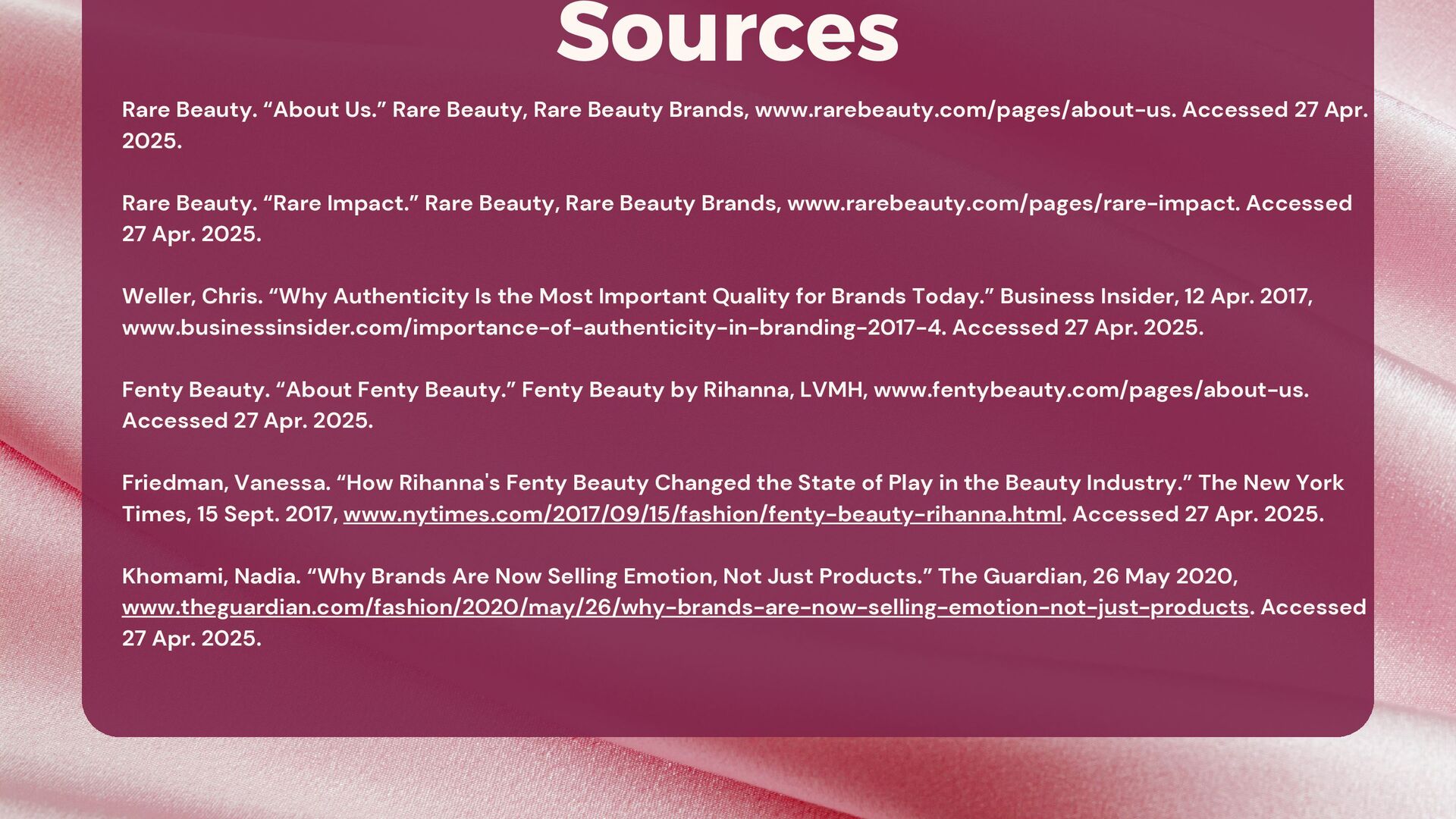
  15. Sources Rare Beauty. “About Us.” Rare Beauty, Rare Beauty Brands,

    www.rarebeauty.com/pages/about-us. Accessed 27 Apr. 2025. Rare Beauty. “Rare Impact.” Rare Beauty, Rare Beauty Brands, www.rarebeauty.com/pages/rare-impact. Accessed 27 Apr. 2025. Weller, Chris. “Why Authenticity Is the Most Important Quality for Brands Today.” Business Insider, 12 Apr. 2017, www.businessinsider.com/importance-of-authenticity-in-branding-2017-4. Accessed 27 Apr. 2025. Fenty Beauty. “About Fenty Beauty.” Fenty Beauty by Rihanna, LVMH, www.fentybeauty.com/pages/about-us. Accessed 27 Apr. 2025. Friedman, Vanessa. “How Rihanna's Fenty Beauty Changed the State of Play in the Beauty Industry.” The New York Times, 15 Sept. 2017, www.nytimes.com/2017/09/15/fashion/fenty-beauty-rihanna.html. Accessed 27 Apr. 2025. Khomami, Nadia. “Why Brands Are Now Selling Emotion, Not Just Products.” The Guardian, 26 May 2020, www.theguardian.com/fashion/2020/may/26/why-brands-are-now-selling-emotion-not-just-products. Accessed 27 Apr. 2025.