efficient and cost- effective use of IT resources. ITIL outlines what processes to be implemented; but not how to implement it http://www.tso.co.uk/pism/app/content/pism_7.htm
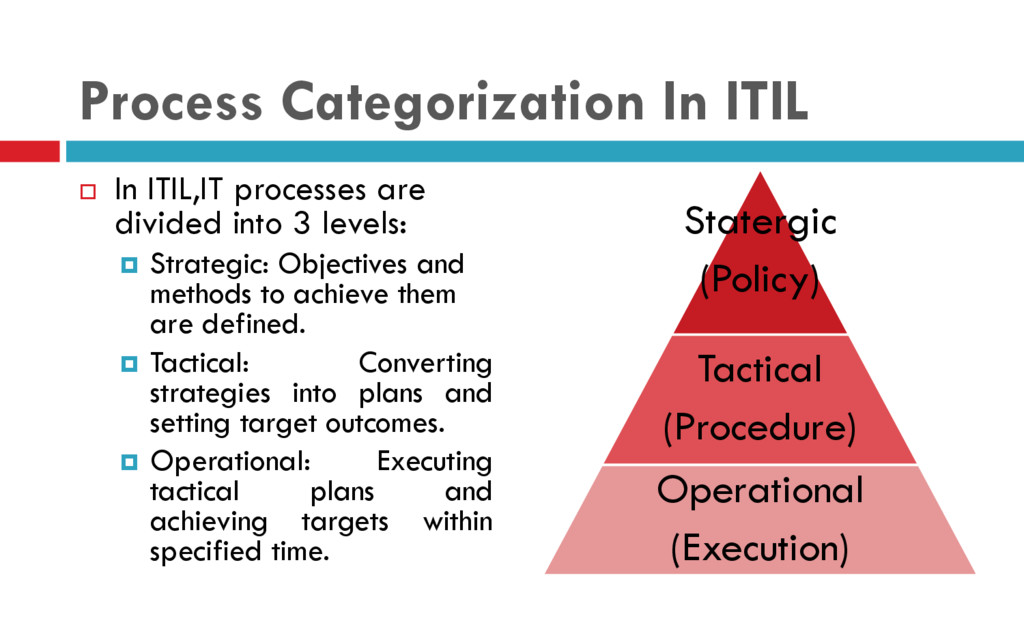
into 3 levels: Strategic: Objectives and methods to achieve them are defined. Tactical: Converting strategies into plans and setting target outcomes. Operational: Executing tactical plans and achieving targets within specified time. Statergic (Policy) Tactical (Procedure) Operational (Execution)
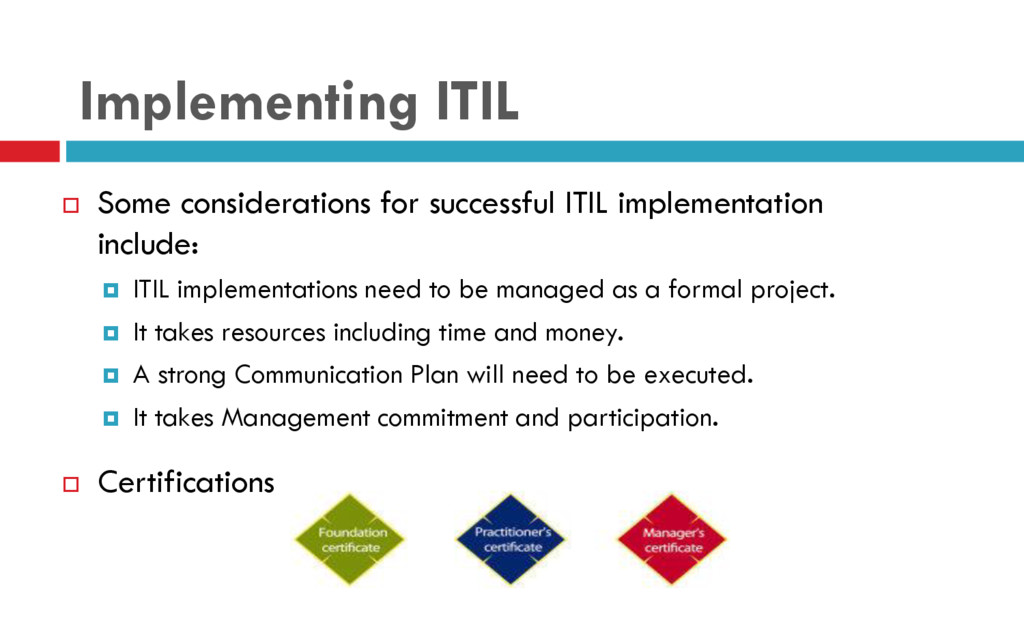
ITIL implementations need to be managed as a formal project. It takes resources including time and money. A strong Communication Plan will need to be executed. It takes Management commitment and participation. Certifications
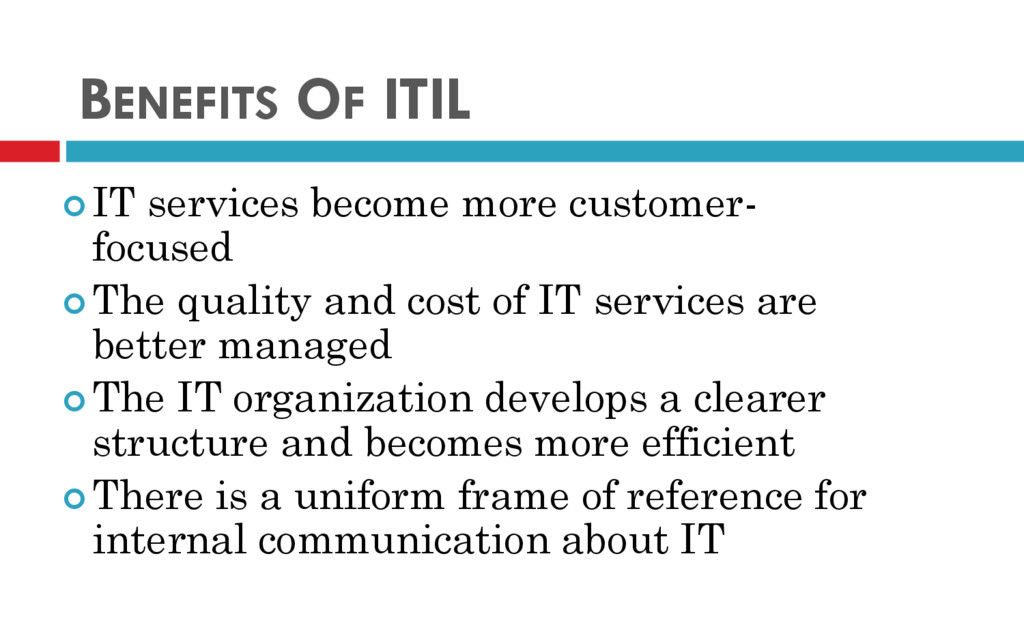
The quality and cost of IT services are better managed The IT organization develops a clearer structure and becomes more efficient There is a uniform frame of reference for internal communication about IT
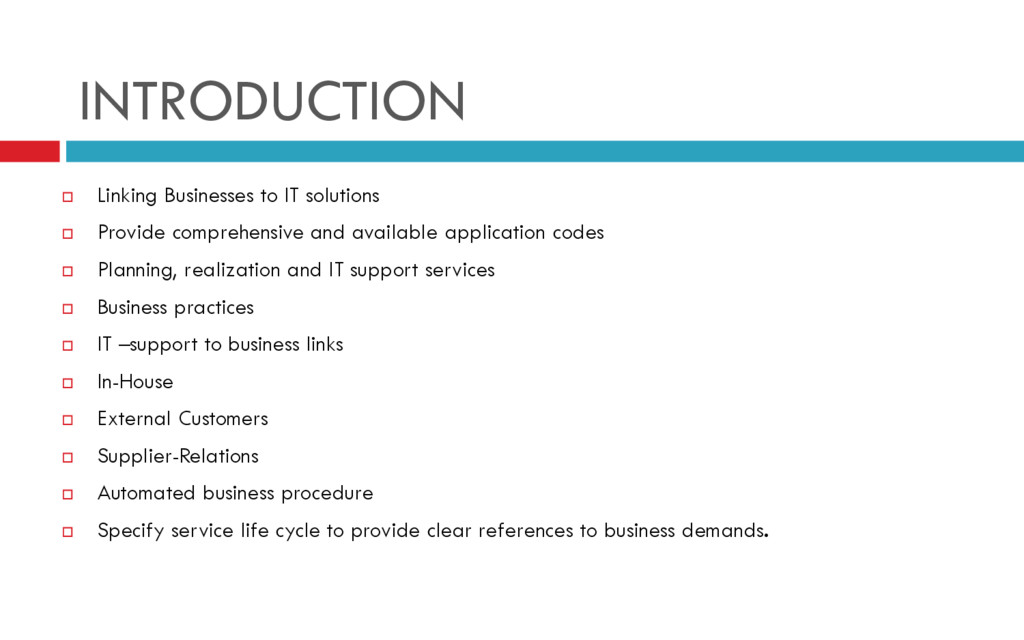
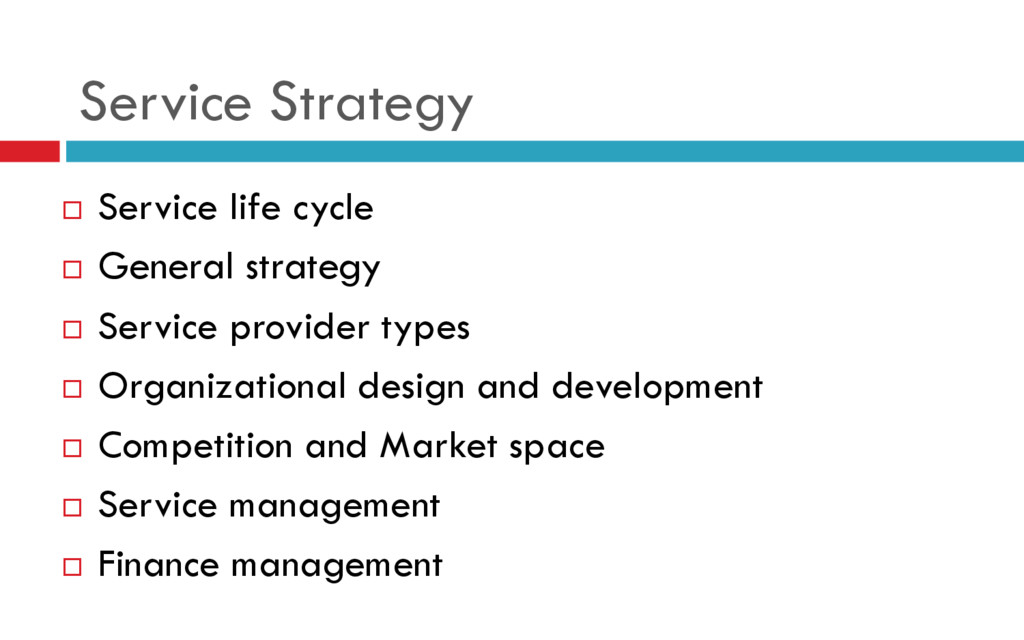
and available application codes Planning, realization and IT support services Business practices IT –support to business links In-House External Customers Supplier-Relations Automated business procedure Specify service life cycle to provide clear references to business demands.
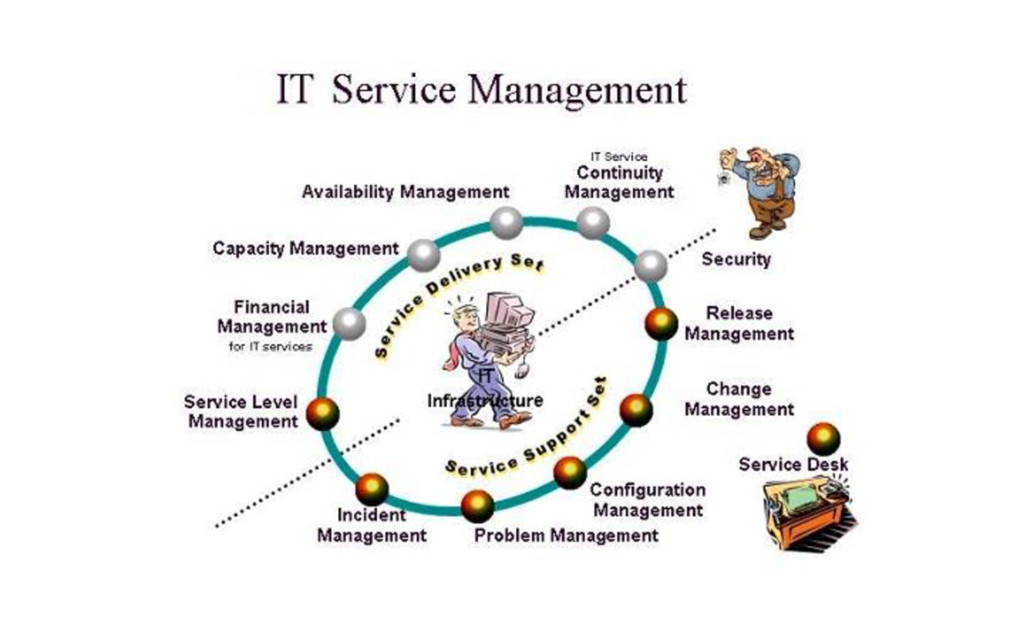
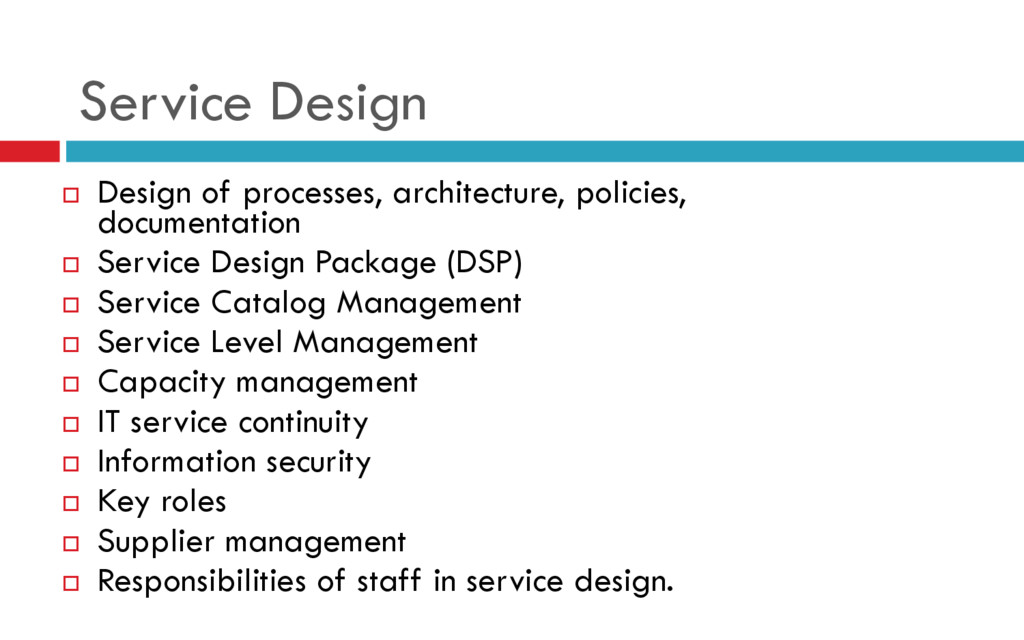
Service Design Package (DSP) Service Catalog Management Service Level Management Capacity management IT service continuity Information security Key roles Supplier management Responsibilities of staff in service design.
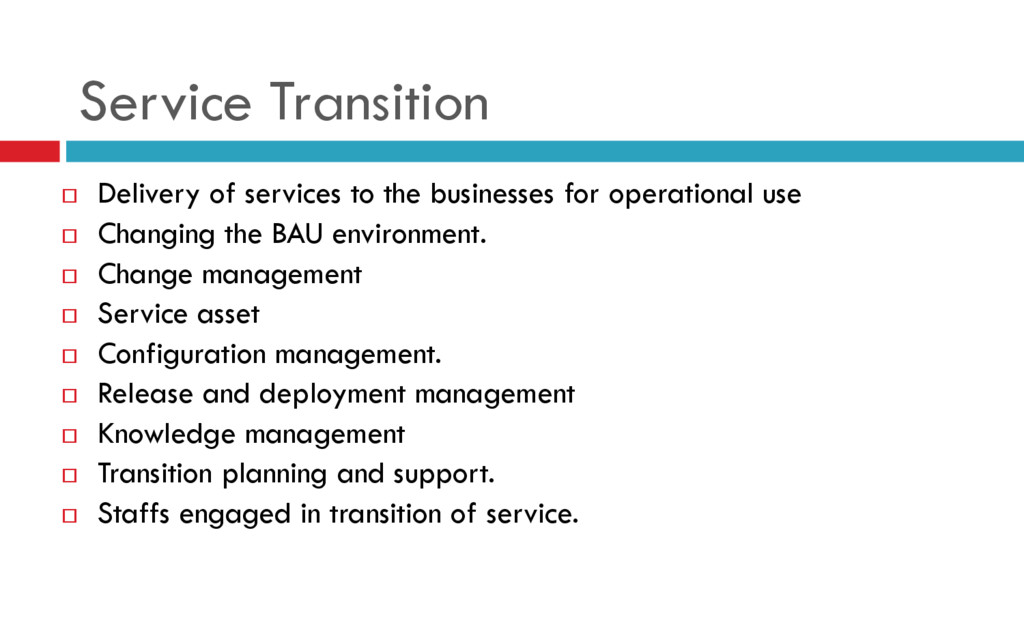
operational use Changing the BAU environment. Change management Service asset Configuration management. Release and deployment management Knowledge management Transition planning and support. Staffs engaged in transition of service.
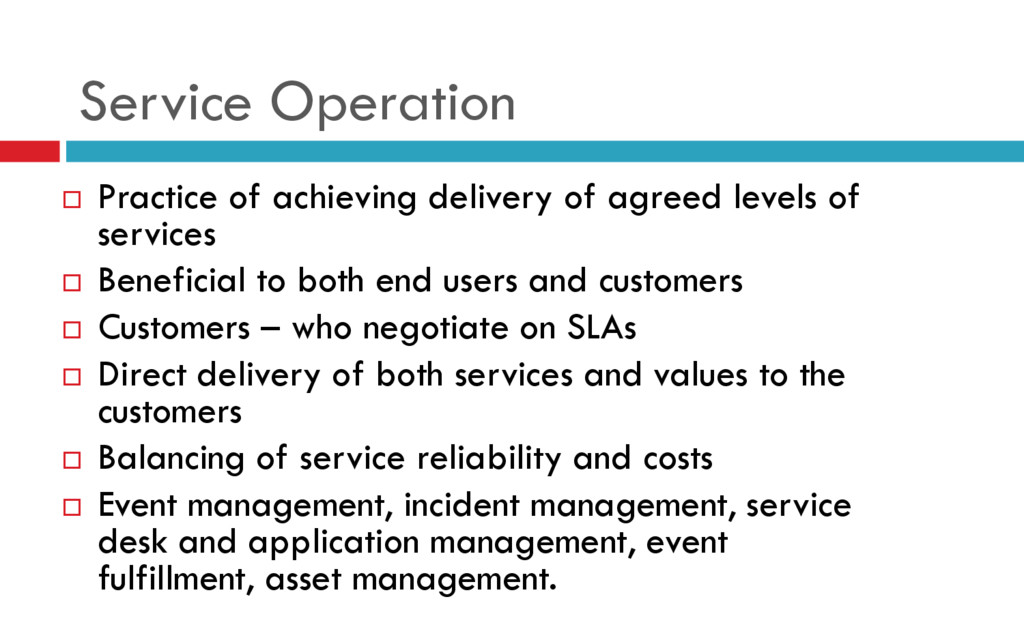
of services Beneficial to both end users and customers Customers – who negotiate on SLAs Direct delivery of both services and values to the customers Balancing of service reliability and costs Event management, incident management, service desk and application management, event fulfillment, asset management.
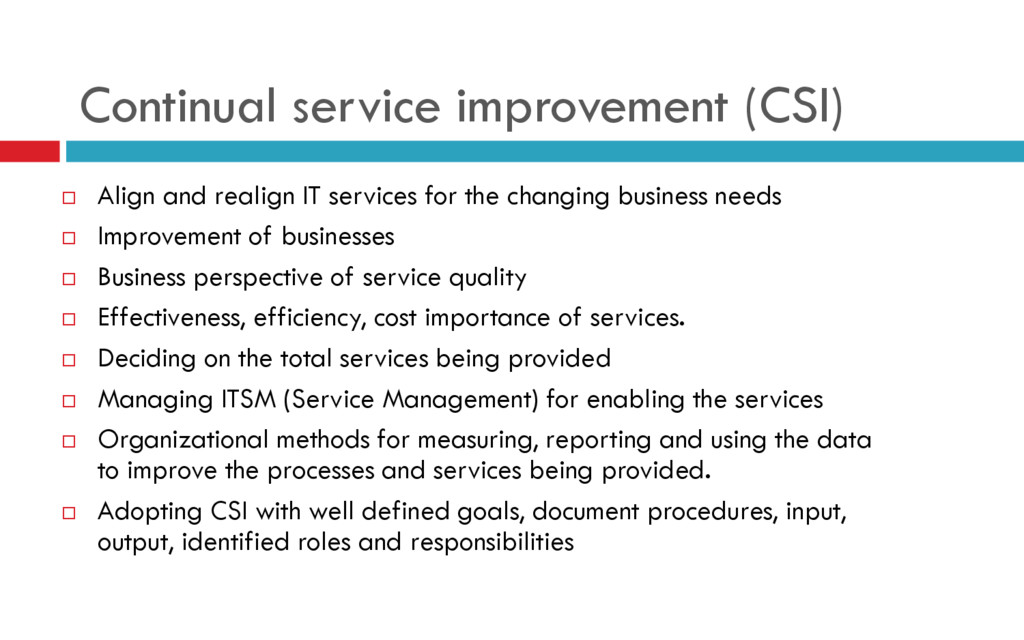
for the changing business needs Improvement of businesses Business perspective of service quality Effectiveness, efficiency, cost importance of services. Deciding on the total services being provided Managing ITSM (Service Management) for enabling the services Organizational methods for measuring, reporting and using the data to improve the processes and services being provided. Adopting CSI with well defined goals, document procedures, input, output, identified roles and responsibilities
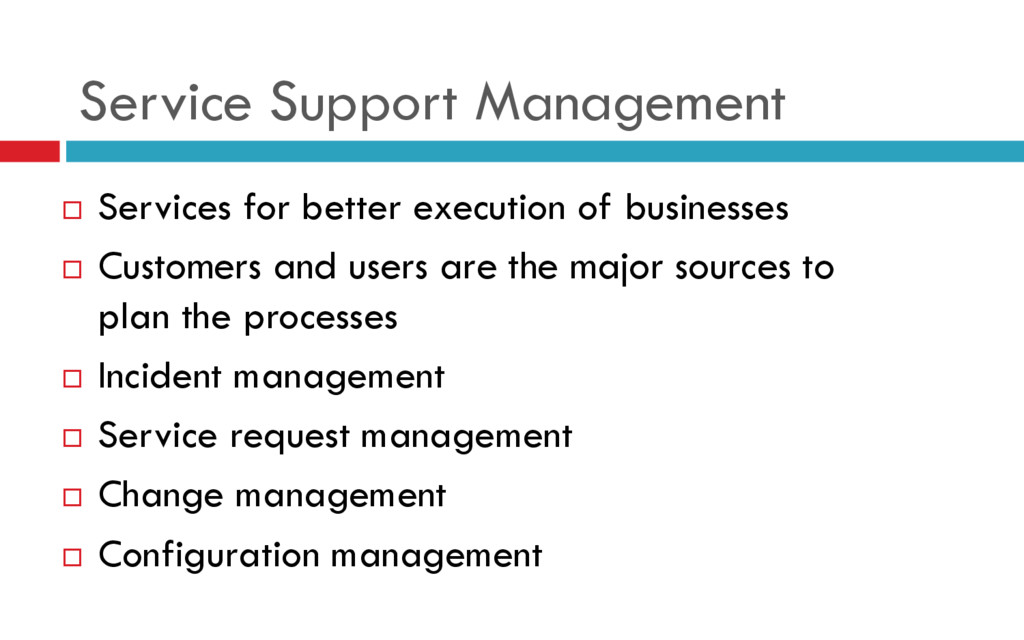
Customers and users are the major sources to plan the processes Incident management Service request management Change management Configuration management
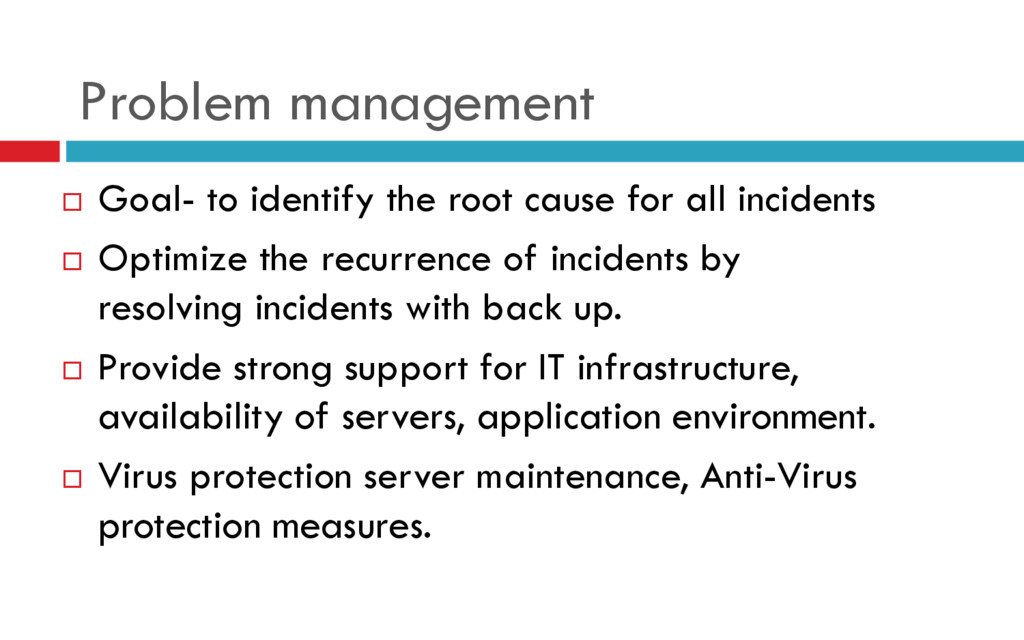
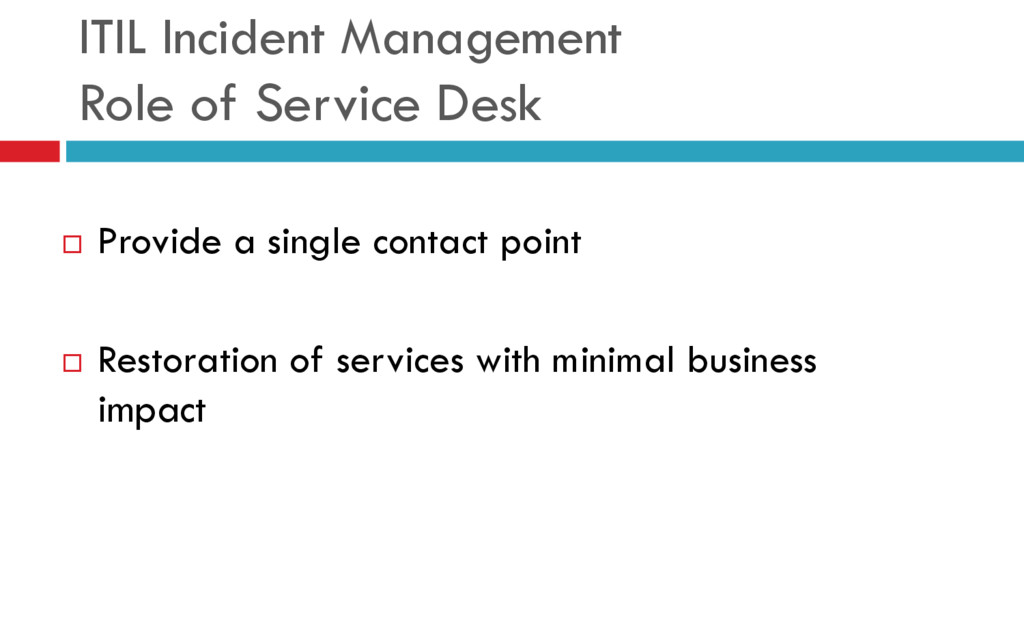
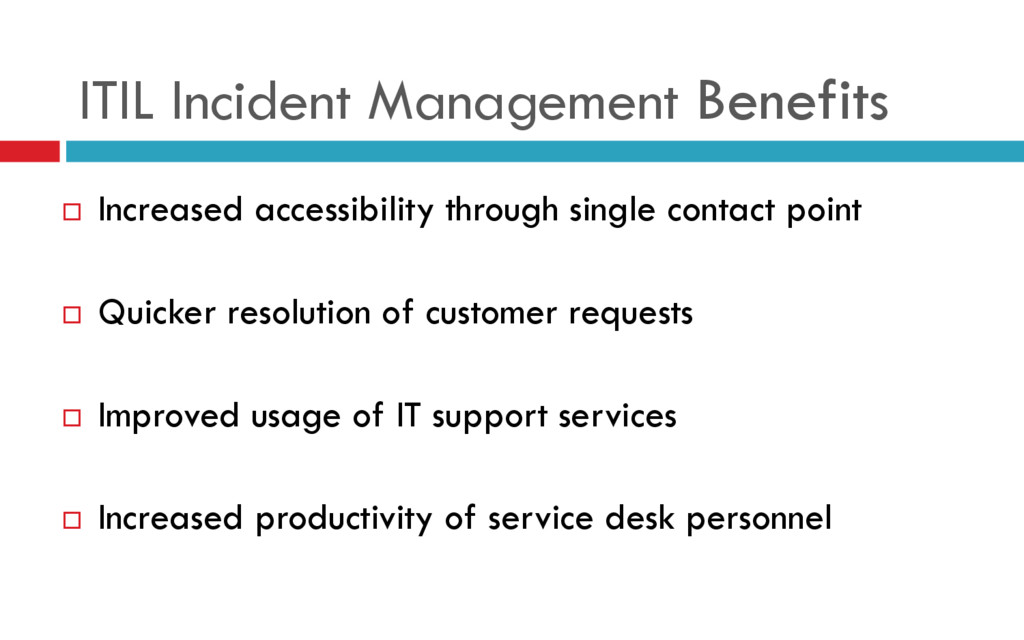
all incidents Optimize the recurrence of incidents by resolving incidents with back up. Provide strong support for IT infrastructure, availability of servers, application environment. Virus protection server maintenance, Anti-Virus protection measures.
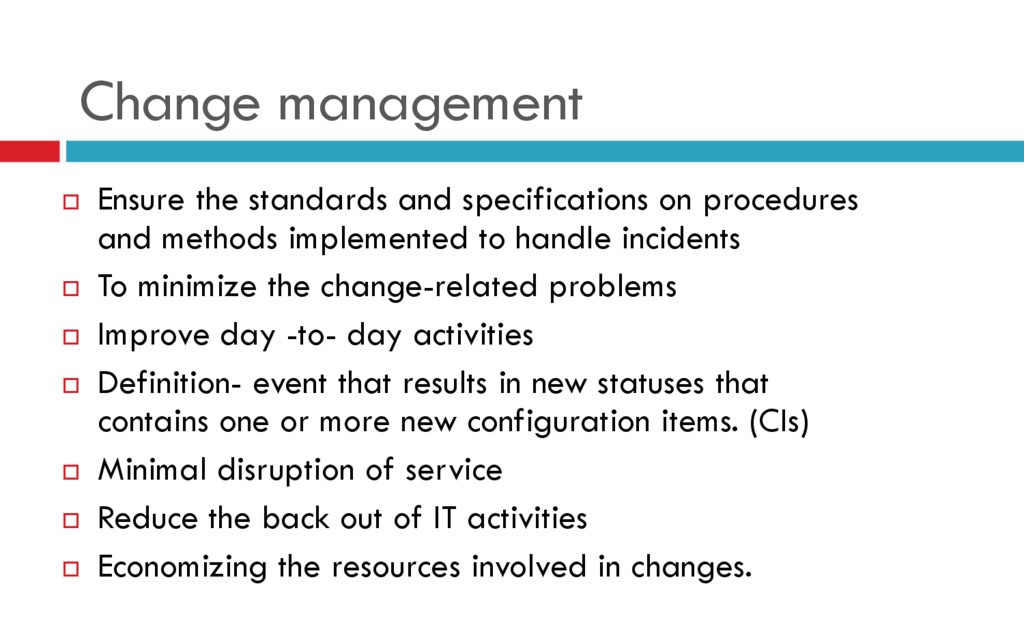
and methods implemented to handle incidents To minimize the change-related problems Improve day -to- day activities Definition- event that results in new statuses that contains one or more new configuration items. (CIs) Minimal disruption of service Reduce the back out of IT activities Economizing the resources involved in changes.
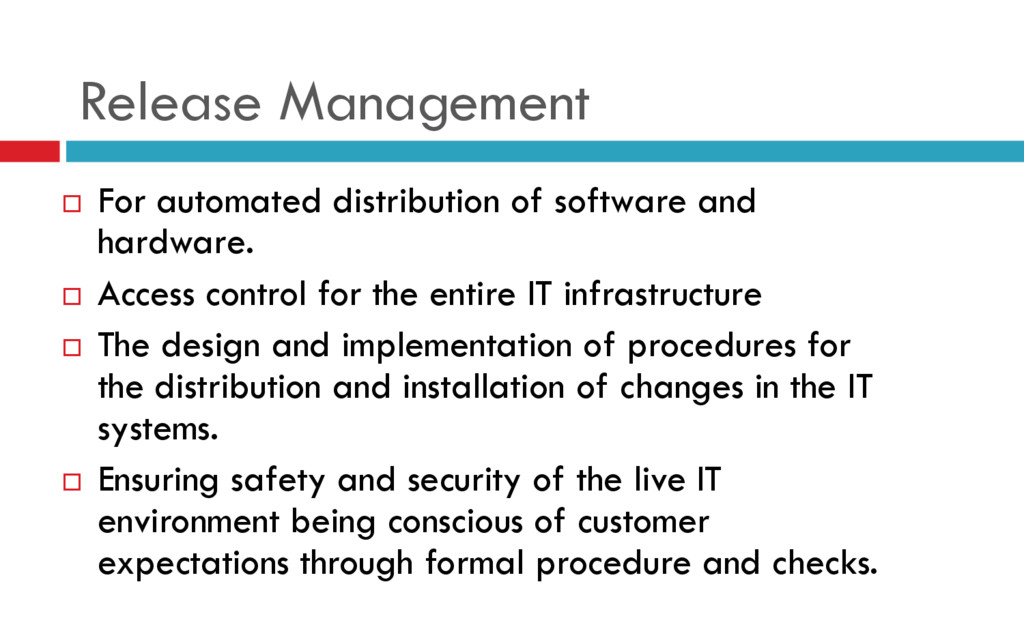
Access control for the entire IT infrastructure The design and implementation of procedures for the distribution and installation of changes in the IT systems. Ensuring safety and security of the live IT environment being conscious of customer expectations through formal procedure and checks.
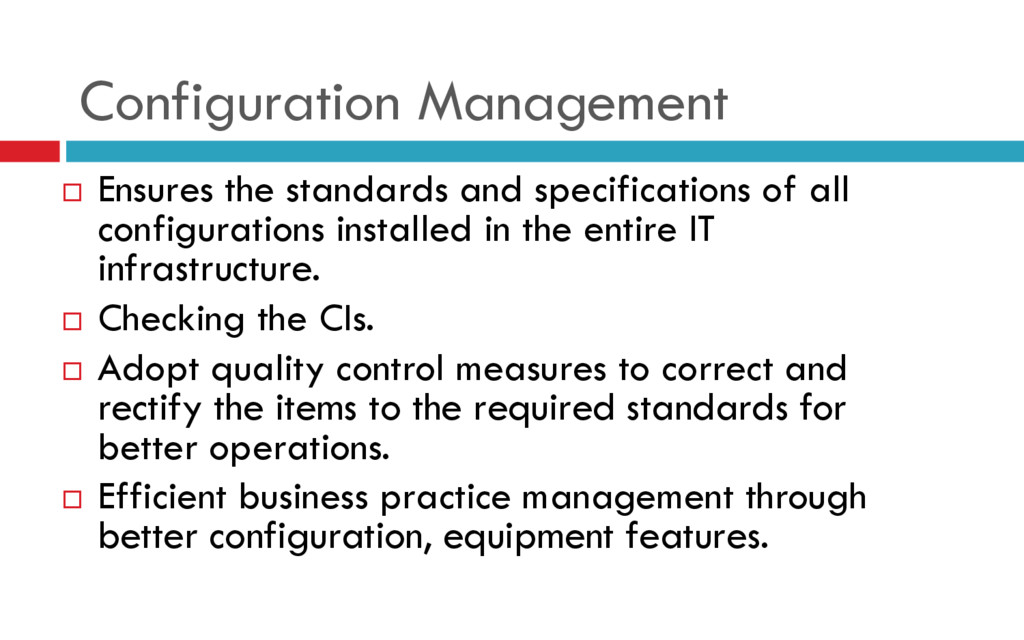
configurations installed in the entire IT infrastructure. Checking the CIs. Adopt quality control measures to correct and rectify the items to the required standards for better operations. Efficient business practice management through better configuration, equipment features.
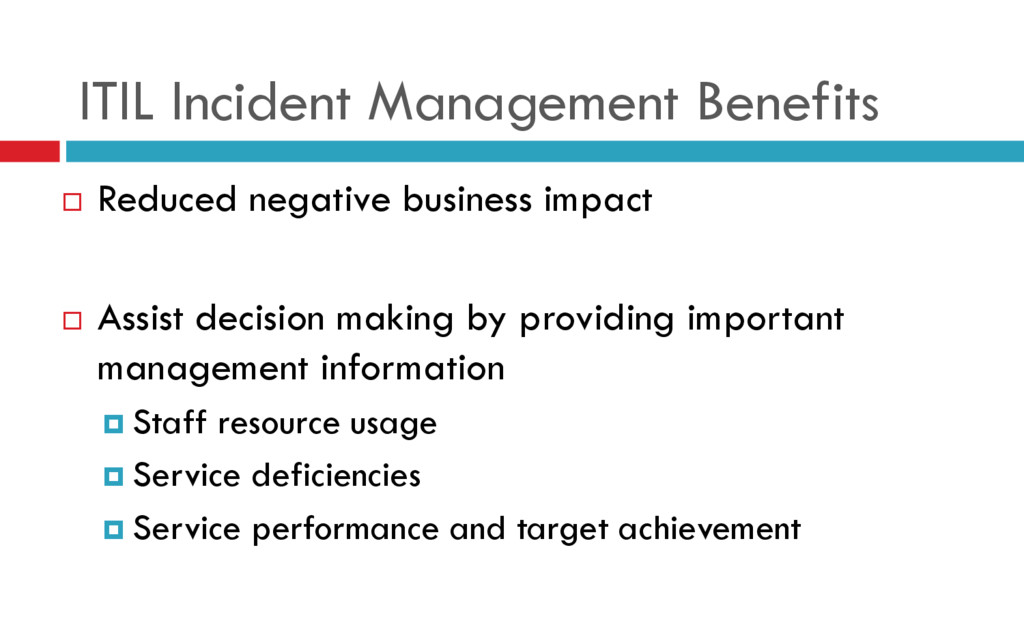
Assist decision making by providing important management information Staff resource usage Service deficiencies Service performance and target achievement
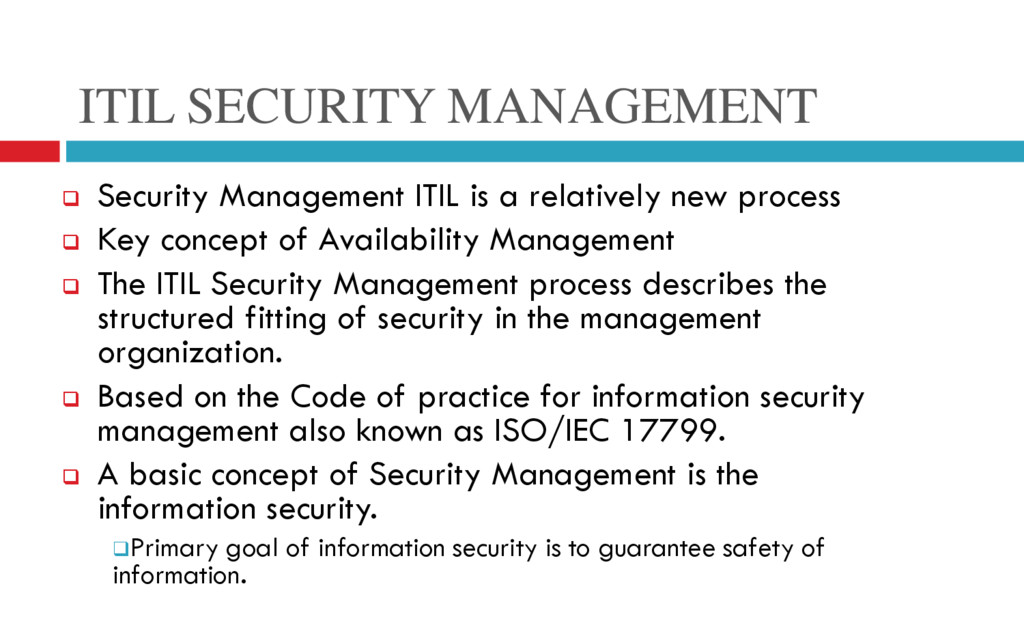
new process Key concept of Availability Management The ITIL Security Management process describes the structured fitting of security in the management organization. Based on the Code of practice for information security management also known as ISO/IEC 17799. A basic concept of Security Management is the information security. Primary goal of information security is to guarantee safety of information.
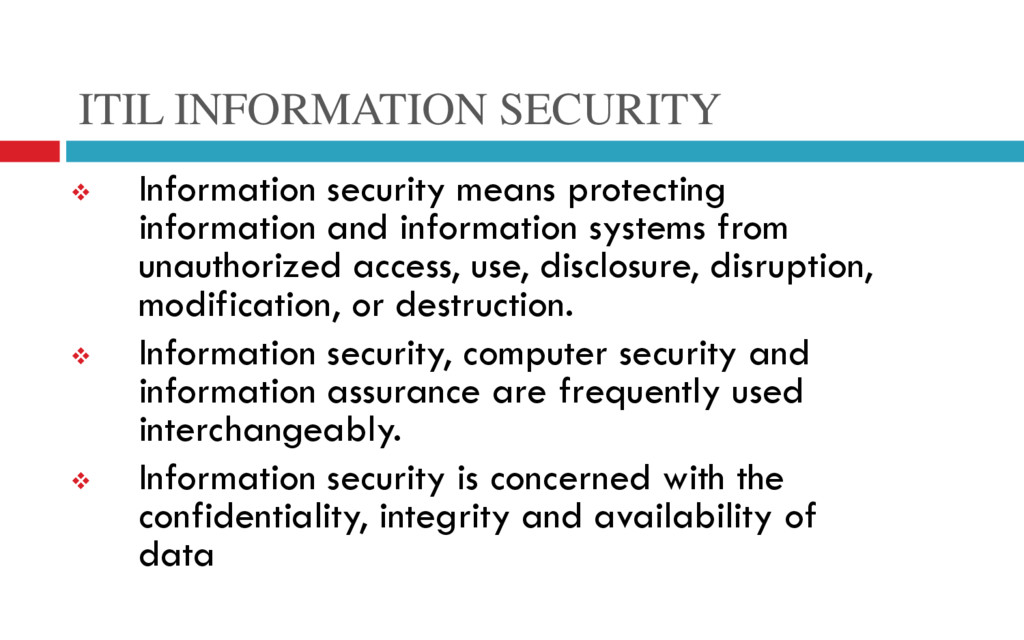
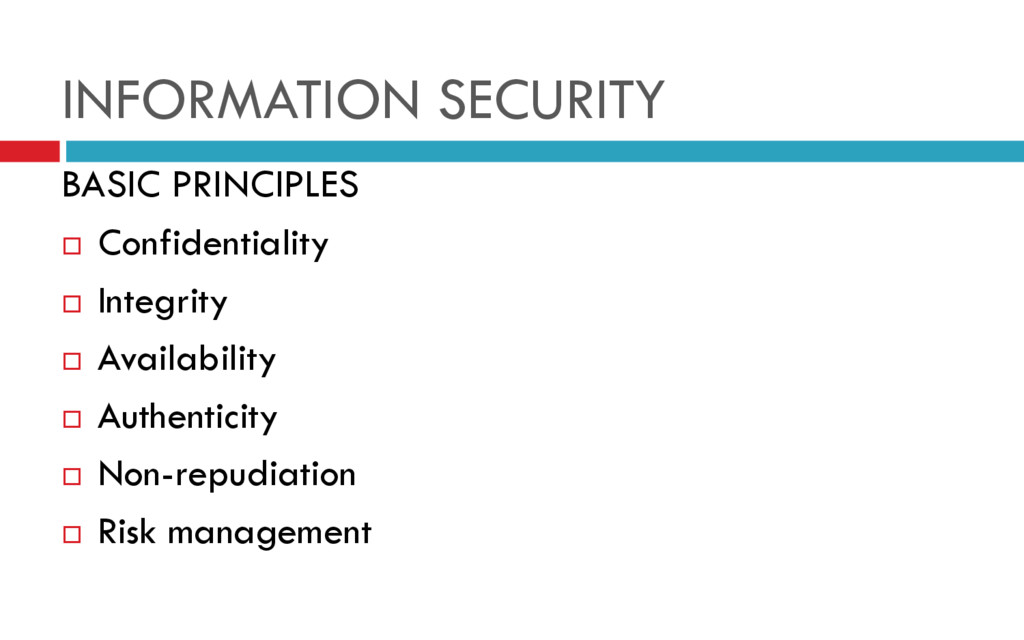
information systems from unauthorized access, use, disclosure, disruption, modification, or destruction. Information security, computer security and information assurance are frequently used interchangeably. Information security is concerned with the confidentiality, integrity and availability of data
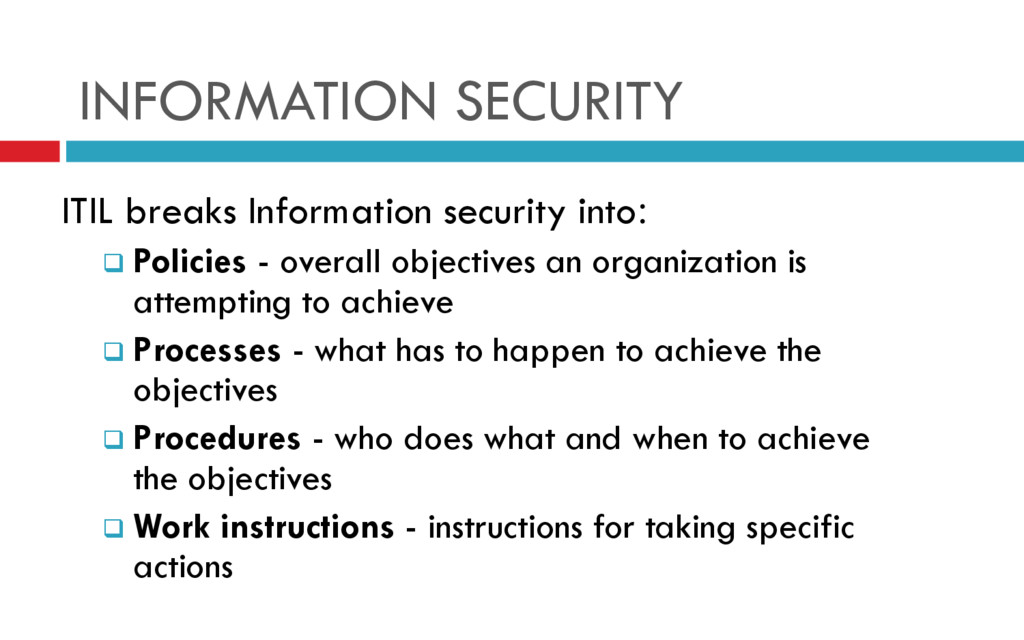
overall objectives an organization is attempting to achieve Processes - what has to happen to achieve the objectives Procedures - who does what and when to achieve the objectives Work instructions - instructions for taking specific actions
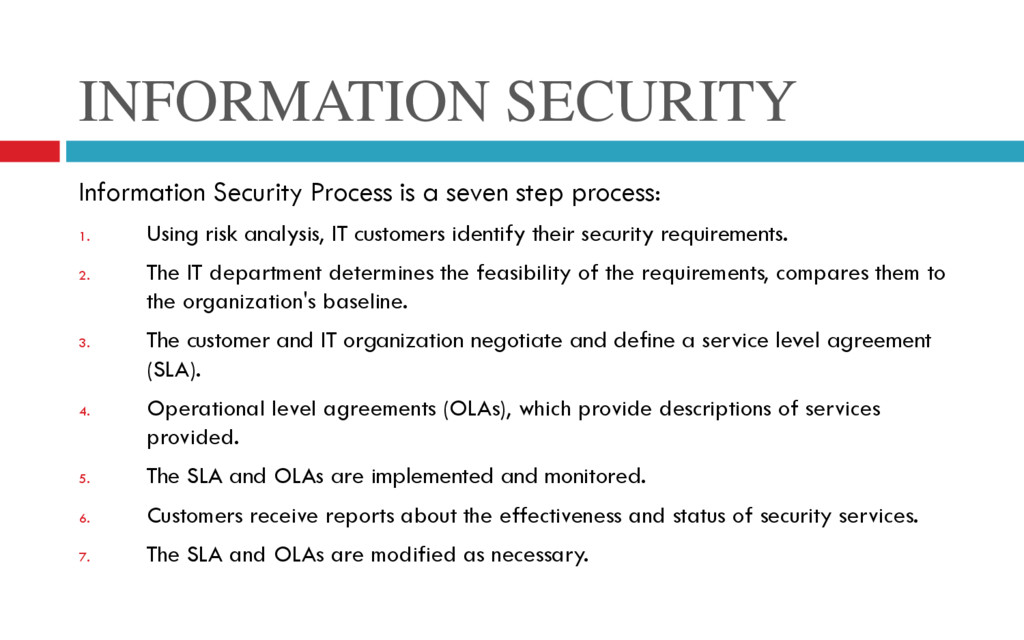
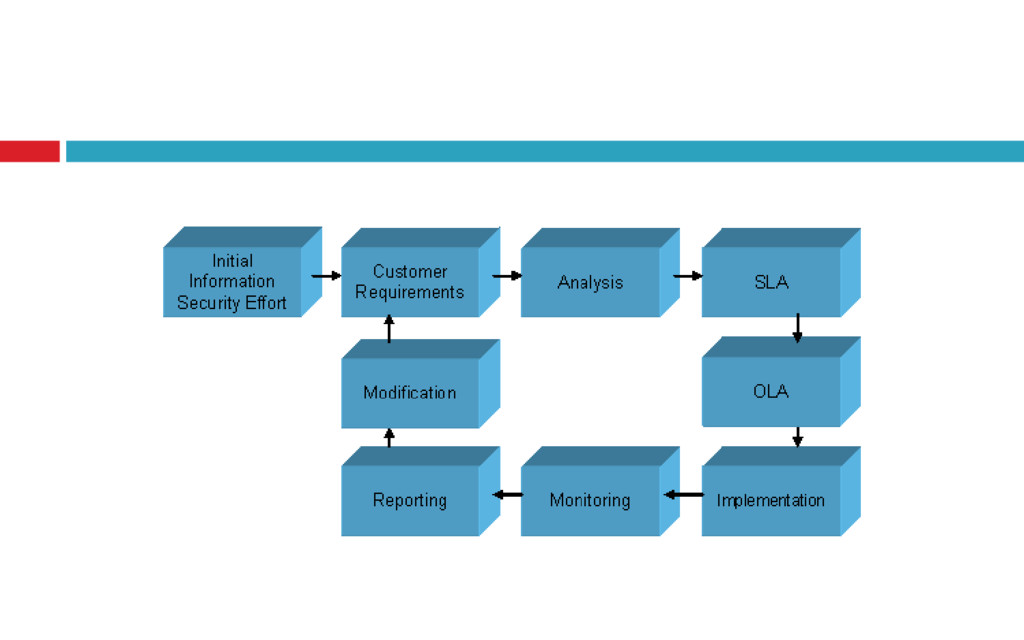
1. Using risk analysis, IT customers identify their security requirements. 2. The IT department determines the feasibility of the requirements, compares them to the organization's baseline. 3. The customer and IT organization negotiate and define a service level agreement (SLA). 4. Operational level agreements (OLAs), which provide descriptions of services provided. 5. The SLA and OLAs are implemented and monitored. 6. Customers receive reports about the effectiveness and status of security services. 7. The SLA and OLAs are modified as necessary.
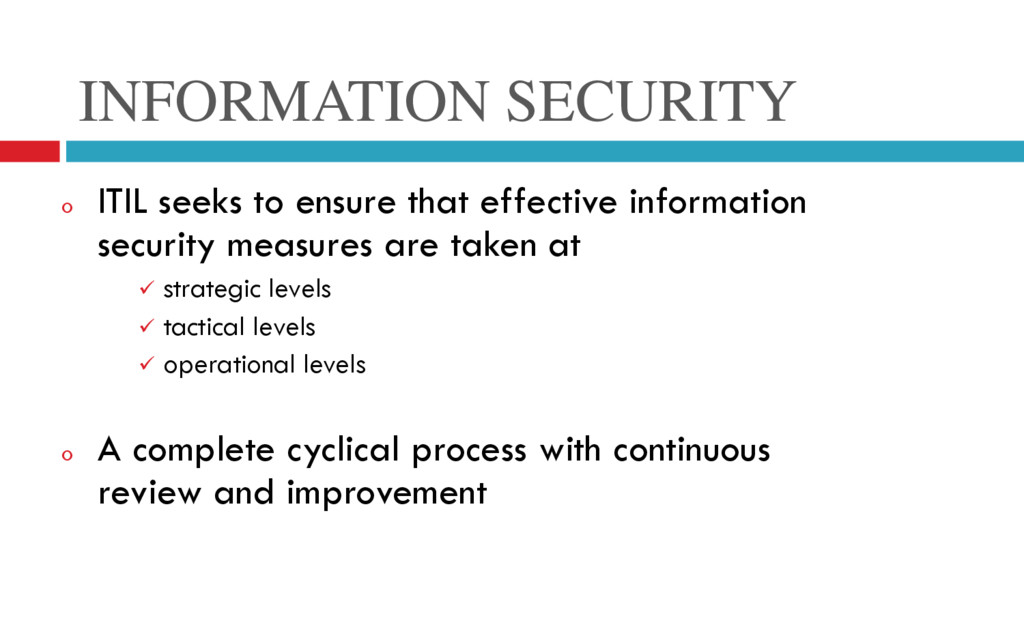
security measures are taken at strategic levels tactical levels operational levels o A complete cyclical process with continuous review and improvement
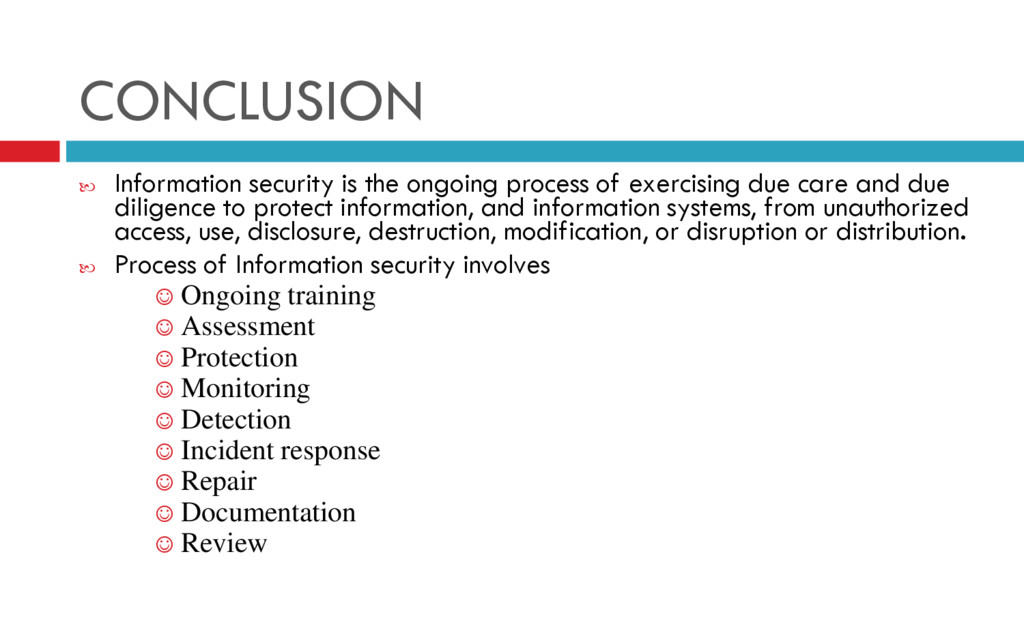
due care and due diligence to protect information, and information systems, from unauthorized access, use, disclosure, destruction, modification, or disruption or distribution. Process of Information security involves Ongoing training Assessment Protection Monitoring Detection Incident response Repair Documentation Review


 vg
 imuta
 110y
 munakata
 nsatoh
 endonanana
 takuyay0ne
 ymotongpoo
 visional_engineering_and_design
 torounit
 harutiro
 grimoh
 yusuke427
 scottboms
 morganepeng
 rkendrick25
 productmarketing
 chikuwait
 geshan
 codingconduct
 jonoalderson
 deanohume
 aleyda
 katarinadahlin
 chrisshort