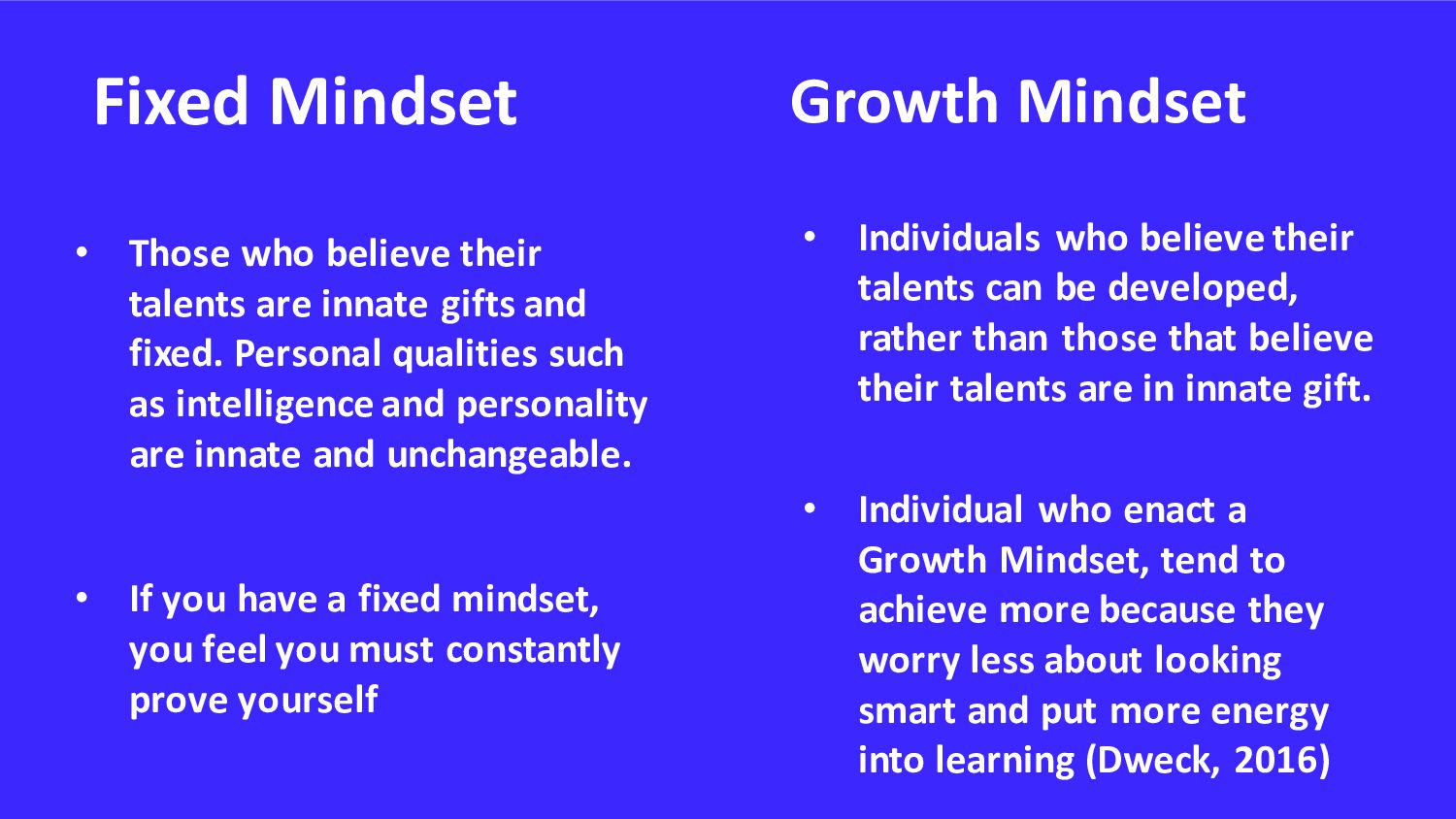
gifts and fixed. Personal qualities such as intelligence and personality are innate and unchangeable. • If you have a fixed mindset, you feel you must constantly prove yourself • Individuals who believe their talents can be developed, rather than those that believe their talents are in innate gift. • Individual who enact a Growth Mindset, tend to achieve more because they worry less about looking smart and put more energy into learning (Dweck, 2016) Growth Mindset
a growth mindset, you believe the abilities you’re born with are only a starting point—you can get smarter and improve yourself with hard work, persistence, and the right learning strategies. You have a passion for learning and welcome mistakes as opportunities to learn, and you seek challenges to push yourself.
growth mindset, their employees report feeling more empowered and committed • They are also supported by the organization for their collaborative and innovative efforts.
world, success is about proving to your self and others that you're smart and talented. • Conversely, success in the growth mindset world is about pushing yourself, learning, and improving. Failure means not seizing an opportunity to learn, not striving for what's important to you, or not reaching for your potential.
determinant of whether a company fails or succeeds • Fixed-mindset leaders tend to believe they’re geniuses who don’t need strong executive teams, just underlings to implement their ideas. • They’re concerned with looking superior and enhancing their own reputations, rather than serving the company’s best interests. • Dweck explains that their egos drive them to belittle their employees and ignore or deny their own mistakes, which can run their companies into the ground.
positive and energized. They believe in everyone’s ability to learn and develop. Dweck says that instead of using their company as a tool for self- promotion, growth-minded leaders focus on improving the company and employees. Most industry-leading companies (regardless of the industry) operate with growth mindsets.
and how they affect you can prompt you to start making changes. • However, completely changing your habitual thought patterns takes time and work. • Often, the fixed mindset hangs around and competes with the growth- oriented ways of thinking that you’re trying to adopt.
may temporarily feel like you’re losing your sense of who you are. • However, the growth mindset ultimately frees you from constantly judging yourself so you can be authentic and explore your full potential. • In other words, you won’t be so concerned about who you are, because you’ll be focused on who you can become
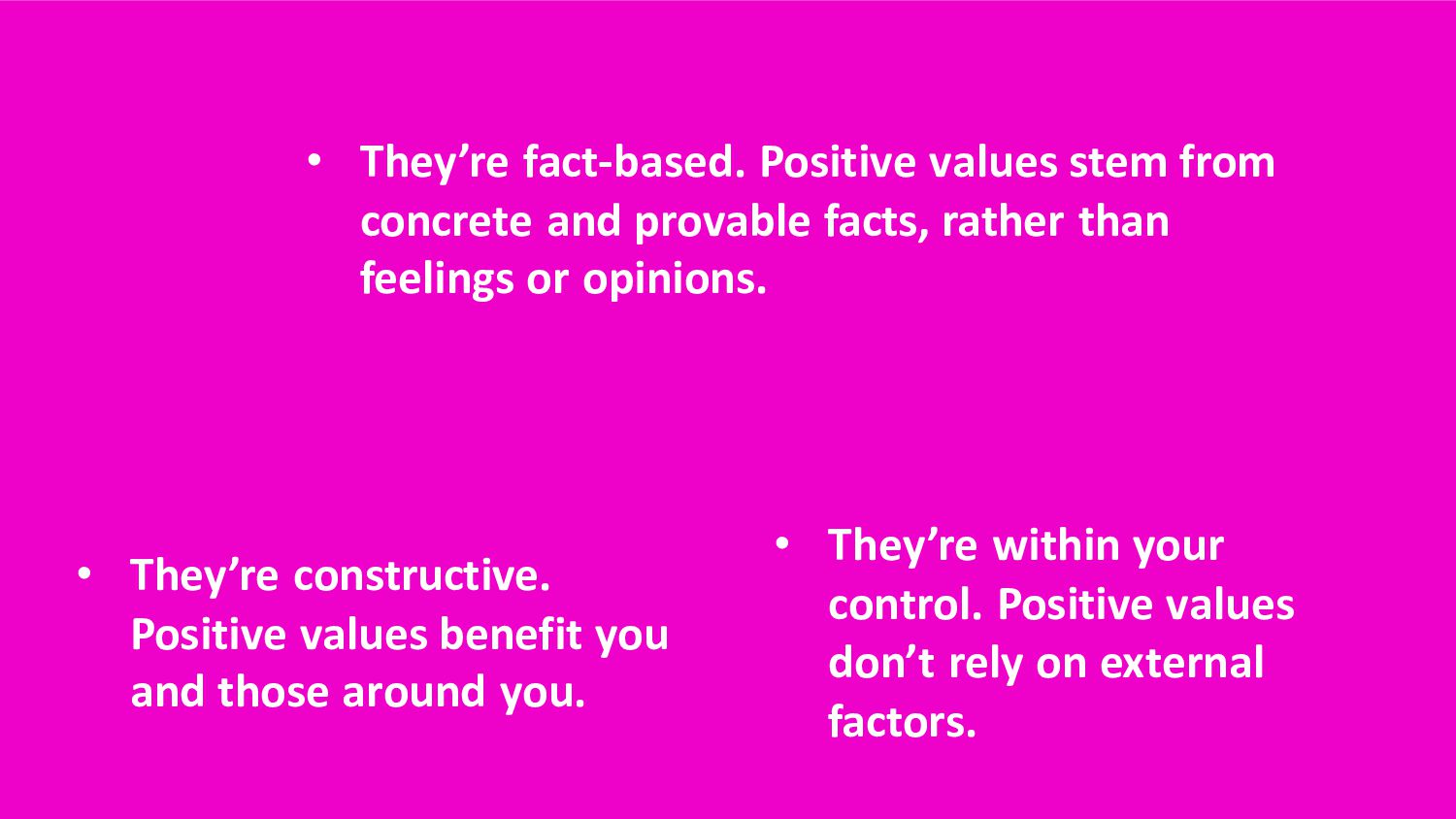
facts, rather than feelings or opinions. • They’re constructive. Positive values benefit you and those around you. • They’re within your control. Positive values don’t rely on external factors.
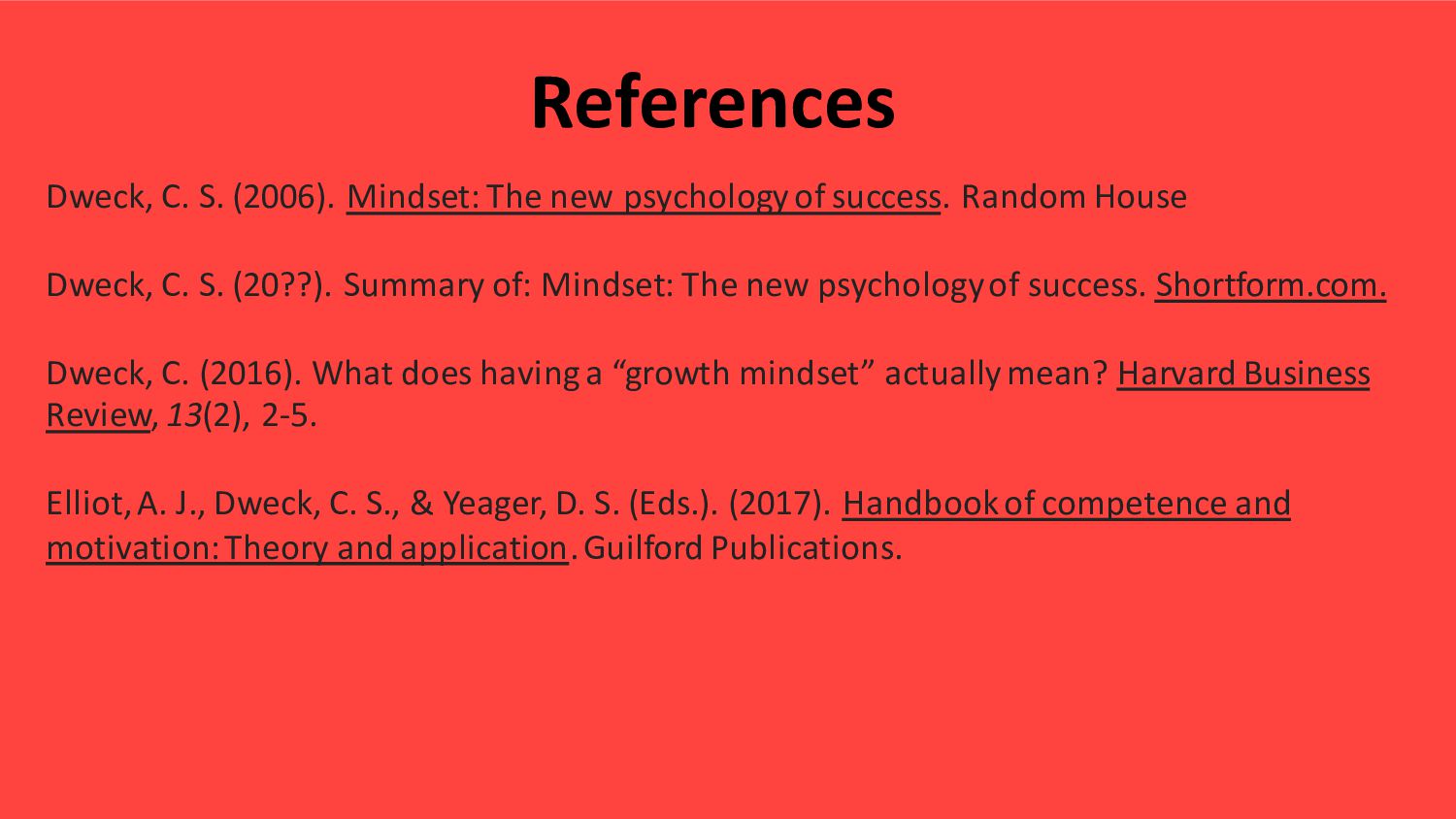
success. Random House Dweck, C. S. (20??). Summary of: Mindset: The new psychology of success. Shortform.com. Dweck, C. (2016). What does having a “growth mindset” actually mean? Harvard Business Review, 13(2), 2-5. Elliot, A. J., Dweck, C. S., & Yeager, D. S. (Eds.). (2017). Handbook of competence and motivation: Theory and application. Guilford Publications.


 kimpetersen
 caitechhr
 tomomasa
 aictokamiya
 gatechnologies
 fullkaiten
 malna
malna
.png) yuichirom
yuichirom
 loglass2019
 m3c
m3c
 mikikosaka
 doradora09
 cyberlinks
 jdejongh
 lfama
lfama
 tammyeverts
 moore
moore
 akashhashmi
 popppiees
 gurzu
gurzu
 axbom
axbom
 brad_frost
 chriscoyier